
From Business Problem to Production: How Forward Deployment Engineering Accelerates Data and AI Projects
The reports are still slow. Data still has to be pulled from multiple systems. Teams still struggle to get a reliable view of what is happening. An AI pilot may even be working, but getting it into a production workflow proves far more difficult than building the initial prototype.
This is a familiar problem in enterprise technology: the distance between having the right technology and making it work for the business.
The answer isn’t necessarily another platform or another proof of concept. Often, what is needed is an engineering team that can work close enough to the business to understand the problem, close enough to the technology to design the right solution, and close enough to the production environment to make that solution work.
That is the idea behind Forward Deployment Engineering (FDE).
Instead of treating engineers as people who receive requirements and return a finished implementation, FDE puts them alongside the teams facing the problem. They work through the data, systems, workflows and constraints together, making engineering decisions as they learn what the business actually needs.
For data and AI projects, this can fundamentally change how a solution gets built. The question shifts from “What technology should we implement?” to “What needs to be engineered to solve this problem?”
And that is where the journey from business problem to production begins.
The Hard Part Begins After the Technology Is Chosen
Consider what happens when an enterprise decides to modernize its data platform.
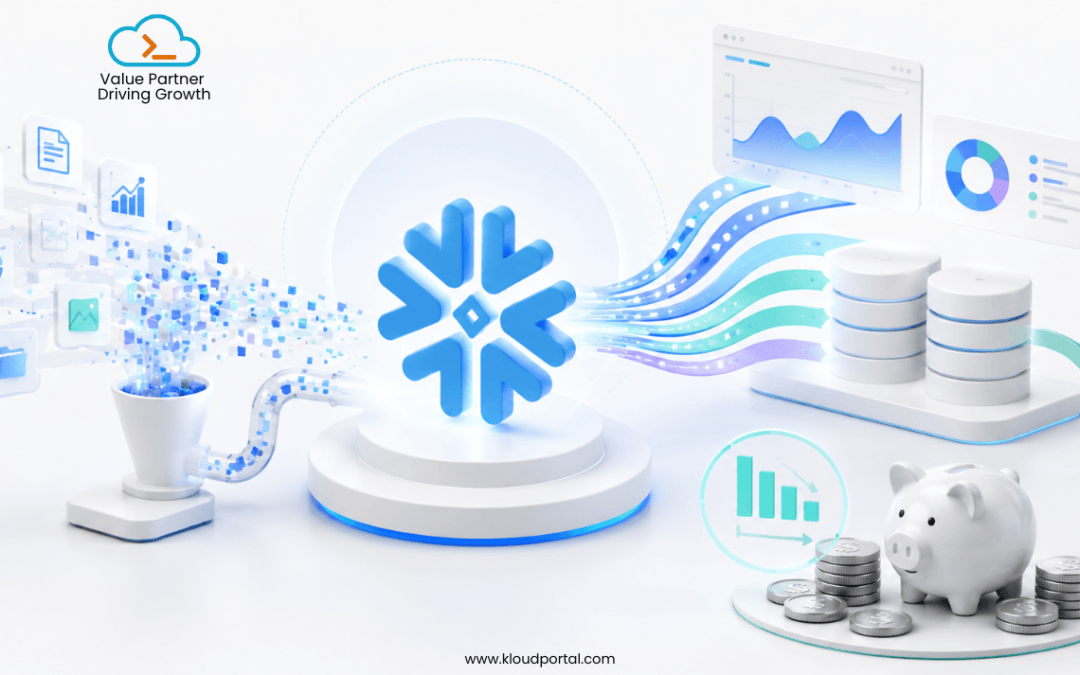
Choosing Snowflake or Databricks may be an important decision, but it is rarely the hardest one. The real work begins when engineers have to connect the platform to the company’s existing environment.
Data might come from an ERP, CRM, operational databases, APIs and legacy applications. Some workloads may run in batches while others require real-time processing. Different teams may define the same business metric differently.
Now the project isn’t simply about implementing a data platform. It is about engineering the connections, pipelines, governance, and workflows that allow the platform to deliver business value. That is where having engineers close to the problem becomes valuable.
From Requirements to Real-World Engineering
In a conventional delivery model, teams often define requirements first and hand them to an engineering team.
But data and AI projects rarely remain that simple. An engineer may discover that the required data is incomplete. A legacy dependency may change the architecture. A business user may reveal that the original workflow doesn’t match how the process actually operates.
With forward deployment, those discoveries become part of the delivery process rather than late-stage surprises.
The team can ask:
- What are we trying to solve?
- What does the existing environment allow us to do?
- What needs to change to make the solution work?
That creates a tighter cycle between discovery, engineering and feedback.
The Technology Follows the Problem
This approach also changes how technologies such as Snowflake, Databricks, and Solace fit into an enterprise solution.
A business may need Snowflake to create a scalable and governed data foundation. Databricks may be required for large-scale data engineering, machine learning or AI workloads. Solace can become relevant when applications and systems need real-time event-driven communication.
The point isn’t to implement all three.
The point is to determine which combination of technologies solves the actual business problem. That requires engineers who understand the individual platforms but can also connect them into a broader architecture.
In a modern enterprise environment, data engineering, cloud, AI, integration and platform engineering increasingly overlap.
Building Deployment-Ready Teams
This is where Forward Deployment Engineering differs from simply adding resources to a project.
A forward-deployed engineer needs technical depth, but also needs to be comfortable working with ambiguity and directly with client teams.
They need to understand:
- Enterprise data architectures
- Cloud platforms
- Data pipelines and integration
- AI and machine learning workflows
- Security and governance
- Production operations
Just as importantly, they need to understand why the solution is being built.
This is why KloudPortal is developing trained Forward Deployment Engineering and AI-native teams. Engineers are trained across modern data, cloud and AI technologies and prepared to work within real enterprise environments.
The objective isn’t to provide engineers who simply know a technology. It is to build teams capable of applying that knowledge to a client’s specific problem.
From AI Prototype to Production Capability
AI makes this distinction even more important. Building an AI prototype can happen relatively quickly. Making it useful inside an enterprise is a different challenge. An AI application may need access to governed enterprise data, integration with existing applications, monitoring, evaluation, security controls and a reliable operating model.
The model is only one part of the solution.
An AI-native engineering team therefore needs to think beyond the model and engineer the data, applications, infrastructure and workflows around it. This is where forward deployment can shorten the path from experimentation to production.
Why FDE Is Becoming Important in 2026
This delivery model is gaining momentum across the technology industry.
In June 2026, AWS announced a $1 billion investment in Forward Deployed Engineering, including a partner-led FDE model focused on helping customers build and deploy production AI systems within their real operating environments.
The broader shift is clear: Enterprises increasingly need engineering teams that can bridge the gap between technology capability and business execution.
Measuring What Actually Matters
A successful data or AI engagement shouldn’t be measured simply by whether a platform was deployed or a prototype was completed.
The better questions are:
- Did the business get the information it needed faster?
- Did the process become more efficient?
- Did the AI use case make it into production?
- Can the solution scale and be operated reliably?
These are the measures that connect engineering work to business outcomes, and they are what make Forward Deployment Engineering more than another delivery model.
From Engineering Capability to Business Outcome
The future of enterprise data and AI won’t be determined by the platforms organizations choose alone.
It will depend on whether they have the engineering capability to turn those platforms into solutions that work in the real world.
That is the capability KloudPortal is building through trained Forward Deployment Engineering and AI-native teams—teams that can work within client environments, understand complex data and technology challenges, and engineer solutions using the right combination of technologies.
The technology changes according to the problem. The objective doesn’t – because enterprises don’t ultimately need another technology implementation. They need the problem solved.
Understand the problem. Build the right solution.
Take it to production. Deliver the outcome.
Ready to put this approach into action? Let’s bring in Forward Deployment Engineering teams from KloudPortal.