Content Marketing vs. Influencer Marketing: How to use both to achieve your marketing goals

Content Marketing vs. Influencer Marketing: How to use both to achieve your marketing goals

Content and influencer marketing are important digital marketing concepts for product marketing. While educative and informative content is the bedrock of a marketing campaign at any stage, influencer marketing is particularly helpful in getting your product/service off to a flying start.

Influencers have a very large following on social media platforms such as Facebook, Instagram, LinkedIn, Twitter, WhatsApp, and so on. When they write and post good content about new products or services, their followers get to know them on a positive note. That’s a big achievement for any business marketing team.

However, marketers need to understand that influencer marketing is also a form of content marketing. Instead of choosing one or the other, choosing both to create synergy can be the right way forward.

What Is Influencer Marketing?

Influencer marketing uses a celeb personality or someone who has a huge following on social media to promote a product or business.

There are chances that people will be influenced by their favorite celebs promoting a brand, and they may buy the product or invest in the business. Also, customers tend to have more trust in a product when referred by a third party rather than discovering them all by themselves.

Here influencers play the role of a third party and promote the business.Influencers can help drive traffic to a business website or the landing pages, ultimately increasing sales.

Marketing teams tie up with influencers. And they create blogs, articles, and social media posts and upload them on their respective platforms, where they have many followers. Influencers create brand awareness and most likely bring leads. If you consider using influencer marketing to reach your target audience, choose your influencer from an appropriate niche.

The product/service marketing team must research the right influencers for their businesses and bring them on board.

For influencer marketing, picking the familiar and known personality in your industry or niche is key. Once you find the influencer you are looking for, communicate and create a great rapport.

Benefits Of Influencer Marketing:

  • Broaden the audience and brand exposure
  • Increase trust and credibility
  • Gives content strategy a boost
  • Enhance sales
  • Cost-effective and time-saving
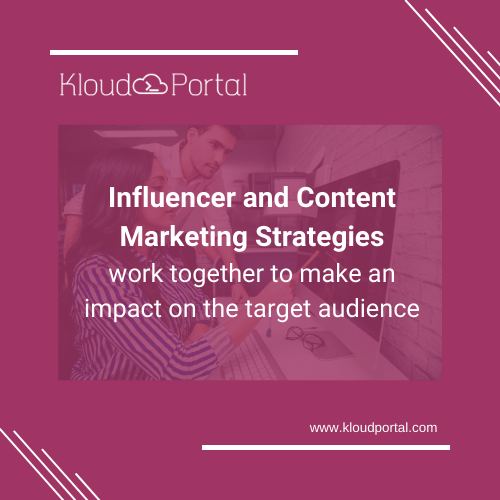
Making an impact on the audience can best be achieved by strategizing both content and influencer marketing techniques

What Is Content Marketing?

Content marketing is part of digital marketing and has been in use for a long time. The top marketing agency can draw an audience to their pages through content marketing, ultimately generating leads and increasing sales.

All marketing agencies use content marketing to discuss their products/services and educate their audience about their features and benefits. It is an easy and proven technique to boost sales.

Also, unlike influencer marketing, it falls on a little cheaper side.

Well-written content makes a big difference and helps grab the customers’ attention easily. Even an influencer works through the content. If the content goes well with the customer’s tastes and expectations, it can positively impact them. In addition, content marketing is a safe and cost-effective way to market a brand or business. However, it is time taking compared to influencer marketing.

Benefits Of Content Marketing:

  • Increased domain authority
  • More traffic from referrals
  • Increased possibility for conversion.
  • Broad relevance
  • Reduced marketing expenses and increasing value

How To Use Both To Achieve Your Marketing Goals?

Until now, you have read how content marketing and influencer marketing can help you take your business to the next level. Now, let’s look at how you can use both to achieve your marketing goals. Startups and established brands are adopting influencer and content marketing strategies to make a quick mark on the audience. Using both marketing strategies leaves no one out.

You have to work on the demographics of your customers so that you can create the right content that hits them. By knowing the demographics of your customers, you can find the platforms to reach them easily. You can always take inspiration from the long-form content to make short influencer posts for social media. You can ask the influencers to participate in a short Q&A session and answer possible questions on your business for the customers.

Benefits Of Using Both Influencer & Content Marketing:

  • Improved brand awareness
  • Improved brand awareness
  • Brand trustworthiness
  • Long-Term Partnership
  • Higher conversion rate
  • Enhanced SEO
  • Better ROI
  • Cost-effective

In Conclusion

Lately, content and influencer marketing has been extensively used for promoting products/services and brands as both use social media and other digital marketing channels. Business owners use these digital marketing concepts to increase awareness of their business and generate leads.

Content marketing uses the content in the form of blogs, white papers, case studies, emails, social media posts, etc., to reach the masses. In contrast, influencer marketing uses an influencer to post videos and social media content.

In reality, both social media posts and blogs are equally important for making a brand or business successful. A company will benefit by employing content and influencer marketing.

Get in touch with us.

Arun

About The Author…

Arun has been a print media journalist with wide-ranging experience. In search of solutions to everyday problems, he is drawn to technology and digital marketing. News and analytical insights fascinate him, and he passionately follows all that is new in the tech business. He writes for several news and content platforms. His areas of interest range from digital marketing to blockchain and digital currencies. He is dedicated, focused, and resourceful.

How to Implement Content Amplification Strategy to Reach More Audience 

How to Implement Content Amplification Strategy to Reach More Audience 

Content is King

While marketers are always on the lookout for new and innovative ways to reach more audiences, Content marketing remains one of those rare modes of marketing that never gets old. “ It’s like fine wine; the value only increases with time.”

Content amplification is a sub-spectrum of content marketing where the same content is repurposed to be promoted to a wider base of audiences through multiple channels within the world wide web.

In this blog post, we will discuss how to implement a content amplification strategy and some of the most effective methods to do the same. Let’s get started!

What is Content Amplification?

Content amplification. Sounds complicated, doesn’t it? Let us break it down for you.

Take the case of Noise VS Signal, a popular metaphor used extensively in Content Marketing. Here, your content is the signal, and everything else is the noise. To put it in simpler terms, Content amplification is the process of elevating your content reach to a wider audience – thereby amplifying the signal of your content. So how do you implement the process of amplifying content? Let’s see.

Content syndication

Content-syndication is the process of republishing content on third-party websites. It can be a great way to reach a wider audience and generate more traffic to your website.

However, it’s important to syndicate your content wisely, as over-syndication can lead to search engine penalties. When syndicating content, be sure to use original and well-written articles that are relevant to your niche. In addition, be sure to include a link to your website so readers can learn more about your business. With that said, here are 3 popular platforms to syndicate your articles-

  1. Medium – Medium is a popular blogging platform that allows users to syndicate their articles. Medium is designed to promote your content to those niche-specific audiences who could be potential leads for your business.
  2. LinkedIn Publishing – LinkedIn Publishing is a great way to reach professionals and decision-makers in your industry. LinkedIn allows you to syndicate your articles and add multimedia content such as images and videos.
  3. Quora – Quora is a popular Q&A platform where people can ask questions and get answers from experts in various fields. You can syndicate your articles on Quora by adding them to relevant topic pages.

Guest posting

Guest posting is a practice in which one writer creates content for another website. While guest posting has traditionally been used in Internet Marketing to generate backlinks, it can also be an effective way to build relationships and expand your audience. When done correctly, guest posting can be a win-win for both parties. The host site gets high-quality content, and the guest writer gets exposure to a new audience.

However, it’s important to ensure that you publish on a site relevant to your niche. Otherwise, you might have to risk coming across spammy publications. Guest-posting can be a great way to build your brand and expand your reach. But as with anything, it’s important to do your research and ensure that you’re doing it right.
 

Guest posting helps in generating backlinks, build relationships and expand your audience.


Paid Ads

Paid advertising is a form of marketing in which businesses or individuals pay to have their products or services promoted on various platforms, including SERPs, Social Media, and Television.

Paid ads can be an effective way to reach a wide audience, as they can be customized to target specific demographics. While paid ads can be expensive, they can also produce a high return on investment if they are well-designed and properly targeted.

Paid ads can be a major trump card for businesses of all sizes, but it is important to consider the potential costs before making a decision.

Influencer Marketing

In the world of marketing, influencers are people who have the power to sway public opinion. By partnering with influencers with large followings on social media, brands can tap into new markets and reach consumers they may not have been able to reach through traditional marketing channels. Influencers can also help build trust and credibility with potential customers, as their endorsements are more authentic than traditional advertising.

They may be experts in their own way in the field, or they may simply have a large following on social media. Either way, they can promote or discourage people from purchasing a product or service.

However, it is important to choose an influencer carefully, as their endorsement can also backfire if their audience disagrees with their endorsement. When used correctly, however, influencer marketing can be a powerful tool for reaching new customers.

Email Marketing

Email-marketing is one of the finest ways to amplify your message in a content-driven world. By building a list of subscribers and carefully crafting your messages, you can reach a large audience with minimal effort. And because email is a highly personal form of communication, you can create a deep connection with your readers, encouraging them to take action on your behalf.

Furthermore, email marketing allows you to track click-through rates and other metrics, which can give you valuable insights into effectiveness of your content.

Conclusion

As you can see, there of course are quite a lot of ways to amplify your content and widen the audience base for your business. By tailoring your amplification strategy to fit your goals and the needs of your audience, you can create a successful and effective campaign.

If you don’t wish to go through all the technical hassles for implementing an amplification strategy for your business, worry not. We’re here to help.

At Kloudportal, we are a team of marketing Ninjas with adept experience in helping businesses approach their customers in the right way to obtain targeted results.

Get in touch with us today to witness your business take over the Digital wave.

Vyshnavprakash

About The Author…

Passionate freelance writer with 3+ years of experience in writing for a variety of platforms and media sources. Adept in developing original content based on the needs of a client, and committed to writing with integrity and a dedication to the craft. Bringing forth valuable experience serving as a content creator for high-traffic blogs and websites. Capable of writing about a variety of topics and skilled in performing research and achieving ultimate preparedness for any job.

How to create the best B2B SaaS marketing strategy?

How to create the best B2B SaaS marketing strategy?

Introduction:

SaaS enterprises fill a need in the market by offering online subscription services to businesses. Most companies use at least one SaaS provider for email automation, Customer Relationship Managemen(CRM), or file hosting service. However, although a SaaS firm can assist business owners in finding consumers, it is gripping to see how SaaS business owners promote other businesses.

It corresponds to implementing a plan of action based on your organization’s goals. A marketing plan is created by using several strategies and approaches.

You’ll need to apply the most effective marketing tactics in sync with your business to accelerate your business to the next level and stand out from the crowd.

To understand it in more depth, let us go through eight B2B marketing strategies to help you build your SaaS business:

1. Create Appealing Content:

Content marketing for SaaS companies can take the shape of case studies, blogs, e-books, or any other type of content and is a proven technique for establishing a brand, reaching your target audience, and generating leads.

Compelling content increases marketing influence.

It also improves the brand from a marketing aspect, providing experience in solving difficulties that others are encountering. Instead of explicitly pitching a product, the material should be instructive, relevant, or amusing in a way that targets your target audience and gives them unique information.

2. Build A Strong Social Media Presence:

Building a social media network, interacting with your followers, and understanding your target demographic are excellent strategies to establish a brand.

Many B2B marketers have had success growing their businesses using social media platforms such as Quora, LinkedIn, and other venues where key decision-makers ask questions.

3. Interact With Your Audience:

Community participation is a terrific approach to reaching out to a certain demographic and educating them about how your product may assist them in solving difficulties.

Utilizing social media by organizing virtual campaigns, interactive polls, and games will render more reach and leads.

4. Showcase The Case- Studies and Partnerships:

Displaying client testimonials is a simple and efficient technique to establish trust. Make any partnerships and integrations with other firms prominently displayed. Showing your associations with well-known businesses builds trust.

Make your client testimonials and case studies easily accessible on your website to build a strong reputation.

5. Provide A Plethora of Pricing Options:

It is always beneficial for your company to demonstrate how you provide greater value to clients.

Regarding subscription pricing schemes, one size does not always fit all. Consider giving several price plans to your consumers based on their budgets and demands, and make them easily accessible on your website.

It demonstrates that you understand your customer’s needs and provide flexible and customized solutions for their budgets.

Make your client testimonials and case studies easily accessible on your website

6. Provide Demos and Free Trials:

Free trials are also a fantastic method to give your consumers a taste of your software before committing to purchasing it.

To enhance customer conversion rates, follow up with marketing automation and sales.

Furthermore, you may use client input to improve your product and plan offers overtime. If you don’t provide a full free trial, consider giving a demo version, allowing buyers to try out the features of your services.

7. Utilize The Power of Referrals:

Referral programs, a popular marketing tactic among SaaS firms, may help increase user sign-ups by providing incentives to the community.

Referral programs allow you to reach out to the people who would most benefit from your products and services.

Most referral systems are the same: provide a reward to receive the same prize back. This concept, on its own, is classic.

Brands that have effectively engaged loyal consumers are increasingly approaching the referral model in novel and innovative ways. Some of these novel ideas include tiered systems, gamified benefits, and short bonus periods with increased rewards.

8. Keep Track of the Market Trends:

Researching the market is an important part of a successful SaaS product marketing plan. It’s critical to identify the top SaaS company in your line of goods so you may benefit from its experience, especially the techniques it employs.

SaaS product marketing agency assists in developing the company’s approach in line with the market trends.

Conclusion:

Whereas it is clear that B2C marketing is concerned with mindshare and building a brand, B2B SaaS marketing focuses on getting your clients at the right time and educating them on how your solution addresses their problems. By delving further into these eight best practices, you’ll be able to create a successful marketing plan that converts interested leads into loyal buyers.

Still confused about how to get started?
Don’t worry; Kloudportal has got you covered!

Kloudportal is a digital marketing firm specializing in SaaS marketing and sales outsourcing. Contact us to learn more about how a comprehensive marketing strategy might help your business in 2022.

Almaas saleem

About The Author…

Almaas Saleem – A software Engineer by profession, worked as an Automation Test Engineer and cleared the international level testing exam (ISTQB). Almaas has a sharp eye on everything about the web, technology and innovation and also is Engaged in Technical writing for new businesses managing various entities. Her Area of Expertise includes Web development and design, Automated test software(s), ethical hacking, cybersecurity, cryptography, and digital marketing. Being committed and efficient towards her work is what makes Almaas stand out from the crowd.

Top 6 SaaS Product Marketing Strategies that delivered results 

Top 6 SaaS Product Marketing Strategies that delivered results 

With 4 Billion active internet users across the globe, the customer base of SaaS businesses has leapt to significant levels over the past few years.

With such a rising surge of potential customers, businesses surely need to up their product marketing tactics. After all, acquiring customers depends on how well the products are perceived by them.

So should you make a strategy for product marketing?

Creating a strategy that resonates with customers and drives desired outcomes can be challenging, but it’s definitely worth the effort.

In this blog post, we’ll take a look at the top six product marketing strategies that have yielded positive results for SaaS businesses in different verticals of services.

1. Analyze Your Target Audience

When starting a SaaS company, it’s of high priority that founders take ample time to drill down into their target audience.

“One-size-fits-all approach” trick from yesteryears that don’t work with modern customers, as they lack the pinpoint focus necessary to appeal to different buyers.

If conversions are the goal, then it is essential to identify the primary audience and understand what sources of friction they may have.

Here are a few such examples for potential assessment of your target customer –

  • What are those likely topics they would talk about at work?
  • What is their position in the company?
  • What is their career status?
  • What are the problems faced in completing their work?

Only by taking this granular approach will founders be able to maximize their chances of long-term success.

2. User-Centric Branding

What is user-centric branding?

Simply put, it emphasizes the importance of aligning your brand values around your target customers, their aspirations, behavior, and response.

Such a branding strategy would go on to influence the overall purpose of the company. Unlike conventional businesses that rely solely on one-time sales, user-centric branding ensures that your SaaS business evolves at a constant pace with the customers.

It’s also worth keeping in mind that user-centric branding goes beyond the product itself and includes the company’s values, mission, and culture.

When done right, this can be quite the means for a SaaS company to differentiate itself from competitors.

3. Content Marketing

Creating and distributing valuable, relevant, and consistent content to attract and retain a clearly-defined audience that drives profitable customer action.

It is the end goal of content marketing.

Content marketing can be an incredibly effective way to connect with prospects and customers, build trust and credibility, generate leads, boost sales, and drive brand awareness.

Of course, like any other marketing tactic, content marketing requires careful planning and execution to succeed. A key factor that makes content marketing stand apart is its compounding power of return, whereby the value increases with time.

It’s like a smart investment; perfect it the first time and reap the benefits forever.

4. AI and ML for Hyper-Personalized Marketing Campaigns

With 80% of B2B marketers vouching for AIaaS (Artificial Intelligence as a Service) as the next big thing in Tech, the SaaS industry is witnessing a major paradigm shift from conventional TechTech to AI for enhancing customer experience.

Thanks to AIaaS, Hyper-personalized marketing campaigns are now within reach of every SaaS business out there.

Data driven marketing for achieving your business goals is a key strategy

These powerful tools can analyze customer data to identify patterns and preferences, allowing companies to tailor their marketing messages accordingly.

On top of that, AI and ML can automate many of the tasks involved in creating and managing marketing campaigns, freeing up businesses to focus on crucial aspects.

5. Trials

A trial is a great way to test new software before committing to a purchase. Trials allow customers to use it for a limited time, usually for free, to see if it meets their needs.

This can be an invaluable opportunity for businesses, as it allows them to collect feedback and gauge customer interest before investing in large-scale production.

For consumers, product trials offer a risk-free way to try out new products and ensure they get the best value for their money.

As you can see, offering a trial version for every single service a company offers acts as a Win-Win for both the customer and business.

Sounds like a good deal, doesn’t it?

6. Improve Customer Experience

Whether it be SMBs, SaaS, or MNCs, excellent customer service is the cornerstone of any successful business. It’s essential for building strong relationships and fostering loyalty with customers in the long term.

Here are a few things you could do to enhance the customer experience for your SaaS business –

  • Focus on making the customer feel valued and appreciated. Greet them warmly, thank them for their business, and take the time to listen to their concerns.
  • Work to resolve any problems quickly and efficiently. If a customer is unhappy with a purchase, adopt the necessary measures immediately.
  • Finally, follow up after the complete transaction to ensure everything went smoothly.

By providing outstanding customer service at every stage of the process, you are nurturing repeat-value consumers that would consistently drive quality leads for your business.

Conclusion

While it’s not an exhaustive list, the strategies we’ve explained above should provide you with a detailed overview of developing a solid marketing plan for your SaaS business.

But Hey, If you still need help connecting the dots of Marketing to real-time tactics that bring in actionable results, We are here to help.

Our team at Kloudportal is dedicated to helping companies achieve their business goals through effective and data-driven marketing strategies.

Why wait?

Get in touch with us now.

Vyshnavprakash

About The Author…

Passionate freelance writer with 3+ years of experience in writing for a variety of platforms and media sources. Adept in developing original content based on the needs of a client, and committed to writing with integrity and a dedication to the craft. Bringing forth valuable experience serving as a content creator for high-traffic blogs and websites. Capable of writing about a variety of topics and skilled in performing research and achieving ultimate preparedness for any job.

5 Simple Ways To Promote Your Virtual Events in 2022

5 Simple Ways To Promote Your Virtual Events in 2022

Remote and hybrid working are now new ways of working in the post- Covid scenario. This led to a rise in virtual events. Not only those hosted by businesses but also by the entertainment industry, such as interactive concerts in which people across the globe participate.

Virtual event marketing is a strategy that decides the kind of event that will help a business connect with its target audience. It informs its audience about the online event and its details. Virtual event marketing involves collecting and collating data, pursuing leads, measuring event metrics, and fine-tuning tactics for upcoming events.

An online event marketing strategy, incorporating even artificial intelligence if required, should be built around:

  • Event landing page 
  • Email marketing campaigns
  • Social media marketing
  • Influencer marketing
  • Event blog posts
  •  Event guest posts
  •  Paid marketing ads

Here are 5 ideas to promote virtual events and ensure they do not end up as just another online event in the digital landscape.

1. Create An Attractive Event Page

Your event page will be the first-place potential participants will head to learn about the virtual event. The event page should stand out and be enticing enough to get people to sign up. Eye-catching images and vibrant colors should mark the event page. And if needed, Machine Learning should be used. Don’t forget to brag about the guest speakers who will attend the event. All information related to the virtual event should be featured on the event page.

Make sure the event page contains:

  • The time as well as date of the event and its agenda.
  • The speakers at the event, details of event sponsors.
  • Links for registration and checkout gateways.

2. Use Keyword Research To Draw Traffic

Those familiar with search engine marketing will know the importance of keyword research. In this case, knowing which keywords potential participants will search to trace your event is crucial from an SEO stance.

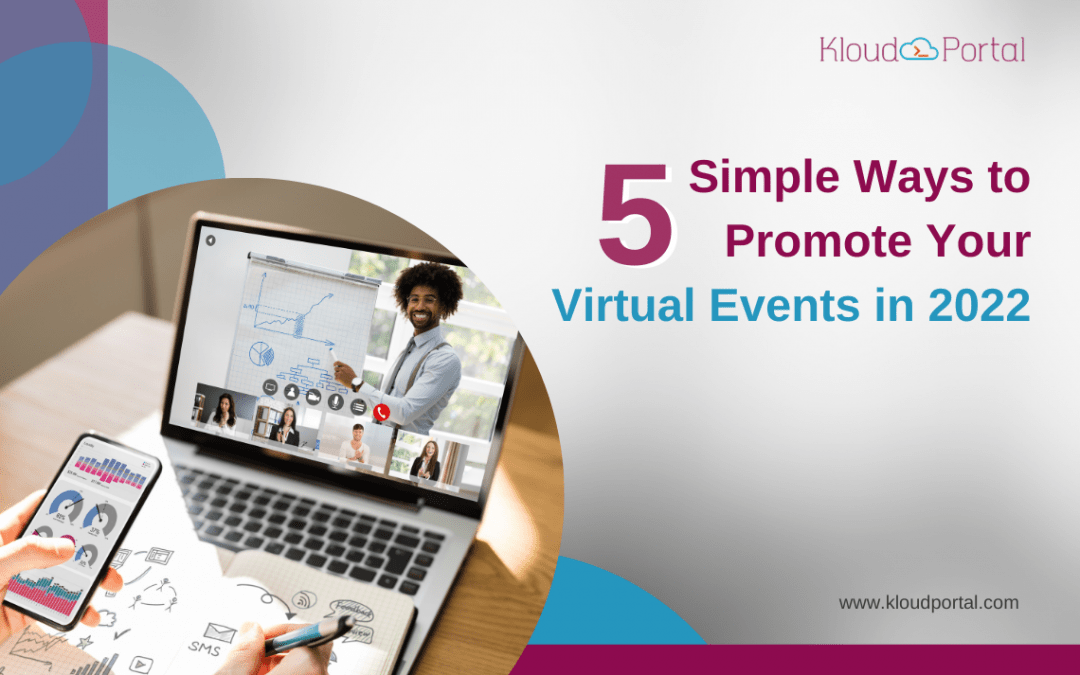
Here are 5 simple ways of promoting your virtual events


There is any number of tools that can be used for keyword planning. Use chat-bots. You can even Google search for appropriate keywords. A degree of imagination and knowledge of the event subject is required. Pepper the marketing content with relevant keywords.

3. Use E-mail Marketing To Your Benefit

Email is an effective marketing tool. And emails continue to be relevant to marketing strategies. Send emails to everybody on the company’s email list. Emails packed with information about virtual events. Send impressive emails, creative ones. Everything connected with the event. Right down to changes related to the event. Don’t forget emails and encourage feedback post the event.

Apart from engaging email content and effective imagery, email marketing strategy for virtual events should use email automation tools such as MailChimp to avoid the likelihood of emails ending up in spam.

4. Build Up Anticipation

To ensure the virtual event does not end up begging for attention and attendance, see to it the build-up given to the virtual event is marked with surprises, including the odd sneak preview. Stay engaged ahead of the virtual event, build anticipation, and regularly share information about the event. Think of it as a movie release. Get the teaser trailer ready. Build hype and get people talking about the virtual event. Use social media to the fullest to attract attendance. The excitement should be infectious. People should be clamoring for the event to happen. Share footage of the preparations being made for the event. Include short bios of guest speakers. The sneak-peek previews should pique interest in what it will be like on the big day. Use the training engine.

5. Let Social Media Work For You

It’s the age of social media. Promoting events, both physical and virtual, using the reach of social media is the norm these days. Social media ensures information about the planned virtual event is passed on to the relevant audience. Social media is perhaps the most effective and cost-effective marketing tool these days. Sharing information about your virtual event on your company’s social media pages should be the first thing in your virtual event marketing strategy. Also, take advantage of data modeling.

Final Thoughts

Email is the easiest way to publicize a virtual event. Also, the cheapest! Another is website copy. The email, as well as the website copy, should make potential participants feel valued. Also, get onboard experts and influencers to host the event to interest attendees! Optimize the landing pages and use Q&A sessions to engage with the audience. Remember hosting a virtual event does not mean it wouldn’t take time.

A lot of time and resources would have to be invested, and data modeling and pattern building take time. Virtual events are easier to ‘’hold” than physical ones. Also, they enable businesses to access bigger and larger audiences. Thereby helping increase revenues and track important facts about targeted customers. An online event to attract leads and accomplish conversions requires an ideal virtual event marketing strategy.

Arun

About The Author…

Arun has been a print media journalist with wide-ranging experience. In search of solutions to everyday problems, he is drawn to technology and digital marketing. News and analytical insights fascinate him, and he passionately follows all that is new in the tech business. He writes for several news and content platforms. His areas of interest range from digital marketing to blockchain and digital currencies. He is dedicated, focused, and resourceful.
Switch to Google Analytics 4 NOW! UA to be deprecated soon.

Switch to Google Analytics 4 NOW! UA to be deprecated soon.

Google’s latest update says UA and Analytics 360 properties would stop processing data. This indicates that going forward, Google Analytics 4 is going to play a primary role in tracking events and conversions across multiple platforms. The latest update states Universal Analytics property will stop processing data from July 1, 2023, and Analytics 360 properties will stop processing data from October 1, 2023. Let us understand the difference between Universal Analytics and Google Analytics 4.

Universal Analytics was launched in October 2012 by Google. Ease of tracking, defining different event types and tracking them across different platforms, collecting data from any device, and custom dimension and metrics were introduced. However, with the advancements in technology, Universal analytics kept improving.

To improve data tracking and present more meaningful Data, Google Launched GA4 on October 14, 2020. Initially called Web+App property, GA4 brings more enhanced tracking and provides relevant data on why visitors are on your website or app. GA4 is more focused on Privacy, durability, and machine learning-based insights about a visitor’s journey across platforms and devices. It also integrates seamlessly with Google’s ad platform to optimize the performance of campaigns and improve the RoI for such campaigns.

Fundamental Differences between Universal Analytics and Google Analytics 4 Properties:

Universal Analytics defined seven different hit types, which were tracked by the property. These included event hits, page hits, social media interaction hits, transaction hits on eCommerce websites, User timing, exceptions, and app views.

Google analytics 4 gives you compact but elaborate insights


Whereas in Google Analytics 4 property, there are no hit types. Every hit type is just defined as an event. And this defines the fundamental difference in data models presented by UA and GA4 properties.

Events – UA vs. GA4:

Category, Action, and Label were primarily defined and reported in a Universal Analytics Event and had their own hit types. But in GA4, there is no Category, Action, or Label defined. Rather, every hit is considered an event.

Thus, unlike UA reports, GA4 reports do not display the events under Category, Action, and Label. This means that when a visitor visits your web page pageview event is triggered in GA4.

Sessions – UA vs. GA4:

A session is defined as a group of interactions that happen on your website in a certain amount of time.

In Universal Analytics, a session could consist of multiple hits like page views, transactions, events, or social interactions. UA defines a session as “ended” after 30 minutes of inactivity by the visitor or if any other qualifying event was triggered. User activity is triggered manually in UA. That means when a user lands on a website, UA doesn’t consider the user activity unless an event is triggered.

Google Analytics 4 defines a session differently. Unlike in UA, GA4 defines a session from the session start event (which is automatically calculated when a visitor lands on the website). The duration of the session is calculated as the time span between the first event and the last event in the session. User activity in GA4 is calculated automatically. Once a user lands on the website, user activity is recorded. Thus, the number of active user counts may be found to be higher on GA4.

Hence, Google Analytics 4 covers wider and deeper insights to understand a visitor’s behavior on the website. Its intelligent and machine learning capabilities give website owners a significant understanding of the visitor’s behavior. Making it more customer-centric, GA4 focuses on giving a big picture of a customer lifecycle on a website. Clearly defining the customer journey from acquisition to conversion and further retention, GA4 is going to add tremendous value to businesses and influence their decision-making process.

To understand more about GA4 and UA, you can visit Google’s official blog here.

We use cookies to ensure that we give you the best experience on our website. If you continue to use this site we will assume that you are happy with it.

Cookies settings
Accept
Privacy & Cookie policy
Privacy & Cookies policy
Cookie name Active

Privacy Policy

What information do we collect?

We collect information from you when you register on our site or place an order. When ordering or registering on our site, as appropriate, you may be asked to enter your: name, e-mail address or mailing address.

What do we use your information for?

Any of the information we collect from you may be used in one of the following ways: To personalize your experience (your information helps us to better respond to your individual needs) To improve our website (we continually strive to improve our website offerings based on the information and feedback we receive from you) To improve customer service (your information helps us to more effectively respond to your customer service requests and support needs) To process transactions Your information, whether public or private, will not be sold, exchanged, transferred, or given to any other company for any reason whatsoever, without your consent, other than for the express purpose of delivering the purchased product or service requested. To administer a contest, promotion, survey or other site feature To send periodic emails The email address you provide for order processing, will only be used to send you information and updates pertaining to your order.

How do we protect your information?

We implement a variety of security measures to maintain the safety of your personal information when you place an order or enter, submit, or access your personal information. We offer the use of a secure server. All supplied sensitive/credit information is transmitted via Secure Socket Layer (SSL) technology and then encrypted into our Payment gateway providers database only to be accessible by those authorized with special access rights to such systems, and are required to?keep the information confidential. After a transaction, your private information (credit cards, social security numbers, financials, etc.) will not be kept on file for more than 60 days.

Do we use cookies?

Yes (Cookies are small files that a site or its service provider transfers to your computers hard drive through your Web browser (if you allow) that enables the sites or service providers systems to recognize your browser and capture and remember certain information We use cookies to help us remember and process the items in your shopping cart, understand and save your preferences for future visits, keep track of advertisements and compile aggregate data about site traffic and site interaction so that we can offer better site experiences and tools in the future. We may contract with third-party service providers to assist us in better understanding our site visitors. These service providers are not permitted to use the information collected on our behalf except to help us conduct and improve our business. If you prefer, you can choose to have your computer warn you each time a cookie is being sent, or you can choose to turn off all cookies via your browser settings. Like most websites, if you turn your cookies off, some of our services may not function properly. However, you can still place orders by contacting customer service. Google Analytics We use Google Analytics on our sites for anonymous reporting of site usage and for advertising on the site. If you would like to opt-out of Google Analytics monitoring your behaviour on our sites please use this link (https://tools.google.com/dlpage/gaoptout/)

Do we disclose any information to outside parties?

We do not sell, trade, or otherwise transfer to outside parties your personally identifiable information. This does not include trusted third parties who assist us in operating our website, conducting our business, or servicing you, so long as those parties agree to keep this information confidential. We may also release your information when we believe release is appropriate to comply with the law, enforce our site policies, or protect ours or others rights, property, or safety. However, non-personally identifiable visitor information may be provided to other parties for marketing, advertising, or other uses.

Registration

The minimum information we need to register you is your name, email address and a password. We will ask you more questions for different services, including sales promotions. Unless we say otherwise, you have to answer all the registration questions. We may also ask some other, voluntary questions during registration for certain services (for example, professional networks) so we can gain a clearer understanding of who you are. This also allows us to personalise services for you. To assist us in our marketing, in addition to the data that you provide to us if you register, we may also obtain data from trusted third parties to help us understand what you might be interested in. This ‘profiling’ information is produced from a variety of sources, including publicly available data (such as the electoral roll) or from sources such as surveys and polls where you have given your permission for your data to be shared. You can choose not to have such data shared with the Guardian from these sources by logging into your account and changing the settings in the privacy section. After you have registered, and with your permission, we may send you emails we think may interest you. Newsletters may be personalised based on what you have been reading on theguardian.com. At any time you can decide not to receive these emails and will be able to ‘unsubscribe’. Logging in using social networking credentials If you log-in to our sites using a Facebook log-in, you are granting permission to Facebook to share your user details with us. This will include your name, email address, date of birth and location which will then be used to form a Guardian identity. You can also use your picture from Facebook as part of your profile. This will also allow us and Facebook to share your, networks, user ID and any other information you choose to share according to your Facebook account settings. If you remove the Guardian app from your Facebook settings, we will no longer have access to this information. If you log-in to our sites using a Google log-in, you grant permission to Google to share your user details with us. This will include your name, email address, date of birth, sex and location which we will then use to form a Guardian identity. You may use your picture from Google as part of your profile. This also allows us to share your networks, user ID and any other information you choose to share according to your Google account settings. If you remove the Guardian from your Google settings, we will no longer have access to this information. If you log-in to our sites using a twitter log-in, we receive your avatar (the small picture that appears next to your tweets) and twitter username.

Children’s Online Privacy Protection Act Compliance

We are in compliance with the requirements of COPPA (Childrens Online Privacy Protection Act), we do not collect any information from anyone under 13 years of age. Our website, products and services are all directed to people who are at least 13 years old or older.

Updating your personal information

We offer a ‘My details’ page (also known as Dashboard), where you can update your personal information at any time, and change your marketing preferences. You can get to this page from most pages on the site – simply click on the ‘My details’ link at the top of the screen when you are signed in.

Online Privacy Policy Only

This online privacy policy applies only to information collected through our website and not to information collected offline.

Your Consent

By using our site, you consent to our privacy policy.

Changes to our Privacy Policy

If we decide to change our privacy policy, we will post those changes on this page.
Save settings
Cookies settings