KloudPortal Pursues Strategic Partnership with Oracle to Revolutionize ERP Solutions

KloudPortal Pursues Strategic Partnership with Oracle to Revolutionize ERP Solutions

KloudPortal is actively pursuing a strategic partnership with Oracle to transform enterprise resource planning (ERP) for businesses. This collaboration, once formalized, aims to leverage Oracle’s cutting-edge technologies, including Oracle Fusion Cloud ERP and NetSuite, to deliver a robust suite of cloud-based ERP solutions. The initiative underscores KloudPortal’s commitment to enhancing business efficiency, streamlining operations, and driving productivity for its clients.

Planned Offerings and Vision

Through this potential partnership, KloudPortal intends to provide:

  • Oracle Fusion Cloud ERP: A comprehensive solution designed to automate and optimize finance, procurement, and supply chain operations.
  • Oracle Fusion Cloud ERP: A comprehensive solution designed to automate and optimize finance, procurement, and supply chain operations.

Additionally, KloudPortal plans to offer value-added services such as:

  • Project Consulting Services: Expertise in strategizing and executing Oracle ERP implementations tailored to unique business needs.
  • Staff Augmentation: Skilled professionals to support ERP deployment and post-implementation phases.

This anticipated collaboration reflects KloudPortal’s dedication to empowering businesses with innovative ERP solutions that align with their growth strategies. While discussions are ongoing, KloudPortal remains focused on delivering cutting-edge technology solutions that enhance operational efficiency and scalability.

How AI and Google Bots See the Web: Peeking Behind the Digital Curtain 

How AI and Google Bots See the Web: Peeking Behind the Digital Curtain 

By Raviteja Shyamala

Ever Wondered How Google Knows Everything?

Have you ever typed something into Google, and within milliseconds, it spits out exactly what you need? Like, “Best pizza near me” or “Why do cats knock things off tables?” It’s almost like Google is psychic. But nope, it’s just Google bots—tiny, tireless digital minions scurrying around the internet, indexing everything they can find. Here’s how they do it:

  1. Crawling—Google Bots roam the web like overly enthusiastic detectives, hopping from link to link and scanning text, images, and metadata. It’s basically digital parkour.
  2. Indexing – Once they’ve gathered all this juicy information, they organize it in Google’s massive database, making it easy to retrieve.
  3. Serving Results – When you search for something, Google’s algorithm sifts through billions of indexed pages to find the most relevant ones in a fraction of a second. It’s like a super-speed librarian who never takes a coffee break.

Do AI Models Have Their Web Crawlers?

Now, you might be thinking, “If Google has bots, does AI have them too?” Great question! The short answer: not really. Unlike Google, AI models (like ChatGPT, Gemini, and Claude) don’t have little robots zooming around the internet collecting fresh info. Instead, AI learns from pre-collected data. So, where does all this knowledge come from?

“Google organizes the world’s information, while AI interprets it—together, they shape the future of knowledge.” Sundar Pichai

How AI Models Train Without Roaming the Web

AI doesn’t have the luxury of sneaking around the internet like a ninja. Instead, it gets its knowledge from a mix of different sources, kind of like a student cramming for finals with every book, article, and note available. Here’s where AI gets its smarts:

  1. Publicly Available Content – Books, Wikipedia, open-access research—basically, the free buffet of knowledge.
  2. Licensed Data—Some AI models get access to premium, behind-the-scenes information from publishers and companies (think VIP backstage passes).
  3. Web Archives & Common Crawl – Have you ever heard of the Wayback Machine? AI sometimes learns from snapshots of the internet, though it’s more like reading an old diary than getting the latest gossip.
  4. Human Training & Feedback – AI doesn’t just rely on static information—it also learns from humans who guide it, correct its mistakes, and fine-tune its responses. Kind of like a mentor teaching an eager intern.
  5. APIs & Proprietary Databases – Some businesses connect their own data feeds to AI, ensuring it has access to current, accurate information straight from the source.

Can AI Bots Visit Websites Like Google Bots?

Not yet! AI models don’t wake up every morning and decide to browse your website like a nosy neighbor. If businesses want AI to “see” their data, they need to integrate it through APIs or structured feeds. That’s why AI responses might not always be up-to-the-minute fresh—think of it like getting news from a well-informed friend rather than a live news broadcast.

The Future of AI and Web Crawling

So, will AI ever have its crawling bots? Maybe! As AI continues evolving, we might see models that integrate real-time web data more efficiently. But for now, AI and Google operate in different ways—Google finds and ranks content on the fly, while AI pulls from structured, pre-collected knowledge.

If you’re a business owner wondering how to ensure AI “sees” your content, the answer is simple: make it accessible through reputable sources, structured data feeds, and API connections. The digital world is constantly shifting, and the best way to stay visible—whether to Google Bots or AI—is to keep adapting.

Now, if only we could teach Google Bots to stop indexing embarrassing old blog posts from 2008…

Frequently Asked Questions

1. How does Googlebot work?

Googlebot are web crawlers that scan and index web pages by following links and analyzing content to rank them in search results.

2. What does Googlebot see?

Googlebot sees a page’s HTML content, including text, images, and links, similar to how a browser renders it, but it does not execute JavaScript unless allowed.

3. How does Google crawl the web?

Google crawls the web by following links from known pages, using sitemaps, and discovering new content based on updates. It prioritizes pages based on relevance and freshness.

4. How does Google detect bot traffic?

Google detects bot traffic using IP addresses, user agents, behavioral patterns, and machine learning to differentiate between legitimate crawlers and malicious or automated traffic.
Accelerating AI Innovation: The Rapid Development of DeepSeek-R2 

Accelerating AI Innovation: The Rapid Development of DeepSeek-R2 

By Rasmita Patro

DeepSeek-R2, a one-of-a-kind AI model, is leading the way in the constantly developing field of artificial intelligence. Its unique features, such as unparalleled computational efficiency and scalable computing, distinguish it from other models. This uniqueness is a testament to our unwavering commitment to AI innovation. It’s set to redefine the boundaries of enterprise solutions, ushering in a new era of business automation and intelligent systems.

DeepSeek-R2 is not merely an incremental upgrade; it represents a monumental leap forward, a culmination of breakthrough research and scientific innovation. It’s a powerhouse designed to fuel digital transformation, empower businesses with data-driven insights, and drive unprecedented levels of operational efficiency.

DeepSeek-R2 as a Catalyst for Intelligent Enterprise

In today’s dynamic business environment, agility and adaptability are paramount. DeepSeek-R2 provides the tools necessary to navigate this complexity, acting as a catalyst for intelligent enterprise by:

  • Revolutionizing Business Automation: By leveraging smart automation, DeepSeek-R2 streamlines intricate workflows, freeing up valuable human capital for strategic endeavors. This process optimization directly translates into tangible gains in operational efficiency.
  • Empowering Decision Intelligence: In an age of information overload, the ability to extract meaningful insights is crucial. DeepSeek-R2 excels at data processing and analysis, delivering intelligent insights that empower decision intelligence. It enables businesses to make informed, data-backed decisions, mitigating risks and seizing opportunities.
  • Harnessing Predictive Analytics: DeepSeek-R2’s advanced capabilities enable businesses to leverage the power of predictive analytics. By analyzing past data and identifying patterns, it can forecast future trends and outcomes, allowing for proactive planning and resource allocation.
  • Optimizing System Performance: DeepSeek-R2’s ability to analyze and optimize complex systems leads to significant improvements in system optimization. Whether it’s optimizing supply chain logistics or enhancing customer service operations, DeepSeek-R2 delivers measurable results.

Businesses need the right technology partners to stay ahead, leverage AI-driven digital strategies, and achieve exceptional growth!

The Technological Foundation of DeepSeek-R2

The remarkable capabilities of DeepSeek-R2 are rooted in a confluence of advanced technologies and innovative techniques:

  • Computational Power and Efficiency: DeepSeek has prioritized computational efficiency in the design of DeepSeek-R2, enabling it to deliver exceptional performance while minimizing resource consumption. It is crucial for scalable computing and infrastructure scaling. The sheer computational power available to this model allows for complex calculations to be completed in record time.
  • Advanced Neural Networks and Algorithm Advancements: Built upon a foundation of sophisticated neural networks and cutting-edge algorithm advancements, DeepSeek-R2 delivers unparalleled accuracy and efficiency. The commitment to model training ensures peak performance.
  • Scalable Computing and High-Performance Computing: DeepSeek-R2 leverages the power of high-performance computing and distributed processing to handle massive workloads and complex computations. It enables the model to scale seamlessly, accommodating the growing demands of enterprise applications.
  • Cloud Computing and Edge Computing: DeepSeek-R2 is designed to operate seamlessly in both cloud computing and edge computing environments. This flexibility allows businesses to deploy the model in a way that perfectly aligns with their unique requirements and demand processing in the cloud or real-time analysis at the edge. Support for hybrid cloud solutions is available, delivering more adaptable and robust alternatives.
  • Data Science and Data Processing: DeepSeek-R2 is a powerful tool for data science, enabling businesses to extract valuable insights from their data. The model’s advanced data processing capabilities allow it to manage large and intricate datasets efficiently.
  • Optimized Workflows and Model Deployment: DeepSeek has focused on creating optimized workflows for model deployment, making it easier for businesses to integrate DeepSeek-R2 into their existing systems. This streamlined process accelerates technology adoption and minimizes disruption.

“As AI gets more efficient and accessible, we will see its use skyrocket, turning it into a commodity we just can’t get enough of.” Satya Nadella

Shaping the Future of AI and Beyond

DeepSeek-R2 is not just a powerful AI model; it’s a glimpse into the future technology that will shape our world. As AI advances, we can anticipate more cutting-edge capabilities and next-generation solutions to tackle the challenges and opportunities of the digital era.

DeepSeek-R2 embodies the emerging trends in AI, including:

  • Cognitive Computing: DeepSeek-R2’s ability to understand and process complex information aligns with cognitive computing principles. It allows the model to mimic human-like cognitive functions, allowing it to carry out tasks that involve reasoning, problem-solving, and decision-making.
  • Smart Automation: DeepSeek-R2’s capabilities drive smart automation across industries, increasing efficiency and productivity. Intelligent automation involves leveraging AI to streamline and automate tasks that traditionally demand human-like intelligence, including activities like data analysis, decision-making, and process optimization. By leveraging smart automation, DeepSeek-R2 can streamline workflows, freeing up valuable human capital for strategic endeavors.
  • Tech Disruption: DeepSeek-R2 is a catalyst for tech disruption, transforming traditional business models and creating new opportunities for innovation.
  • Cutting-edge research: DeepSeek-R2 is the product of cutting-edge research and will continue to be improved.

Performance Benchmarking

DeepSeek strongly emphasizes performance benchmarking, rigorously evaluating its models against industry standards. This commitment to excellence ensures that DeepSeek-R2 performs steadily and dependably across various types of applications.

DeepSeek-R2 empowers organizations to embrace a data-driven culture. By providing access to data-driven insights, the model empowers organizations to make informed choices using data insights facts rather than intuition. It leads to improved outcomes, reduced risks, and increased competitiveness.

Partner with the trusted technology experts to empower your business with AI-driven digital strategies, ensuring sustained growth and market leadership!

The Impact Across Industries

The transformative potential of DeepSeek-R2 will be felt across numerous industries:

  • Finance: Predictive analytics for fraud detection, risk assessment, and algorithmic trading.
  • Healthcare: Diagnostics driven by AI, tailored healthcare, and the development of new medications.
  • Manufacturing: Intelligent manufacturing, proactive maintenance, and product quality assurance.
  • Retail: Personalized recommendations, supply chain optimization, and customer service automation.
  • Logistics: Optimizing routes, forecasting demand, and managing inventory.

Bottomline

As AI progresses, we can look forward to even greater advancements and sophisticated next-gen solutions that surpass the challenges and make the most of the opportunities presented by the digital era. DeepSeek-R2’s role in driving scientific innovation and breakthrough research will play a key role in this transformation, generating enthusiasm and anticipation for the future.

Frequently Asked Questions

1. What makes DeepSeek-R2 different from other AI models?

DeepSeek-R2 stands out due to its superior computational efficiency, scalable computing, and high-performance computing capabilities. It employs deep learning models and neural networks to deliver intelligent insights for businesses.

2. How does DeepSeek-R2 enhance enterprise automation?

By integrating business automation and decision intelligence, DeepSeek-R2 streamlines workflows, improves process optimization, and enhances operational efficiency through smart automation.

3.Can DeepSeek-R2 be deployed in cloud environments?

Yes, DeepSeek-R2 supports cloud computing, hybrid cloud, and edge computing, enabling on-demand processing and infrastructure scaling for enterprises.

4. What industries benefit most from DeepSeek-R2?

DeepSeek-R2 is applicable across multiple industries, including finance, healthcare, manufacturing, and technology, where data processing, predictive analytics, and intelligent systems are crucial for growth.

Empowering Women in Technology: Strategies for Inclusive Workplaces 

Empowering Women in Technology: Strategies for Inclusive Workplaces 

By Rasmita Patro

The tech industry, a powerhouse driving global digital transformation, has long grappled with a significant challenge: the underrepresentation of women. While strides have been made, achieving true gender diversity and gender equity remains a crucial objective. Women in tech are not just a demographic; they are a vital resource with the potential to bring about significant change. Their unique perspectives, innovative solutions, and essential skills have the power to revolutionize the industry. Creating inclusive workplaces where women thrive goes beyond fairness. It’s a crucial strategy for the future of women in technology.

The Current Landscape: Challenges and Opportunities

Although women are aware of the significance of female representation, they continue to face numerous barriers in tech careers. From subtle biases to overt discrimination, the challenges are multifaceted. Bias reduction is paramount, starting with recognizing and addressing unconscious biases that influence hiring, promotion, and performance evaluations. Fair pay and equal opportunities go beyond just buzzwords; they are fundamental rights that must be upheld to ensure workplace equality.

Breaking barriers requires a concerted effort to dismantle systemic obstacles that hinder women’s career growth and advancement. It involves tackling the gender pay gap, ensuring access to skill development and women’s training, and fostering a supportive environment that encourages women’s networking.

Strategies for Building Inclusive Workplaces

Creating a truly inclusive workplace requires a multi-pronged approach that addresses both systemic and cultural factors. Here are some key strategies:

1. Diversity Hiring and Retention

  • Diversity strategies must be embedded in the hiring process from the outset. It involves actively seeking out and recruiting female engineers, coders, and developers from diverse backgrounds.
  • Implementing blind resume screening and structured interviews can help mitigate unconscious bias.
  • Partnering with organizations that support STEM women and women innovators can expand the talent pool.
  • Creating internship and apprenticeship programs specifically targeted at women can provide valuable entry points into tech careers.
  • Retention strategies are equally important. Creating an inclusive culture where women feel valued, respected, and supported is crucial for retaining top talent.

2. Fostering Women’s Leadership

  • Promoting women’s leadership is essential for creating a more equitable and inclusive tech industry.
  • Providing tech mentorship and sponsorship opportunities can empower women to build the skills and confidence required to take on leadership roles.
  • Establishing clear pathways for career advancement and succession planning can ensure that women are represented at all levels of the organization, including women executives.
  • Encouraging and supporting women founders and women entrepreneurs is also vital for driving innovation and creating new opportunities.

3. Cultivating an Inclusive Culture

  • Building an inclusive culture requires commitment from leadership at all levels.
  • Implementing comprehensive workplace policies that address issues such as harassment, discrimination, and work-life balance is essential.
  • Creating employee resource groups (ERGs) for women can create a supportive environment for networking, guidance, and advocacy.
  • Promoting open communication and feedback channels can assist in recognizing and resolving bias and discrimination concerns.
  • Celebrating the achievements of women innovators is not just a feel-good exercise; it serves as a strong platform for spreading awareness and motivating others. Women’s support systems are crucial for creating a positive environment.
Strategies for Building Inclusive Workplaces

4. Mentorship and Skill Development

  • Tech mentorship programs play a pivotal role in supporting women’s career development.
  • Pairing women with experienced mentors can provide guidance, support, and access to valuable networks.
  • Women’s training programs focused on technical skills, leadership development, and career planning can help women develop the competencies they need to succeed.
  • Investing in skill development ensures that women have the tools and knowledge to thrive in the rapidly evolving tech landscape.

5. Addressing Pay Equity

  • Achieving equal pay for equal work is a fundamental principle of workplace equality.
  • Conducting regular pay audits and implementing transparent pay policies can help identify and address pay gaps.
  • Promoting salary negotiation training for women can help them advocate for fair compensation.

6. The Role of External Partnerships

  • Collaborating with external organizations that are committed to tech inclusion can amplify efforts to promote workplace diversity.
  • Partnering with educational institutions and community organizations can help create pipelines for female representation in STEM fields.
  • Collaborating with industry organizations and advocacy groups can help drive policy changes and raise awareness of the importance of women’s empowerment.

The Future of Women in Tech: A Vision for Tomorrow

The future of women in technology is marked by transformative opportunities and a growing emphasis on diversity and inclusion. As industries embrace digital transformation, women are increasingly breaking barriers in fields like artificial intelligence, cybersecurity, and data science, while emerging areas such as robotic process automation (RPA) and extended reality (XR) offer new avenues without historical gender biases.

Despite only 28% of global tech jobs being held by women, initiatives promoting STEM education, mentorship, and workplace inclusion are inspiring the next generation. Companies are recognizing the economic benefits of diversity, with studies showing that organizations with more women in leadership roles achieve higher profitability. By fostering inclusive environments, addressing systemic biases, and celebrating female role models, the tech industry can unlock innovation and pave the way for a more equitable future.

Conclusion

Empowering women in tech is essential for a progressive and innovative industry. Businesses can create a more diverse and dynamic tech industry by fostering inclusive workplaces, ensuring workplace equality, and supporting career advancement. From diversity hiring to leadership roles, the collective effort of companies, policymakers, and individuals can shape a future where women executives, developers, and STEM women lead the way. The journey towards gender equity is ongoing, but with structured diversity strategies and unwavering commitment, we can break barriers and build a truly inclusive tech workforce.

Frequently Asked Questions

1. Why is gender diversity crucial in the tech industry?

Gender diversity in the tech industry is not just a matter of equality but a strategic advantage. Diverse teams bring varied perspectives that foster creativity, improve decision-making, and enhance innovation. It can lead to better problem-solving and improved business performance.

2. What are the best strategies to enhance women’s leadership in tech?

Encouraging women’s mentorship, providing career growth opportunities, and implementing leadership roles for women are key to fostering women executives in tech careers.

3. How can companies ensure equal pay and pay equity?

Companies can conduct regular pay audits, implement transparent pay equity policies, and offer salary negotiation training for women developers and female engineers.

4. What role does digital transformation play in empowering women in tech?

Digital transformation enables flexible work options, access to online learning, and remote job opportunities, making it easier for women in tech to balance career and personal responsibilities.

Preparing Your Business For A Microsoft Compliance Audit

Preparing Your Business For A Microsoft Compliance Audit

By Rasmita Patro

A Microsoft compliance audit can be a daunting prospect for any organization, especially those with a significant investment in Microsoft software. However, with proper preparation and understanding of the audit process, organizations can navigate this entire process smoothly and minimize potential risks. Software vendors play a crucial role in providing reliable services and infrastructure, while disaster recovery plans ensure the protection of product keys, hardware, and customer data.

Microsoft Compliance Audits

A Microsoft compliance audit is a formal examination of an organization’s use of Microsoft software to ensure adherence to the terms of its licensing agreements. Microsoft or its authorized representatives conduct these audits, including verifying Microsoft audit to correct a number of Microsoft licenses for the software they have deployed.

A Microsoft audit ensures that organizations adhere to the guidelines set for software usage, helping identify any non-compliant hardware or services. Staying compliant not only avoids penalties but also builds trust with customers by ensuring reliable and authorized solutions. Microsoft compliance audits are essential for several reasons:

  • Legal and Financial Implications: Non-compliance can lead to substantial fines, lawsuits, and damage to a mid-sized company’s reputation. These consequences underscore the importance of Microsoft compliance audits.
  • Risk Mitigation: By proactively addressing potential compliance issues, organizations can reduce the risk of future compliance issues and ensure business continuity.
  • Optimized Software Investments: Understanding your software usage can help you optimize your software investments and avoid unnecessary expenses.
  • Enhanced Security Posture: Compliance audits often involve assessing your organization’s security practices, which can help identify and address potential vulnerabilities.

How to Prepare for The Audits

Thoroughly reviewing all your Microsoft license audit agreements, including Enterprise Agreements (EAs), Software Assurance (SA), and other licensing programs, is a crucial step in preparing for a Microsoft compliance audit. While the foundational steps outlined above are crucial, there are other aspects to ensure a smooth and successful audit process:

Understand Your Microsoft Licensing Agreements

  • Review Contracts: Thoroughly review all your Microsoft license audit agreements, including EAs, SAs, and other licensing programs.
  • Identify License Types: Understand the different types of licenses you have, such as product licenses, user licenses, and device licenses.
  • Track License Usage: Implement a robust software asset management (SAM) system to track the deployment and usage of Microsoft software across your companies.

Conduct a Self-Audit

  • Inventory Software: Create a comprehensive inventory of all Microsoft software installed on your systems, including on-premises and cloud-based deployments.
  • Verify License Entitlements: Ensure that you have the appropriate Microsoft licenses audit for all deployed software, considering factors like user count, device count, and server configurations.
  • Review Documentation: Gather information on all relevant documentation, such as purchase orders, invoices, and software deployment records.
  • Identify Potential Gaps: Analyze your inventory and license entitlements to identify any potential compliance gaps.

Implement a strong Software Asset Management Program

  • Centralized Inventory: Establish a centralized system to track all software assets, including Microsoft products.
  • Regular Software Discovery: Conduct regular software discovery scans to identify unauthorized installed software.
  • License Optimization: Analyze your license usage to identify opportunities for optimization and cost savings.
  • Policy Enforcement: Develop and enforce policies to ensure compliance with Microsoft license audit conditions.

Prepare for the Audit

  • Appoint an Audit Team: Assemble a cross-functional team to manage the audit process. Your active involvement is crucial in ensuring a successful audit.
  • Designate a Primary Contact: Identify a primary contact to liaise with Microsoft’s audit team.
  • Gather Documentation: Collect all relevant documentation, including license agreements, purchase orders, invoices, and software inventory final report.
  • Prepare for Data Requests: Be prepared to provide evidence data on software usage, deployment, and Microsoft license audit entitlements.
  • Review Audit Procedures: Familiarize yourself with Microsoft’s audit procedures and guidelines.

Steps in a Microsoft Compliance Audit

  • Audit Initiation: Microsoft initiates the audit process by contacting the company and providing a scope of the audit.
  • Data Collection: The Microsoft audit team collects data on software usage, deployment, and license compliance through various methods, including surveys, software inventory scans, and document reviews.
  • Analysis and Verification: The audit team analyzes the collected data to verify compliance with Microsoft’s license compliance terms.
  • Findings and Recommendations: Microsoft license audit provides a detailed final audit report outlining any compliance gaps and recommendations for remediation.
  • Remediation and Follow-up: The business addresses the identified compliance issues and implements corrective actions. Microsoft expects to conduct follow-up-to-date audits to verify compliance.
Why are Microsoft Compliance Audits Important?

Why are Microsoft Compliance Audits Important?

Microsoft compliance audits are essential for several reasons:

  • Legal and Financial Implications: Violation can lead to major fines, legal action, and damage to your organization’s reputation.
  • Risk Mitigation: By proactively addressing potential complaint issues, organizations can reduce the risk of future problems and ensure business continuity.
  • Optimized Software Investments: Understanding your software usage can help you optimize your software investments and avoid unnecessary costs.
  • Enhanced Security Posture: Compliance audits often involve assessing your company’s security practices, which can help identify and address potential vulnerabilities.

Preparing for the Future of Work

To navigate the challenges and capitalize on the possibilities presented by AI, individuals and organizations need to take time-consuming proactive steps:

  • Lifelong Learning: Continuously upgraded skills and knowledge to stay relevant in the AI era.
  • Upskilling and Reskilling: Invest in teaching and development to acquire advanced skills and adapt to evolving job roles.
  • Ethical AI Development: Promote ethical AI development and usage to mitigate biases and ensure responsible AI.
  • Collaboration between Humans and AI: Foster collaboration between individuals and AI systems to leverage the strengths of both.
  • Social Safety Nets: Implement strong social safety nets to support workers who AI may displace.

At KloudPortal, we specialize in providing end-to-end Microsoft Compliance Audit services, helping you navigate the complexities, ensure adherence to Microsoft’s standards, and minimize risks.

Key Takeaways

  • Thoroughly review agreements, track software usage, and implement a Software Asset Management (SAM) system to track compliance effectively.
  • Regularly assess software deployment, verify licenses, and address compliance gaps proactively to minimize risks and ensure business continuity.
  • Assemble a cross-functional audit team, organize documentation, appoint a liaison with Microsoft to streamline the audit process.

Conclusion

Preparing for a Microsoft compliance audit requires a comprehensive approach that involves understanding your licensing agreements, conducting regular self-audits, implementing a strong SAM program, and working closely with the Microsoft team. By taking these steps, organizations can ensure compliance, minimize risks, and protect their investment in Microsoft software. Remember, the importance of Microsoft compliance audits cannot be overstated.

Frequently Asked Questions

What triggers a Microsoft compliance audit?

Microsoft audits can be triggered by factors such as irregularities in licensing data, reports from the Microsoft Business Software Alliance, or routine checks as part of their compliance program.

How long does the audit process take?

The timeline varies depending on the complications faced by midsized companies. On average, it can take several weeks to a few months to complete.

What happens if my organization needs to be more compliant?

Non-compliance can result in financial penalties, mandatory purchases of missing licenses, or legal action. Proactively addressing discrepancies can mitigate these risks.

The Role Of Data  Analytics In  E-Commerce Customer Support

The Role Of Data Analytics In E-Commerce Customer Support

By Aparna Sushumna

Data analytics has strategically revolutionized the e-commerce industry, providing actionable insights that help businesses optimize customer support, marketing strategies, and overall business performance. In the face of fierce competition, leveraging the influence of data to understand customer behavior and improve services is not just crucial but forward-thinking. Data analysis improves the customer experience while also increasing client satisfaction and retention rates. It plays a significant role in e-commerce customer support and impacts marketing tactics, inventory management, and business metrics. It also addresses the key questions around its importance and the role of data scientists in this evolving field.

Data Analytics In E-Commerce Customer Support

Data analytics is essential for improving customer service in e-commerce. By examining data, companies can uncover important insights into customer behavior, preferences, and buying patterns. Understanding these patterns enables companies to provide personalized support, improve response times, and resolve customer issues more efficiently.

Personalized Customer Support

Data-driven insights allow businesses to tailor their customer support strategies empathetically according to individual preferences. Analyzing historical data, such as previous purchases or browsing patterns, helps customer support agents provide targeted solutions, improving the overall customer experience and strengthening the connection with your customers.

  • Faster Response Times: Predictive analytics and real-time data monitoring help businesses anticipate customer needs and potential issues before they arise. This reduces response times and increases client satisfaction.
  • Identifying Pain Points: Data analytics tools like Google Analytics, customer surveys, and feedback systems allow companies to identify common customer pain points. E-commerce businesses can then address these concerns by refining their customer service strategies, optimizing processes, and enhancing communication channels.

Our company provides the best enterprise SEO services in India, which are designed to boost rankings and drive organic traffic for enterprises across various industries.

Data Analytics In E-Commerce Customer Support

E-commerce businesses thrive on data-informed insights that guide their marketing efforts. Data analytics helps companies craft marketing campaigns that resonate with their target audience. By understanding customer behavior and analyzing past data, businesses can optimize their marketing plans and improve customer acquisition and retention.

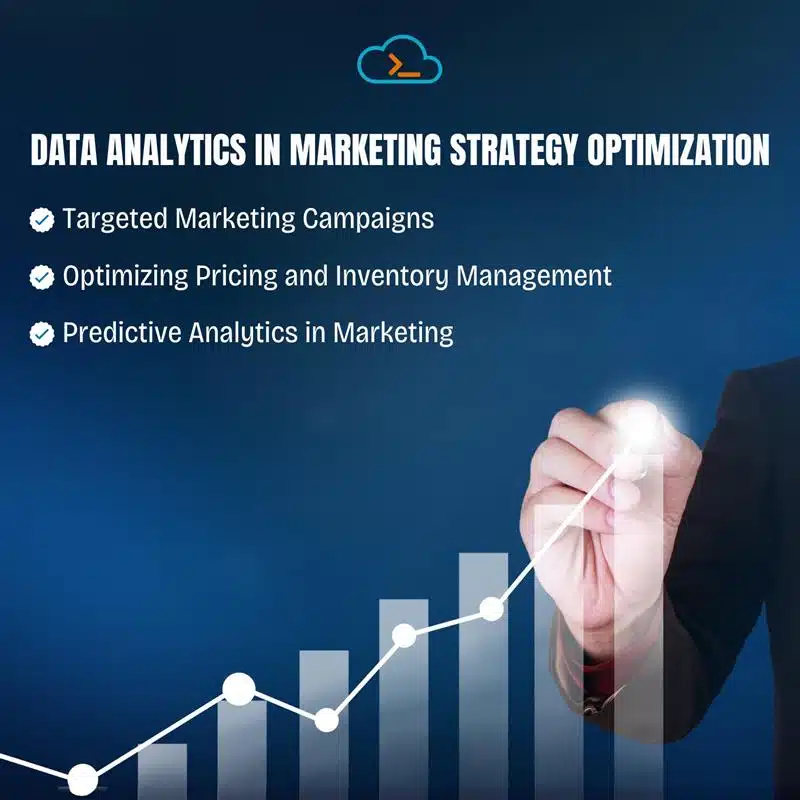
  • Targeted Marketing Campaigns: By examining data points like purchase history and user behavior, businesses can create personalized promotional campaigns that drive higher engagement. For instance, businesses can send personalized emails offering discounts based on previous purchases, which increases the chances of repeat orders.
  • Optimizing Pricing and Inventory Management: E-commerce businesses can use data analysis to optimize pricing strategies and manage inventory levels effectively. By analyzing market trends, historical sales data, and customer demand, companies can adjust pricing in real time, prevent stockouts, and ensure inventory is always aligned with customer needs.
  • Predictive Analytics in Marketing: Predictive analysis allows businesses to forecast future trends, customer lifetime value, and behavior patterns. It helps in optimizing marketing tactics and allocating resources to key areas that will generate the best returns on investment.
Data Analytics In Marketing Strategy Optimization

Enhancing Consumer Satisfaction

Consumer satisfaction is the backbone of any e-commerce business, and data insights provide the analytics tool to measure, track, and enhance it. E-commerce stores can gather and analyze customer feedback through various analytics tools and surveys, giving businesses the operational insights needed to improve their services.

  • Tracking Key Metrics: Metrics such as consumer satisfaction scores, average response time, and the rate of repeat purchases are all essential indicators of how well a business is performing in terms of customer service. Data assessment allows businesses to track these performance indicators in real time and make adjustments when necessary.
  • Improving Customer Retention: Data mining allows businesses to recognize patterns in customer behavior that may contribute to churn or dissatisfaction. It allows them to take proactive measures, such as offering personalized promotions or addressing customer issues promptly, to retain existing customers.
  • Actionable Insights: The insights derived from data analysis help e-commerce businesses fine-tune their customer service strategies. By understanding common trends in customer complaints or areas where support is lacking, companies can focus on improving these areas, leading to better overall client satisfaction.

Kloudportal helps e-commerce businesses make smarter decisions by turning data into actionable insights. Whether it’s building custom dashboards or integrating support tools that improve response time and customer satisfaction, we provide solutions that make a real difference.

Future Trends in E-commerce Data Analytics

E-commerce Data Analytics is vital for online businesses to identify trends and gain insights from raw data. By analyzing online transactions across marketing channels, businesses can optimize inventory levels and align their strategies with business objectives, enhancing overall performance in the competitive online store. As technology continues to evolve, data analytics stands in e-commerce customer support will become even more critical. Some emerging trends include:

  • Algorithms in Artificial Intelligence (AI) and Machine Learning: It can streamline processes, tailor customer experiences, and deliver predictive insights.
  • Real-time Analytics: Real-time data analysis enables businesses to respond quickly to customer needs and trends.
  • Natural Language Processing (NLP): NLP can be used to analyze customer feedback and support interactions, providing valuable insights into customer sentiment and pain points.

Key Takeaways

  • Enhanced Customer Experience: Data analytics improves customer service by revealing insights into behavior and preferences, enabling personalized support and quicker issue resolution, leading to higher satisfaction and retention.
  • Optimized Marketing Strategies: Leveraging data insights allows e-commerce businesses to create targeted marketing campaigns, optimize pricing, and manage inventory effectively for greater impact.
  • Proactive Issue Resolution: Analytics tools identify common pain points, enabling businesses to refine strategies and address issues before they escalate, enhancing overall customer satisfaction.

Conclusion

Data analytics in e-commerce customer support is undeniable. It allows companies to utilize data-driven insights to enhance customer satisfaction, refine business strategies, and elevate overall performance. Whether stimulating pricing, managing inventory, or crafting targeted promotional campaigns, data assessment stands at the core of modern e-commerce business success. By leveraging data, businesses can not only improve customer support but also gain a competitive edge in the digital marketplace.

Frequently Asked Questions

1. What is the use of data analytics in customer service?

Data analytics enables e-commerce companies to improve their customer support by providing meaningful insights into consumer behavior, preferences, and buying trends. It allows companies to offer personalized support, reduce response times, and more effectively address customer pain points.

2. What is the role of a data scientist in e-commerce?

A data scientist plays an important role in e-commerce by analyzing customer data, identifying trends, and providing insights that inform business strategies. They work on optimizing marketing campaigns, improving customer service, and forecasting trends using predictive analytics.

3. How can data analytics improve customer satisfaction?

By tracking performance indicators like customer satisfaction scores and analyzing customer feedback, businesses can identify patterns for improvement and offer personalized solutions. It leads to a more satisfying customer experience, increased retention, and loyalty.

4. How do e-commerce businesses use predictive analysis?

Predictive analysis helps e-commerce businesses forecast trends, optimize pricing strategies, and manage inventory levels. By reviewing historical data and market trends, organizations can make educated decisions that enhance organizational performance and elevate client satisfaction.

We use cookies to ensure that we give you the best experience on our website. If you continue to use this site we will assume that you are happy with it.

Cookies settings
Accept
Privacy & Cookie policy
Privacy & Cookies policy
Cookie name Active

Privacy Policy

What information do we collect?

We collect information from you when you register on our site or place an order. When ordering or registering on our site, as appropriate, you may be asked to enter your: name, e-mail address or mailing address.

What do we use your information for?

Any of the information we collect from you may be used in one of the following ways: To personalize your experience (your information helps us to better respond to your individual needs) To improve our website (we continually strive to improve our website offerings based on the information and feedback we receive from you) To improve customer service (your information helps us to more effectively respond to your customer service requests and support needs) To process transactions Your information, whether public or private, will not be sold, exchanged, transferred, or given to any other company for any reason whatsoever, without your consent, other than for the express purpose of delivering the purchased product or service requested. To administer a contest, promotion, survey or other site feature To send periodic emails The email address you provide for order processing, will only be used to send you information and updates pertaining to your order.

How do we protect your information?

We implement a variety of security measures to maintain the safety of your personal information when you place an order or enter, submit, or access your personal information. We offer the use of a secure server. All supplied sensitive/credit information is transmitted via Secure Socket Layer (SSL) technology and then encrypted into our Payment gateway providers database only to be accessible by those authorized with special access rights to such systems, and are required to?keep the information confidential. After a transaction, your private information (credit cards, social security numbers, financials, etc.) will not be kept on file for more than 60 days.

Do we use cookies?

Yes (Cookies are small files that a site or its service provider transfers to your computers hard drive through your Web browser (if you allow) that enables the sites or service providers systems to recognize your browser and capture and remember certain information We use cookies to help us remember and process the items in your shopping cart, understand and save your preferences for future visits, keep track of advertisements and compile aggregate data about site traffic and site interaction so that we can offer better site experiences and tools in the future. We may contract with third-party service providers to assist us in better understanding our site visitors. These service providers are not permitted to use the information collected on our behalf except to help us conduct and improve our business. If you prefer, you can choose to have your computer warn you each time a cookie is being sent, or you can choose to turn off all cookies via your browser settings. Like most websites, if you turn your cookies off, some of our services may not function properly. However, you can still place orders by contacting customer service. Google Analytics We use Google Analytics on our sites for anonymous reporting of site usage and for advertising on the site. If you would like to opt-out of Google Analytics monitoring your behaviour on our sites please use this link (https://tools.google.com/dlpage/gaoptout/)

Do we disclose any information to outside parties?

We do not sell, trade, or otherwise transfer to outside parties your personally identifiable information. This does not include trusted third parties who assist us in operating our website, conducting our business, or servicing you, so long as those parties agree to keep this information confidential. We may also release your information when we believe release is appropriate to comply with the law, enforce our site policies, or protect ours or others rights, property, or safety. However, non-personally identifiable visitor information may be provided to other parties for marketing, advertising, or other uses.

Registration

The minimum information we need to register you is your name, email address and a password. We will ask you more questions for different services, including sales promotions. Unless we say otherwise, you have to answer all the registration questions. We may also ask some other, voluntary questions during registration for certain services (for example, professional networks) so we can gain a clearer understanding of who you are. This also allows us to personalise services for you. To assist us in our marketing, in addition to the data that you provide to us if you register, we may also obtain data from trusted third parties to help us understand what you might be interested in. This ‘profiling’ information is produced from a variety of sources, including publicly available data (such as the electoral roll) or from sources such as surveys and polls where you have given your permission for your data to be shared. You can choose not to have such data shared with the Guardian from these sources by logging into your account and changing the settings in the privacy section. After you have registered, and with your permission, we may send you emails we think may interest you. Newsletters may be personalised based on what you have been reading on theguardian.com. At any time you can decide not to receive these emails and will be able to ‘unsubscribe’. Logging in using social networking credentials If you log-in to our sites using a Facebook log-in, you are granting permission to Facebook to share your user details with us. This will include your name, email address, date of birth and location which will then be used to form a Guardian identity. You can also use your picture from Facebook as part of your profile. This will also allow us and Facebook to share your, networks, user ID and any other information you choose to share according to your Facebook account settings. If you remove the Guardian app from your Facebook settings, we will no longer have access to this information. If you log-in to our sites using a Google log-in, you grant permission to Google to share your user details with us. This will include your name, email address, date of birth, sex and location which we will then use to form a Guardian identity. You may use your picture from Google as part of your profile. This also allows us to share your networks, user ID and any other information you choose to share according to your Google account settings. If you remove the Guardian from your Google settings, we will no longer have access to this information. If you log-in to our sites using a twitter log-in, we receive your avatar (the small picture that appears next to your tweets) and twitter username.

Children’s Online Privacy Protection Act Compliance

We are in compliance with the requirements of COPPA (Childrens Online Privacy Protection Act), we do not collect any information from anyone under 13 years of age. Our website, products and services are all directed to people who are at least 13 years old or older.

Updating your personal information

We offer a ‘My details’ page (also known as Dashboard), where you can update your personal information at any time, and change your marketing preferences. You can get to this page from most pages on the site – simply click on the ‘My details’ link at the top of the screen when you are signed in.

Online Privacy Policy Only

This online privacy policy applies only to information collected through our website and not to information collected offline.

Your Consent

By using our site, you consent to our privacy policy.

Changes to our Privacy Policy

If we decide to change our privacy policy, we will post those changes on this page.

Save settings
Cookies settings