
AI In Website Design: Pros And Cons

AI In Website Design: Pros And Cons

Aparna Sushumna

Artificial intelligence in website design and development integrates machine learning techniques and advanced algorithms that streamline and enhance the entire design process. By leveraging AI, designers can automate repetitive tasks, gain insightful data-driven recommendations, and create more personalized user experiences. This technology not only speeds up the workflow but also improves the overall quality and functionality of websites, making them more intuitive and engaging for users. AI-powered tools and platforms can analyze user behavior, generate design elements, and optimize user interfaces. AI in web development can improve efficiency, reduce costs, and enhance user experience.

Benefits Of AI in Website Design

AI is transforming website building and design by bringing efficiency, creativity, and personalization to the forefront. Here are some key benefits:

1. Efficiency and time-saving benefits

AI enhances web design by automating repetitive tasks like layout creation, code generation, and content population, allowing designers to focus on high-level creative work. AI-powered tools streamline processes, improve efficiency, and reduce manual effort, resulting in quicker project turnarounds. Additionally, AI-driven platforms accelerate prototype creation, enabling faster testing and iterative cycles.

2. Improved SEO and content optimization

AI can assist with generating content ideas, layouts, and keyword suggestions that boost SEO, making sites more discoverable and engaging. AI can automatically tag multimedia elements and create blog posts with relevant keywords, ensuring they’re accessible and optimized for search engines. Content marketing services integrate AI-based solutions with content creation that help brands promote their product.

3. Data-driven decision making

AI can process vast amounts of user interaction data, providing valuable insights into which design elements work best. This helps designers make informed decisions based on real-world usage rather than guesswork. Some AI tools can autonomously test design variations and refine layouts to maximize user engagement.

4. Increased accessibility

AI can create responsive designs and adaptive interfaces that adapt to individual users’ needs, including those with disabilities. For instance, it can suggest design elements optimized for screen readers or users with color blindness. AI enables more inclusive designs by supporting voice commands, gestures, and other non-traditional inputs.

5. Enhanced User Experience

AI analyzes user patterns, behavior, and preferences to provide personalized recommendations and content. AI-powered tools can optimize user interfaces and enhance user engagement. AI can improve search engine optimization, website usability, data privacy, and accessibility and enables hyper-personalization and context-aware experiences.

6. Creative inspiration and design diversity

AI tools can suggest color schemes, layouts, or design elements based on a brand’s style and user preferences, giving designers fresh ideas and accelerating creativity. AI can analyze brand guidelines and ensure that all elements of content creation on a site maintain a cohesive look and feel across all pages.

7. Cost-effectiveness

AI in web design reduces the need for large design teams by automating routine tasks, making it a cost-effective solution for businesses of all sizes. With AI managing repetitive work, design and development teams can work more efficiently, optimizing time and resources without compromising quality. Ultimately, AI empowers designers to work smarter, combining speed, creativity, and data-driven insights to enhance the design process.

Benefits of AI in Website Design

Challenges of AI in Website Design

Though generative AI creates an edge in web design, this transformation has its drawbacks.

a. Technical Limitations

AI algorithms may struggle with complex design requirements and technical limitations. AI-powered tools may require significant upfront investment and resources. AI may have practical limitations in terms of customization and personalization of user queries. AI and the latest tools may require continuous learning and adaptation to stay relevant.

b. Creative Limitations

AI-generated designs and concepts may lack the creativity and originality of human designers. AI may struggle to understand human emotions and nuances. AI may not be able to replicate the human touch and intuition. AI may require some human input and oversight to ensure design integrity.

c. Dependence on Data Quality

AI algorithms rely heavily on high-quality data for accurate and fair design recommendations. If the data is poor—meaning it has mistakes, is incomplete, or is biased—it can lead to unreliable or unfair design recommendations. To ensure optimal outcomes, continuous refinement, updates, and quality data are essential, enabling AI to adapt to changing trends and user behavior effectively.

Future of AI in Website Design

The Role of Human Designers in AI-Powered Design

Human designers play a crucial role in AI-powered design, providing creative direction, data analysis, and oversight of machine learning algorithms. They can also work alongside AI tools to enhance and refine design recommendations. Human designers can ensure that AI-generated designs meet brand identity and user experience requirements and provide emotional depth and resonance to AI-generated designs.

Evolving role of AI in web design

AI is estimated to take central control in web development, automating repetitive tasks and enhancing personalization. AI will optimize user experiences and improve efficiency in web design. AI will create more innovative and creative designs for expert web developers. AI will revolutionize the web design industry.

Strategies to integrate AI along with human creativity

Designers should view AI as a tool to augment their human creativity. AI should inform creative decisions, not replace human intuition. Human oversight is essential to ensure design integrity and user-centricity. The integration of humans and machines is key to further effective AI integration.

Best Practices for Implementing AI in Website Design

Start with clear goals and objectives for AI integration. With the assistance of the best digital marketing agency in India in India, choose the right AI tools and platforms for your needs. Ensure high-quality data for accurate design recommendations. Provide human oversight and creative direction. Continuously refine and update AI algorithms to adapt to changing trends and user preferences.

Key Takeaways

  • Several AI platforms are emerging to automate web design and improve the quality and performance of websites in general.
  • AI in web development can improve efficiency, reduce costs, and enhance user experience.
  • AI platform offers users a variety of prebuilt templates and an extensive set of automated features.

Conclusion

AI in website design offers benefits such as efficiency, time savings, and enhanced user experience. However, AI in website performance also presents challenges such as technical limitations, ethical concerns, creative limitations, and dependence on data quality. Human and AI collaboration is essential for effective AI integration. The future of AI in website design is promising, with predictions of increased automation, personalization, and innovation. Best practices for implementing AI in website design include starting with clear goals, choosing the right tools, ensuring high-quality data, providing human oversight, and continuously refining and updating AI algorithms.

Frequently Asked Questions

Is AI good for websites?

Yes, AI is beneficial for websites. Though implementing an effective AI strategy requires careful planning, creativity and expertise, the rewards are substantial.

How will AI affect web design?

AI will transform web design by enhancing tools that shape a website’s look, layout, and user experience, making it a powerful force in redefining industry standards.


The Role Of Data  Analytics In  E-Commerce Customer Support

The Role Of Data Analytics In E-Commerce Customer Support

By Aparna Sushumna

Data analytics has strategically revolutionized the e-commerce industry, providing actionable insights that help businesses optimize customer support, marketing strategies, and overall business performance. In the face of fierce competition, leveraging the influence of data to understand customer behavior and improve services is not just crucial but forward-thinking. Data analysis improves the customer experience while also increasing client satisfaction and retention rates. It plays a significant role in e-commerce customer support and impacts marketing tactics, inventory management, and business metrics. It also addresses the key questions around its importance and the role of data scientists in this evolving field.

Data Analytics In E-Commerce Customer Support

Data analytics is essential for improving customer service in e-commerce. By examining data, companies can uncover important insights into customer behavior, preferences, and buying patterns. Understanding these patterns enables companies to provide personalized support, improve response times, and resolve customer issues more efficiently.

Personalized Customer Support

Data-driven insights allow businesses to tailor their customer support strategies empathetically according to individual preferences. Analyzing historical data, such as previous purchases or browsing patterns, helps customer support agents provide targeted solutions, improving the overall customer experience and strengthening the connection with your customers.

  • Faster Response Times: Predictive analytics and real-time data monitoring help businesses anticipate customer needs and potential issues before they arise. This reduces response times and increases client satisfaction.
  • Identifying Pain Points: Data analytics tools like Google Analytics, customer surveys, and feedback systems allow companies to identify common customer pain points. E-commerce businesses can then address these concerns by refining their customer service strategies, optimizing processes, and enhancing communication channels.

Our company provides the best enterprise SEO services in India, which are designed to boost rankings and drive organic traffic for enterprises across various industries.

Data Analytics In E-Commerce Customer Support

E-commerce businesses thrive on data-informed insights that guide their marketing efforts. Data analytics helps companies craft marketing campaigns that resonate with their target audience. By understanding customer behavior and analyzing past data, businesses can optimize their marketing plans and improve customer acquisition and retention.

  • Targeted Marketing Campaigns: By examining data points like purchase history and user behavior, businesses can create personalized promotional campaigns that drive higher engagement. For instance, businesses can send personalized emails offering discounts based on previous purchases, which increases the chances of repeat orders.
  • Optimizing Pricing and Inventory Management: E-commerce businesses can use data analysis to optimize pricing strategies and manage inventory levels effectively. By analyzing market trends, historical sales data, and customer demand, companies can adjust pricing in real time, prevent stockouts, and ensure inventory is always aligned with customer needs.
  • Predictive Analytics in Marketing: Predictive analysis allows businesses to forecast future trends, customer lifetime value, and behavior patterns. It helps in optimizing marketing tactics and allocating resources to key areas that will generate the best returns on investment.
Data Analytics In Marketing Strategy Optimization

Enhancing Consumer Satisfaction

Consumer satisfaction is the backbone of any e-commerce business, and data insights provide the analytics tool to measure, track, and enhance it. E-commerce stores can gather and analyze customer feedback through various analytics tools and surveys, giving businesses the operational insights needed to improve their services.

  • Tracking Key Metrics: Metrics such as consumer satisfaction scores, average response time, and the rate of repeat purchases are all essential indicators of how well a business is performing in terms of customer service. Data assessment allows businesses to track these performance indicators in real time and make adjustments when necessary.
  • Improving Customer Retention: Data mining allows businesses to recognize patterns in customer behavior that may contribute to churn or dissatisfaction. It allows them to take proactive measures, such as offering personalized promotions or addressing customer issues promptly, to retain existing customers.
  • Actionable Insights: The insights derived from data analysis help e-commerce businesses fine-tune their customer service strategies. By understanding common trends in customer complaints or areas where support is lacking, companies can focus on improving these areas, leading to better overall client satisfaction.

Kloudportal helps e-commerce businesses make smarter decisions by turning data into actionable insights. Whether it’s building custom dashboards or integrating support tools that improve response time and customer satisfaction, we provide solutions that make a real difference.

Future Trends in E-commerce Data Analytics

E-commerce Data Analytics is vital for online businesses to identify trends and gain insights from raw data. By analyzing online transactions across marketing channels, businesses can optimize inventory levels and align their strategies with business objectives, enhancing overall performance in the competitive online store. As technology continues to evolve, data analytics stands in e-commerce customer support will become even more critical. Some emerging trends include:

  • Algorithms in Artificial Intelligence (AI) and Machine Learning: It can streamline processes, tailor customer experiences, and deliver predictive insights.
  • Real-time Analytics: Real-time data analysis enables businesses to respond quickly to customer needs and trends.
  • Natural Language Processing (NLP): NLP can be used to analyze customer feedback and support interactions, providing valuable insights into customer sentiment and pain points.

Key Takeaways

  • Enhanced Customer Experience: Data analytics improves customer service by revealing insights into behavior and preferences, enabling personalized support and quicker issue resolution, leading to higher satisfaction and retention.
  • Optimized Marketing Strategies: Leveraging data insights allows e-commerce businesses to create targeted marketing campaigns, optimize pricing, and manage inventory effectively for greater impact.
  • Proactive Issue Resolution: Analytics tools identify common pain points, enabling businesses to refine strategies and address issues before they escalate, enhancing overall customer satisfaction.

Conclusion

Data analytics in e-commerce customer support is undeniable. It allows companies to utilize data-driven insights to enhance customer satisfaction, refine business strategies, and elevate overall performance. Whether stimulating pricing, managing inventory, or crafting targeted promotional campaigns, data assessment stands at the core of modern e-commerce business success. By leveraging data, businesses can not only improve customer support but also gain a competitive edge in the digital marketplace.

Frequently Asked Questions

1. What is the use of data analytics in customer service?

Data analytics enables e-commerce companies to improve their customer support by providing meaningful insights into consumer behavior, preferences, and buying trends. It allows companies to offer personalized support, reduce response times, and more effectively address customer pain points.

2. What is the role of a data scientist in e-commerce?

A data scientist plays an important role in e-commerce by analyzing customer data, identifying trends, and providing insights that inform business strategies. They work on optimizing marketing campaigns, improving customer service, and forecasting trends using predictive analytics.

3. How can data analytics improve customer satisfaction?

By tracking performance indicators like customer satisfaction scores and analyzing customer feedback, businesses can identify patterns for improvement and offer personalized solutions. It leads to a more satisfying customer experience, increased retention, and loyalty.

4. How do e-commerce businesses use predictive analysis?

Predictive analysis helps e-commerce businesses forecast trends, optimize pricing strategies, and manage inventory levels. By reviewing historical data and market trends, organizations can make educated decisions that enhance organizational performance and elevate client satisfaction.
Optimizing Data Operations For Business Success 

Optimizing Data Operations For Business Success 

By Aparna Sushumna

In today’s era of big data, businesses have the opportunity to gather and analyze valuable information that can significantly impact their decision-making processes. When utilized effectively, data analytics services, cloud platforms, and solutions can offer substantial benefits such as enhanced customer service, heightened productivity, a competitive edge, and increased financial gains. On the other hand, neglecting to harness the power of data could lead to missed opportunities and misguided strategies in a fiercely competitive market. Therefore, businesses must embrace data analytics in order to optimize their data operations and pave the way for success.

Data Optimization for Maximum Efficiency

Data optimization involves extracting, analyzing, and storing data with automated tools to maximize operational efficiency. Tailor techniques to your business needs by learning from others and experimenting with tools. This ensures precise, reliable, and relevant information for effective data management. Optimizing data guarantees the delivery of more precise, dependable, and pertinent information that aligns with your business needs and goals. Employ the requisite tools and techniques to harness the full potential of your availability for effective data management.

Effective Strategies for Optimizing Data Operations to Improve Data Quality

Optimizing data operations is crucial for business success in today’s data-driven world. It involves improving how data is collected, processed, and analyzed to make more valuable insights and better business decisions. Here are key strategies to optimize data operations effectively:

1. Data Centralization and Integration

a. Centralized data storage

Store data assets from various sources in a unified platform, such as a cloud data warehouse or a data lake. This makes it easier for teams to access data assets and use consistent, high-quality data.

b. Integration tools

Use APIs or ETL (Extract, Transform, Load) tools to integrate disparate data sources and ensure smooth and reliable data flow across systems.

2. Data Quality Management

a. Data cleansing

Clean data regularly to remove errors, duplicates, or outdated entries. This improves operational efficiency, data quality, and the valuable insights derived from data analysis.

b. Data governance

Implement policies that ensure data is handled consistently and securely. Assign data stewards to maintain data governance, data quality improvement, and compliance with regulations like GDPR.

3. Automation of Data Workflows

a. Automated data pipelines

Automate data collection, transformation data analysis, and reporting processes. Automation reduces manual errors and data quality and frees up resources for more strategic tasks.

b. AI and machine learning

Use AI and ML tools for predictive analytics, automating repetitive tasks like data classification or anomaly detection.

Best enterprise SEO services in India specialize in big data analytics, artificial intelligence, and machine learning, enabling them to enhance business processes effectively.

4. Efficient Data Storage Solutions

a. Cloud-based storage

To store large volumes of data at a lower cost, opt for scalable cloud solutions. Platforms like AWS, Azure, and Google Cloud offer flexible storage options with data backup and security features.

b. Data compression

Using data compression techniques for massive data volumes reduces storage space, making data analysis and management more cost-effective.

5. Real-time Data Processing

a. Stream processing tools

Implement real-time analytics using tools like Apache Kafka or AWS Kinesis. Data processing allows businesses to react swiftly to changing conditions and make informed decisions.

b. Monitoring dashboards

Use real-time monitoring tools to gain valuable insights and visualize performance metrics, market trends, and key business indicators instantly.

6. Data Security and Privacy

a. Encryption and access control

Implement encryption protocols for critical data and restrict access based on user roles to ensure data privacy and compliance.

b. Backup and disaster recovery

To protect against data loss or breaches, regularly back up data and have a disaster recovery plan in place.

Effective Strategies for Optimizing Data Operations to Improve Data Quality

7. Collaboration and Training

a. Cross-functional collaboration

Encourage collaboration and strategic planning between IT, data teams, and business units to align data operations with business goals to drive sustainable growth.

b. Training

Invest in data literacy, machine learning, and analytics training for employees so they have accurate data and can make data-informed decisions.

8. Cost Management

a. Optimize data infrastructure

Regularly assess infrastructure needs to have sustainable growth and ensure you’re not overpaying for underused resources.

b. Cloud cost management

Use tools to monitor and optimize cloud usage, ensuring you’re only paying for what you need.

9. Measuring Performance and Outcomes

a. KPIs and metrics

Define clear KPIs for your data operations to optimize processes (e.g., data accuracy, processing speed, maximizing data quality), and track them to measure success. Digital marketing services can guide you in carefully meeting these key metrics.

b. Feedback loops

Implement continuous monitoring, data governance, and feedback mechanisms to adjust and optimize operations based on performance outcomes and customer satisfaction.

Optimizing these aspects for business benefits can reduce operational costs, enhance decision-making, provide a competitive edge, and ultimately drive business success.

Data Optimization Providers

Data optimization companies provide tools for organizations to improve their data and ensure proper data quality management. When looking for data analytics or digital transformation solutions, it’s important to understand how these platforms can help with data management processes. For example, data infrastructure companies help build solid data infrastructure, while top data optimization and analytics companies simplify data management, enabling better and more informed decision making in-making. Consider sorting by country or region when searching for a data optimization platform, such as looking for the top data optimization and analytics companies in India if you’re based there.

Key Takeaways

  • Enterprise data forms the foundation of all operations, ensuring accuracy to streamline processes across departments.
  • Enhancing enterprise data quality requires effective practices and tools to eliminate inconsistencies so that it can be effectively utilized for any use case.
  • With optimized data, businesses boost productivity and performance while reducing risks from poor data quality.
  • Optimizing enterprise data involves seeking expert advice and using tools that streamline processes.

Conclusion

Data analytics services and solutions are crucial for leveraging computational data, and they require skilled professionals to oversee and maintain the system regularly. This not only ensures smooth operations but also helps identify further areas for improvement. Businesses can access comprehensive solutions for their data analytics needs, including consulting, application services, and operations support. The multi-cloud strategy emphasizes the use of advanced automation solutions and adopts suitable methods for enhancing data quality and optimizing business processes.

Frequently Asked Questions

1. How does data analytics optimize your organization’s Operations?

Data analytics optimize operations by analyzing data to improve processes, boost productivity, and support data-driven decisions. Identifying trends helps businesses adapt and gain a competitive edge.

2. Why is it important to optimize enterprise data?

Optimizing enterprise data is crucial as it underpins all organizational operations. Poor data quality impacts every aspect of the business. By prioritizing data optimization, organizations can improve data management, enhance customer satisfaction, and gain a competitive advantage.
Role Of AI Customer Support In Mobile Apps

Role Of AI Customer Support In Mobile Apps

By Aparna Sushumna

AI customer support uses artificial intelligence technologies like virtual assistants, chatbots, and machine learning to automate responses to customer behavior, provide personalized assistance, and enhance the overall customer experience. The AI technology in customer support improves the effectiveness of customer service operations while streamlining processes for a better customer experience.

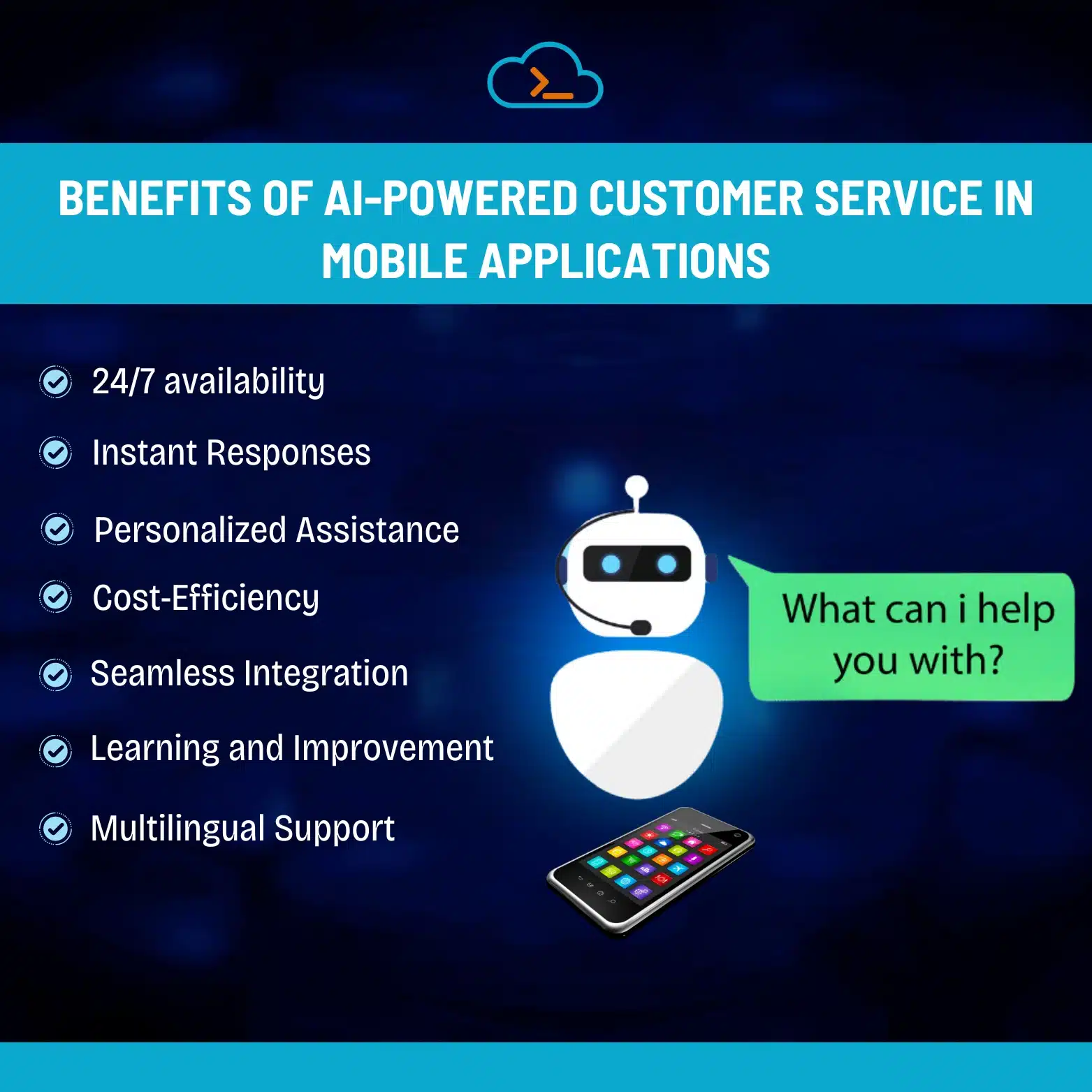
Benefits of AI-Powered Customer Service In Mobile Applications

AI can analyze customer conversations, generate human-like replies to customer questions, and improve response times and customer satisfaction. AI-powered chatbots handle basic customer inquiries well, provide instant support, and assist with tasks like order tracking and troubleshooting. AI also analyzes customer data to identify reasons for contact and provide personalized support.

AI-powered customer support solutions automate workflows, guide agents, optimize workforce management, boost agent efficiency and productivity, improve service quality, and enhance call management and help centers. They also enable businesses to drive upsells and cross-sells during support interactions and send proactive notifications with messages based on user events and past interactions.

AI customer support with expert guidance from digital marketing services in mobile applications is revolutionizing user experience by analyzing customer data and offering faster, more efficient, and personalized interactions. Here’s how:

1. 24/7 availability

AI-powered chatbots and virtual assistants provide round-the-clock support, addressing user queries anytime, anywhere, which significantly enhances user satisfaction.

2. Instant Responses

Unlike human agents, AI systems can instantly respond to common questions, customer queries, and concerns, reducing wait times and improving response accuracy.

3. Personalized Assistance

AI can analyze user data to identify trends and provide customized recommendations, proactive support, and solutions, as well as tailor the support experience to each individual’s needs, knowledge base, and preferences.

4. Cost-Efficiency

AI is not just about improving user experience. It’s also a smart business move. By automating repetitive tasks and queries, AI reduces the need for large customer support teams, leading to significant operational savings for companies while still maintaining high service levels.

5. Seamless Integration

AI tools are easily integrated into mobile applications, ensuring a smooth, user-friendly interface that feels intuitive to interact with, whether through text, voice, or other inputs.

6. Learning and Improvement

AI systems are not static; they continually learn from user behavior and interactions, enabling them to evolve and provide better support over time. This adaptability ensures they can more accurately predict and meet user needs, enhancing the user experience.

7. Multilingual Support

AI systems can handle multiple languages, which is particularly useful for global apps. This enables companies to offer consistent support across different regions.

By automating routine tasks and delivering a more responsive, personalized customer feedback experience, AI is significantly elevating the quality of customer support in mobile apps, leading to improved user retention and engagement.

Benefits Of AI-powered customer service in mobile apps

Enhancing Customer Interactions with AI

AI can personalize interactions, optimize help center content, and recommend solutions based on customer needs. It can also analyze customer and sentiment analysis data-driven insights, identify customer needs, and provide relevant responses. AI-powered chatbots can provide 24/7 instant support for routine inquiries and issues.

1. The Role of NLP in AI Customer Support

NLP (natural language processing) helps machines understand spoken and written language, enabling businesses to personalize customer experiences and improve data analysis and predictive analytics.

2. Meeting Customer Expectations with AI

AI helps customer service teams by automating tasks so agents can focus on complex issues and deliver exceptional service. AI-powered chatbots provide personalized, instant support, reducing wait times. AI also analyzes customer data to identify top reasons for contact and provide personalized support.

3. Implementing AI-Powered Customer Support

Implementing AI-powered customer support involves defining objectives and goals, understanding customer needs, selecting the right AI technologies, integrating AI with existing systems, and training and improving the system. Data security is crucial when implementing AI in customer support operations and services, and integration and training are essential for AI to work effectively. SaaS product marketing agency guides businesses in performing these functions.

4. The Influence Of AI On Customer Service Teams

AI can save support agents time and effort while enabling them to strengthen relationships with customers. It can also help teams better understand and anticipate customer needs and requirements, improving customer conversations and overall customer experience.

5. Overcoming Customer Support Workflow Challenges

AI-powered solutions can help customers overcome customer support workflow challenges by automating routine tasks, providing personalized assistance, and enhancing human agent capabilities. AI can also help teams better understand customer needs and requirements, improving customer conversations and overall customer experience.

The Future of AI in Customer Support

The future of AI in customer support is bright. Within three years, AI is expected to handle up to 80 percent of customer service interactions from start to finish. AI will continue to transform customer interactions, making them more efficient, personalized, and satisfying.

Best Practices for AI-Powered Customer Support

Prioritize end-to-end encryption, regularly audit security measures, use transparent AI algorithms, exclude identifiers from training datasets, and tokenize data so it is only readable by machines. Select AI customer service tools and software that streamline the planning, testing, and refinement phases of implementation to avoid long lead times that can stall businesses for months.

KloudPortal offers the best services to businesses to execute AI practices.

Real-World Examples of AI-Powered Customer Service

Companies like Sephora, Nike, and Lululemon are using AI-powered customer support solutions to enhance customer interactions and improve customer satisfaction. AI-powered chatbots can handle multiple interactions simultaneously, making the technology highly scalable. AI analyzes customer data to identify the top reasons customers contact the customer service team and provide personalized support.

Key Takeaways

  • AI in customer service has revolutionized the way e-commerce apps work.
  • AI customer support extends its benefits to different applications through chatbots, self-service options, and unique data collection.
  • Artificial intelligence technology dynamically reduces human strain and human errors and improves agent productivity, resource, and inventory management.

Conclusion

Mobile apps will continue to shape the way businesses connect with their customers. Integrating AI-powered customer support has become not only an advantage but a necessity.

At KloudPortal, we bring deep expertise in mobile application development and seamless AI customer support integration. Whether you’re building a new app or upgrading an existing app, our team can help you provide user-friendly and intelligent solutions that align with your business goals. Let us help you create smarter, more responsive mobile experiences.

Frequently Asked Questions

1. How does AI help customer experience?

The AI platform for customer experience uses machine learning behavioral data, chatbots, AI tools, and analytics to create a dynamic CX that resonates with customers personally and helps them feel valued and understood.

2. What is the role of AI in mobile app development?

By leveraging AI applications, we can enhance our understanding of user behavior, leading to increased mobile user engagement and higher conversion rates.
Top Responsive Web Design Principles You Need To Know

Top Responsive Web Design Principles You Need To Know

By Aparna Sushumna

Responsive web design is an approach to making web pages render well on various devices and window or screen sizes. It uses flexible layouts and images, as well as media queries that detect the user’s screen size and adjust the design accordingly. Responsive web design ensures a well-structured, user-friendly, and responsive web page that looks great and functions well on various devices and web browsers.

Responsive web design aims to ensure seamless user access and navigation across various devices, including desktop computers, laptops, tablets, and smartphones. By eliminating the need for separate website versions, responsive design creates a single adaptable website that caters to users’ access to different viewing environments.

Partnering with a reputable web design company can help you realize the primary goal of responsive web design – providing easy access and navigation for users across all devices.

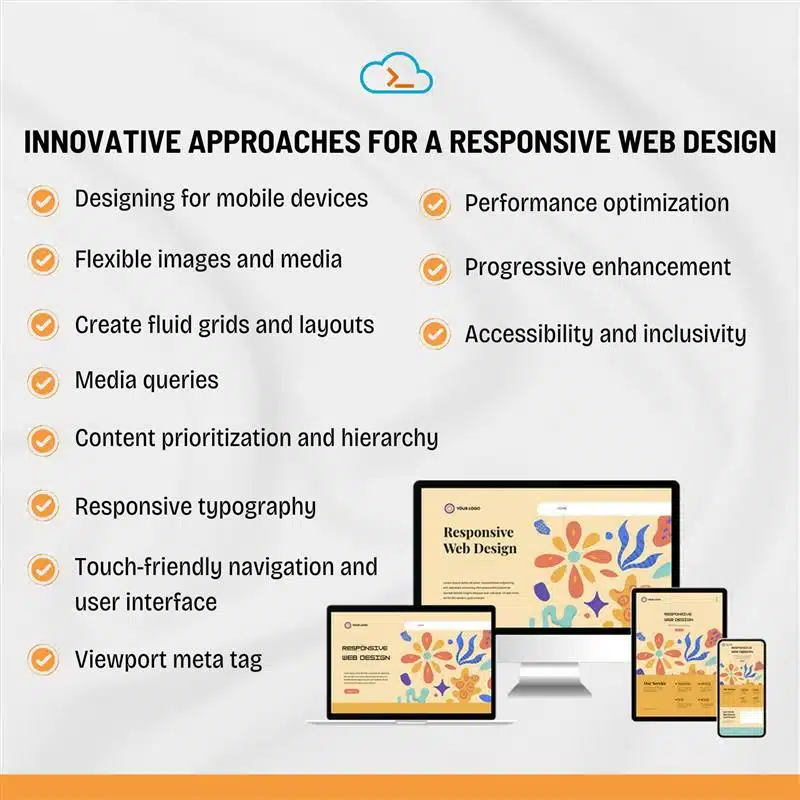
Innovative Approaches for a Responsive Web Design

Responsive web design (RWD) ensures that websites provide an optimal user experience across various devices and screen sizes. Below are the top principles of responsive web design :

1. Designing for mobile devices

Mobile-first design is a crucial principle in crafting websites that resonate with online visitors’ current needs and expectations. Designing for mobile devices involves prioritizing simplicity, efficiency, and a streamlined user experience. The mobile-first design prioritizes small screens to ensure a seamless user experience across various devices. Start by designing for the smallest of smaller screens at first, then gradually add complexity for larger screens. This approach ensures that the core experience remains intact, regardless of the device.

2. Flexible images and media

Images, videos, and other media should adjust in size relative to screen space for their containing elements using max-width properties (e.g., `max-width: 100%`). This prevents media from overflowing their containers on smaller screens. These images also resize proportionally to maintain their aspect ratio as the screen width changes.

3. Create fluid grids and layouts

Designing responsive websites that adapt to different devices and screen sizes relies on the use of flexible layouts and grids. Using relative units and percentages to define the size and positioning of elements within a website’s layout fluid grids ensures flexibility.

4. Media queries

CSS(cascading style sheets) media queries allow you to implement different styles for different screen sizes. By specifying breakpoints (e.g., 768px for tablets and 1024px for desktops), you can create tailored designs and optimize images that ensure usability and readability on all devices.

5. Content prioritization and hierarchy

Content prioritization and hierarchy are crucial for designing responsive websites that cater to diverse devices and user preferences. Prioritizing content according to its importance and relevance ensures a user’s device-friendly experience. Effective visual hierarchy is the art of arranging content in a manner that effortlessly guides visitors through the information. Content marketing services suggest and guide businesses in appropriate content prioritization.

6. Responsive typography

Use scalable fonts (like `em` or `rem` units) to ensure that text is legible on both small and large screens. Responsive typography adjusts font sizes dynamically based on screen size and device.

7. Touch-friendly navigation and user interface

Intuitive navigation is essential for responsive web design, prioritizing clarity and accessibility. Navigation menus should be clear and intuitive, allowing users to access various sections easily. User-friendly forms and interactive elements are also essential for a responsive website. Design buttons and interactive elements to be large enough and spaced appropriately for touch interaction. A good rule of thumb is to use a minimum touch target size of 44×44 pixels for mobile devices.

8. Viewport meta tag

Make sure always to include the viewport meta tag in the HTML head. Tagging will allow you to control the layout on mobile browsers and ensure that the design scales properly. The tag you should use is: “

9. Performance optimization

Load time and performance optimization are crucial for a positive user experience. Optimizing images, using caching strategies, and minimizing code can improve website performance. For consistent performance, one should prioritize performance by optimizing images, browser caching, reducing unnecessary assets, and using techniques like lazy loading to ensure quick load times on slower mobile networks.

10. Progressive enhancement

Ensure that your website or web page’s core content and functionality work even on older browsers or slower devices by layering additional features for newer, more capable browsers.

11. Accessibility and inclusivity

Executing responsive web design is essential for enhancing user feedback and accessibility across different devices. By prioritizing accessibility features such as keyboard navigation support and color contrast, we can ensure equal access and usability for users, including those with disabilities or impairments.

Innovative Approaches For a Responsive Web Design

Benefits of Responsive Web Design

Responsive web design is crucial in today’s digital landscape, catering to diverse devices and user preferences. It ensures a seamless user experience across mobile devices, tablets, and desktop computers.

Responsive web design is essential for creating websites for mobile traffic that captivate and delight users, drive traffic, and achieve business goals.

Implementing Responsive Web Designs

Creating a responsive web design involves using media queries to insert different styles to a website based on the device or screen being used. Flexible images, grids, and media queries are essential for developing responsive websites under the expert advice of the best digital marketing agency in India.

Rigorous testing for responsiveness guarantees that the website adapts seamlessly and functions effectively across an array of devices and screen sizes.

Best Practices for Responsive Web Design

Adhering to best practices under guidance from top digital marketing services in Hyderabad, such as implementing a mobile-first approach and emphasizing quick load times, is crucial for optimal user experience when developing responsive websites. Keeping abreast of design trends and user expectations is vital for achieving success.

Giving priority to user feedback and employing an iterative design process is essential for improving the website.

Key Takeaways

  • Responsive web design is more than just aesthetics. It’s a crucial factor in ensuring optimal user experience, accessibility, and engagement across various devices.
  • Designing websites that seamlessly adapt to different screen sizes and orientations can improve conversion rates, enhance brand perception, and reach a wider audience.
  • Modern responsive web design leverages powerful techniques like Flexbox, CSS Grid, and CSS variables to create dynamic and efficient layouts.

Conclusion

In today’s digital world, it’s essential for website success to incorporate responsive web design. Embracing these principles enables the conception of websites that produce outstanding user experiences across all devices. This approach ensures a well-organized, user-friendly, and adaptable website that excels across various devices, mobile phones, and web browsers.

Frequently Asked Questions

1. What are the 3 basics for responsive web design?

  1. CSS Media Queries: Adapt layouts for different screen sizes.
  2. Fluid Layouts: Ensure content adjusts to various resolutions.
  3. Bootstrap: Utilize a responsive grid system and pre-built components.

2. What is a key thing you need to know about responsive design?

Reliable web development has a lot more than just aesthetics: it also involves usability, visual quality, accessibility, and participation.

3. What are the key elements of a good web design?

A good website is accompanied by several important components and design elements that are crucial for creating a user-friendly experience.

We use cookies to ensure that we give you the best experience on our website. If you continue to use this site we will assume that you are happy with it.

Cookies settings
Accept
Privacy & Cookie policy
Privacy & Cookies policy
Cookie name Active

Privacy Policy

What information do we collect?

We collect information from you when you register on our site or place an order. When ordering or registering on our site, as appropriate, you may be asked to enter your: name, e-mail address or mailing address.

What do we use your information for?

Any of the information we collect from you may be used in one of the following ways: To personalize your experience (your information helps us to better respond to your individual needs) To improve our website (we continually strive to improve our website offerings based on the information and feedback we receive from you) To improve customer service (your information helps us to more effectively respond to your customer service requests and support needs) To process transactions Your information, whether public or private, will not be sold, exchanged, transferred, or given to any other company for any reason whatsoever, without your consent, other than for the express purpose of delivering the purchased product or service requested. To administer a contest, promotion, survey or other site feature To send periodic emails The email address you provide for order processing, will only be used to send you information and updates pertaining to your order.

How do we protect your information?

We implement a variety of security measures to maintain the safety of your personal information when you place an order or enter, submit, or access your personal information. We offer the use of a secure server. All supplied sensitive/credit information is transmitted via Secure Socket Layer (SSL) technology and then encrypted into our Payment gateway providers database only to be accessible by those authorized with special access rights to such systems, and are required to?keep the information confidential. After a transaction, your private information (credit cards, social security numbers, financials, etc.) will not be kept on file for more than 60 days.

Do we use cookies?

Yes (Cookies are small files that a site or its service provider transfers to your computers hard drive through your Web browser (if you allow) that enables the sites or service providers systems to recognize your browser and capture and remember certain information We use cookies to help us remember and process the items in your shopping cart, understand and save your preferences for future visits, keep track of advertisements and compile aggregate data about site traffic and site interaction so that we can offer better site experiences and tools in the future. We may contract with third-party service providers to assist us in better understanding our site visitors. These service providers are not permitted to use the information collected on our behalf except to help us conduct and improve our business. If you prefer, you can choose to have your computer warn you each time a cookie is being sent, or you can choose to turn off all cookies via your browser settings. Like most websites, if you turn your cookies off, some of our services may not function properly. However, you can still place orders by contacting customer service. Google Analytics We use Google Analytics on our sites for anonymous reporting of site usage and for advertising on the site. If you would like to opt-out of Google Analytics monitoring your behaviour on our sites please use this link (https://tools.google.com/dlpage/gaoptout/)

Do we disclose any information to outside parties?

We do not sell, trade, or otherwise transfer to outside parties your personally identifiable information. This does not include trusted third parties who assist us in operating our website, conducting our business, or servicing you, so long as those parties agree to keep this information confidential. We may also release your information when we believe release is appropriate to comply with the law, enforce our site policies, or protect ours or others rights, property, or safety. However, non-personally identifiable visitor information may be provided to other parties for marketing, advertising, or other uses.

Registration

The minimum information we need to register you is your name, email address and a password. We will ask you more questions for different services, including sales promotions. Unless we say otherwise, you have to answer all the registration questions. We may also ask some other, voluntary questions during registration for certain services (for example, professional networks) so we can gain a clearer understanding of who you are. This also allows us to personalise services for you. To assist us in our marketing, in addition to the data that you provide to us if you register, we may also obtain data from trusted third parties to help us understand what you might be interested in. This ‘profiling’ information is produced from a variety of sources, including publicly available data (such as the electoral roll) or from sources such as surveys and polls where you have given your permission for your data to be shared. You can choose not to have such data shared with the Guardian from these sources by logging into your account and changing the settings in the privacy section. After you have registered, and with your permission, we may send you emails we think may interest you. Newsletters may be personalised based on what you have been reading on theguardian.com. At any time you can decide not to receive these emails and will be able to ‘unsubscribe’. Logging in using social networking credentials If you log-in to our sites using a Facebook log-in, you are granting permission to Facebook to share your user details with us. This will include your name, email address, date of birth and location which will then be used to form a Guardian identity. You can also use your picture from Facebook as part of your profile. This will also allow us and Facebook to share your, networks, user ID and any other information you choose to share according to your Facebook account settings. If you remove the Guardian app from your Facebook settings, we will no longer have access to this information. If you log-in to our sites using a Google log-in, you grant permission to Google to share your user details with us. This will include your name, email address, date of birth, sex and location which we will then use to form a Guardian identity. You may use your picture from Google as part of your profile. This also allows us to share your networks, user ID and any other information you choose to share according to your Google account settings. If you remove the Guardian from your Google settings, we will no longer have access to this information. If you log-in to our sites using a twitter log-in, we receive your avatar (the small picture that appears next to your tweets) and twitter username.

Children’s Online Privacy Protection Act Compliance

We are in compliance with the requirements of COPPA (Childrens Online Privacy Protection Act), we do not collect any information from anyone under 13 years of age. Our website, products and services are all directed to people who are at least 13 years old or older.

Updating your personal information

We offer a ‘My details’ page (also known as Dashboard), where you can update your personal information at any time, and change your marketing preferences. You can get to this page from most pages on the site – simply click on the ‘My details’ link at the top of the screen when you are signed in.

Online Privacy Policy Only

This online privacy policy applies only to information collected through our website and not to information collected offline.

Your Consent

By using our site, you consent to our privacy policy.

Changes to our Privacy Policy

If we decide to change our privacy policy, we will post those changes on this page.
Save settings
Cookies settings