Is your website deindexed by google? Here is what you can do

Is your website deindexed by google? Here is what you can do

Website owners make all possible efforts to get Google to index their web pages. They try hard to get high ranking, visibility and enough traffic to their websites. But suddenly your ranking and visibility are lost in a moment. This indicates that the website is de-indexed by Google due to some reasons. In this blog, we will discuss some of the reasons that can push Google to de-index your website along with some remedial actions. To get started, let us first discuss what is the meaning of de-indexing?

What is de-indexing?

De-indexing is an SEO process of pulling off a website, or a webpage, or some content of the page from the search engine’s index and therefore it does not show up in the SERPs of any search portals like Google and Bing.

How do you know if a website is de-indexed?

To identify whether your website or certain pages are de-indexed by Google is by checking manually on Google search. The other best way to keep track of the errors on your domain is by using online tools like the Google search console where you get useful information such as server errors, number of indexed pages, backlinks to your site, and affected URLs, etc.

How will de-indexing affect the website ranking?

If the pages where most of your content is posted are deindexed, it will hurt your site’s overall quality and rankings. Users can find your website online through search engines and so if your website does not show up in search results then this will have a severe impact on your SEO rankings. However, if low-quality pages are de-indexed then it might help too.

Why does Google de-index certain pages and How to recover from it?

Google may permanently or temporarily exclude some websites or certain pages from its index and search results if the sites do not meet Google’s webmaster guidelines. Below are some of the main reasons why Google might have de-indexed your WordPress website from search engine result pages.

  • Keyword stuffing
  • Duplicate content
  • Page cloaking
  • Unnatural backlinks or improper link building practices.
  • Poor quality content
  • Server issues

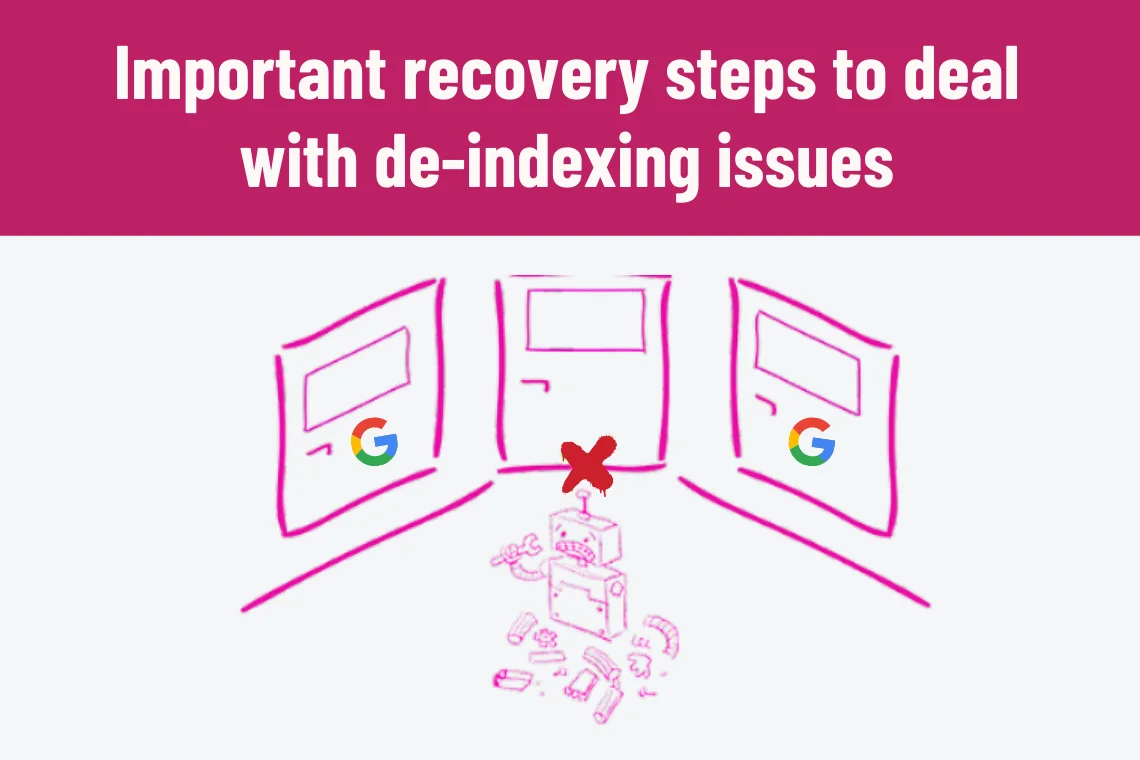
Important recovery steps to deal with de-indexing issues

To recover from de-indexing issues your first reflex should be to check the cause of the errors. Once you have identified the reasons, make sure you take the necessary steps to rectify them. Here are some of the recovery steps to be implemented.

  • Perform an audit to identify the list of natural and unnatural or spammy links. Once identified, disavow the unnatural links. The best strategy for building natural links organically is to provide quality and unique content.
  • Uncover low-quality, thin and duplicate content pages by using an SEO crawler. Check your spelling and grammar, improve the quality of the content and make sure you keep consistency.
  • Check with your web host server for any crashes recently. If any, determine the bottleneck that is impacting and stabilize them. Also, include a website monitoring service to get alerts about server crashes.
  • Check for any new algorithm updates or guidelines and modify your website accordingly.
  • Never buy links or use linking software to generate artificial links.
  • Identify spammy links redirected to your site and clean up the malware.
  • Use link checker tools or Google webmaster tools to identify broken links and make sure you fix them.

Finally, make sure you follow the guidelines while crafting your site and submit a sitemap or reconsideration request to Google along with steps that were taken to resolve the issues to get your website re-indexed.

Take away

Search engines like Google’s bots crawl through every WordPress page or post that is available on the web and is indexed. Therefore, if your site or certain pages of your site are de-indexed then there seem to be several reasons to be considered. Check the above-mentioned factors and review your entire site SEO.

If you are concerned about your website’s SEO or rankings, check out our SEO Strategy and Services. Our leading digital marketing agency is a one-stop solution for your multiple problems. Contact us today to get a quote on our SEO Services.

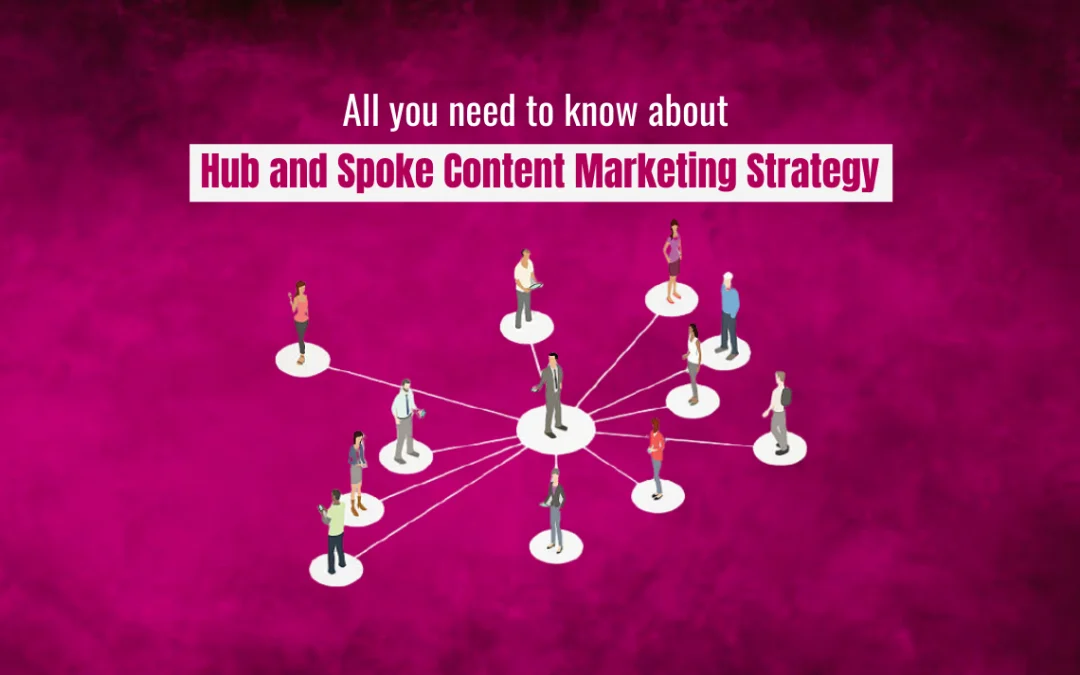
All you need to know about Hub and Spoke Content Marketing Strategy

All you need to know about Hub and Spoke Content Marketing Strategy

Content marketing is a powerful Search Engine Optimization (SEO) strategy that allows a website to rank higher on the Search Engine Results Page (SERP). Powerful and engaging content can captivate, engross and retain your target audience while building a powerful brand image and authority for the business. Quality content makes the customers more informed and helps them take learned decisions to choose a brand. Hence, targeting the specific audience with the right content should be the mantra for success for any business.

What is the Hub and Spoke content model?

Hub and Spoke is a content marketing model that is devised to create focussed content around a large topic, which in turn leads to an increase in organic traffic, keywords, rankings, etc, indirectly contributing to generating marketing leads and sales conversions. The model helps you build hub pages and spoke pages, which work in tandem with one another and make your website tick in Google’s algorithm, eventually increasing your SERP.

What is Hub and Spoke marketing and why is it important for SEO and content marketing?

This model is synonymously known as the topic clusters model. The hub pages focus more on a generic topic of higher relevance and builds content around it. The Spoke pages create content that would supplement and complement the hub pages. The Hub pages will target the short-tail and focal keywords, whereas the long-tail keywords are addressed in the spoke pages. The internal linking and URL structuring will further enhance the user experience by giving the visitors powerful and commanding content, exhibiting your authority around your area of expertise.

The benefits of implementing the Hub and Spoke Model will be:


hub and spoke model


  • Increasing organic traffic to your website
  • Fortifies your brand authority
  • The model organizes your entire site structure, helping in SEO and user experience alike
  • This model is going to be a crucial factor for lead generation and in keeping your sales pipeline healthy.

How to build a Hub and spoke model and how does it work?

Now that we have understood the model, you may be wondering how to get started? Let’s uncover now.

The first step would be to do Keywords research. After defining the target audience, deep dive into uncovering the most relevant and sought-after keywords by your end-users. You will arrive at the short-tail and long-tail keywords.

The next step will be to organize the keywords into hubs and spokes pages. Focus on what the users will type in google that will lead to you. Target the most crucial keywords and build compelling and focused content around that.

Once done, focus on URL structuring in such a way that internal linkings are judiciously utilized to give a clear picture to the visitor as to what you have to offer them. Next, you need to focus on creating fresh, attractive and informative content for your audience. The Quality of content pays off if proper time and resources are implemented in deriving at the same.

This model helps you evaluate the success of individual webpages that are driving more organic traffic to themselves. The constant evaluation will help you strategize better and build on a successful model by weeding out irrelevant content.

Conclusion

The Digital market space is driven by multifolds of content. A good Hub and Spoke content marketing strategy will steer you through the competitive web of challenges. You will establish yourself as a Unique, value-driven and customer-focused organization.

If you are concerned about your website’s SEO or rankings, check out our SEO Strategy Services and Content Writing Services. Our leading digital marketing agency is a one-stop solution for your multiple problems. Contact us today to get a quote on our SEO Services and Content Writing Services.

1. Keywords research, Moz
2. URL structuring, Hostgator
5 Redirect Mistakes That Can Impact Your Website Negatively

5 Redirect Mistakes That Can Impact Your Website Negatively

A sudden drop in the SEO rankings is like a nightmare for webmasters. This can happen for a variety of reasons, but if it is due to a redirect mistake, then all the hard work is gone. Well, no worries! You can certainly prevent these errors. In this article, we will learn in detail about everything you need to know about redirects. Let’s get started!

What is a redirect?

A redirect, also termed as URL forwarding, is a technique to forward your website’s visitors to a different URL. It means when a user visits the old URL, the redirect will automatically instruct the browser to go to the new URL.

There are several types of redirects used in different situations. Therefore, think carefully about which type you need to use before you redirect a page or multiple pages on your website so that it will not hurt SEO rankings and the domain authority of your website. The commonly used redirects are 301, 302, 307, HTTP headers, meta refresh, and others.

When to create redirects?

There are numerous reasons to use a redirect, some of them include:

  • When merging two websites
  • To direct search traffic to recently updated content
  • When updating the website’s CMS platform
  • If there is a change in the business name
  • To move or delete a page
  • When website redesign issues are taking place
  • Redirecting all the content to a new website
  • When moving to HTTPS

How does redirect mistakes impact your SEO?

Redirects are essential in SEO for successfully rebuilding your website. They aid SEO in many ways like you can fix broken links, maintain the same domain authority as the original content for the new page.

Despite the importance, using the redirects incorrectly will lower the user experience, discourage the search-bots from exploring your webpage and thus seriously impact both search traffic and site rankings.

5 Redirect mistakes that can affect your website traffic

Redirect mistakes that you should avoid

It is common for SEO experts to use redirects regularly, but if the redirects are not implemented properly, then they have a negative impact on Google ranking. Here are the five redirect mistakes to keep off and fix them.

1.Redirecting all pages to your home page

It is a bad practice to redirect pages to the homepage to rank high. This will reduce the value of the content you have built upon the old URLs.

Tip:

Redirect each broken link to the relevant page and if there is no relevant page, let it show a 404 error page not found.

2.Keeping both HTTP & HTTPS versions

When an SSL certificate is integrated, the website URLs get changed from HTTP to HTTPS. Keeping both versions that have the same content will trigger a plagiarism signal.

Tip:

Use 301 redirect to permanently move the website to the HTTPS version.

3.Getting trapped in redirect chains and redirect loops

When one page redirects to another, and another, then a redirect chain takes place. Similarly, when page 1 redirects to page 2, page 2 to page 3 and so on, then it is a redirect loop. They will slow down the website and degrade the user experience.

Tip:

When you create new redirects, update the old ones to take the shortest path to reach the final content.

4. Using the wrong redirect

It is important to choose the right redirect based on the situation. For example, 301 redirects indicate the moving of a webpage permanently and 302 indicates that the content has been temporarily moved. Therefore, using the wrong redirect can cause significant issues on performance.

Tip:

A 301 redirect is ideal if your page is going to be back soon.

5. Forgetting broken links

A website with many broken links with 404 errors will put visitors at a dead end. Hence causes a drop in traffic and an increased bounce rate.

Tip:

It is essential to keep a track of broken links, monthly or quarterly and take the necessary action.

Conclusion

  • Redirects are helpful, but could also negatively impact your website (if used the wrong way). So, take some time and effort to implement your redirects correctly.
  • Make sure you keep an eye on your redirects and use them properly for the best SEO outcomes.
  • Avoiding the common redirect mistakes mentioned above will preserve your domain authority and rankings.
1. Several Types of Redirects, Search Engine Journal
2. 301 Rredirects, Ahrefs
7 Tips to Create an Effective LinkedIn Marketing Strategy

7 Tips to Create an Effective LinkedIn Marketing Strategy

LinkedIn hosts most of the decision-makers in its gamut and plays an indispensable role in making steadfast business relationships, thus contributing to building a sturdy sales funnel for businesses. It is considered a crucial Business-to-Business (B2B) lead-generation platform. As per the statistics, LinkedIn has helped in 45% conversion of B2B leads into a successful customer base for all the marketers. LinkedIn generates very targeted and niche segments of customers for businesses. A well- thought-out strategy can bring about tremendous results for growing organizations.

What is LinkedIn marketing strategy?

LinkedIn Marketing Strategy is a digital marketing plan to achieve the marketing goals of any organization. The presence of senior-level management, decision-makers and influencers on this social media platform makes it an important stage for B2B marketing activities. With the right strategies, you can tap the potential customers with great ease. Let’s understand a little more about this.

Tips to create an effective LinkedIn marketing strategy, 2021

Creating a plan for the marketing strategies on LinkedIn will be very helpful to implement and succeed in your business.

linkedin is a great platform to tap potential customers

1. Define your marketing objectives

Defining the marketing goals will be helpful to tap the right channels and build the right framework to reap the maximum benefit from this strategy. The goals could be defined in varied ways, like building brand awareness, establishing a brand reputation, generation of leads, engaging with the target audience, selling products, and services, etc.

2. Create a company page

As simple as it may sound, having a company page on LinkedIn works wonders regarding establishing your brand credibility and authority. The Company page acts as a landing page for the customers to connect with your brand. The Company page acts as a brand ambassador for you, highlighting your ideas, brand values and is like the USP of your products and services. Relevant and engaging content on your company page is definitely going to pull the right audience towards you.

3. Focus more on visual content

Visual content sells more than anything. It’s engaging, creative, and appealing to the audience. The viewers have an immediate connection with visual representations of ideas. Posts with links to YouTube video content are a good option, however, the LinkedIn native video option is far more effective, as it auto-plays when your audience scrolls past their posts. Company presentations and relevant PDF’s can also be found in the video space.

4. Relevant and up to date content

The content on the LinkedIn platform should be more focused on value creation, sharing relevant and informative materials with the target audience. Usage of hashtags will be more powerful and give a winsome solution to your marketing strategy. Usage of infographics, latest news updates of products and thought leadership is the most sought-after approach in churning the best content for the LinkedIn Company page.

5. More employees connected to the company page

Your Employees are your brand ambassadors, too. It’s a win-win solution to engage employees and the target audience at the same time. When more and more employees are following the Organization and sharing the Company content, the reach for the posts is diversified. The prospective customers find more credibility and value in employees resonating the brand values.

6. Making the top management active on linkedIn

A lot of attention is garnered when the top executives of an Organization reflect the company values and share their expertise on this platform through their posts. People take notice of such nuances where the top executives of the management are making efforts to connect with their customers.

7. Use LinkedIn analytics

LinkedIn analytics is invaluable to track the success of your posts, content and strategies. It highlights which content is bringing in maximum attention from the audience and the strategies can be aligned accordingly to the content, which captivates higher interest in the end-users.

Conclusion

LinkedIn marketing strategy, if designed and executed effectively, is sure to fetch you the desired results. You are fortifying your brand image and value by increasing your visibility on a platform where your prospective customers are evaluating you.

1. LinkedIn Marketing Strategy, Boosted.lightricks
2. Business-to-Business (B2B), Neilpatel
Learn all about Google’s ‘Link spam update’ in 2021

Learn all about Google’s ‘Link spam update’ in 2021

Hello webmasters, Google is back with a new update called the Link spam update. Here is all you need to know about this update and some specific guidelines to manage spam links.

What is Google’s latest algorithm update?

Google has launched this new algorithm update to broadly improve the quality of the search results. This latest update, which is rolling out over the next few weeks, is focused on identifying and nullifying manipulative links on websites that allow sponsored, affiliate and guest posts.

Link building is a fundamental process in SEO and website owners commonly use outbound links within the content to get better visibility in Google search engine result pages (SERPs). However, sometimes website owners practice some of the wrong SEO techniques, like the use of spammy backlinks, to boost their website’s organic traffic.

What is Google’s Link spam update about?

Google Link spam update works at nullifying these unreliable spammy links that helped in high rankings of your page. This does not necessarily mean that Google will penalize the websites, instead, it will ignore and not evaluate these links anymore, which is obviously like a penalty to the website.


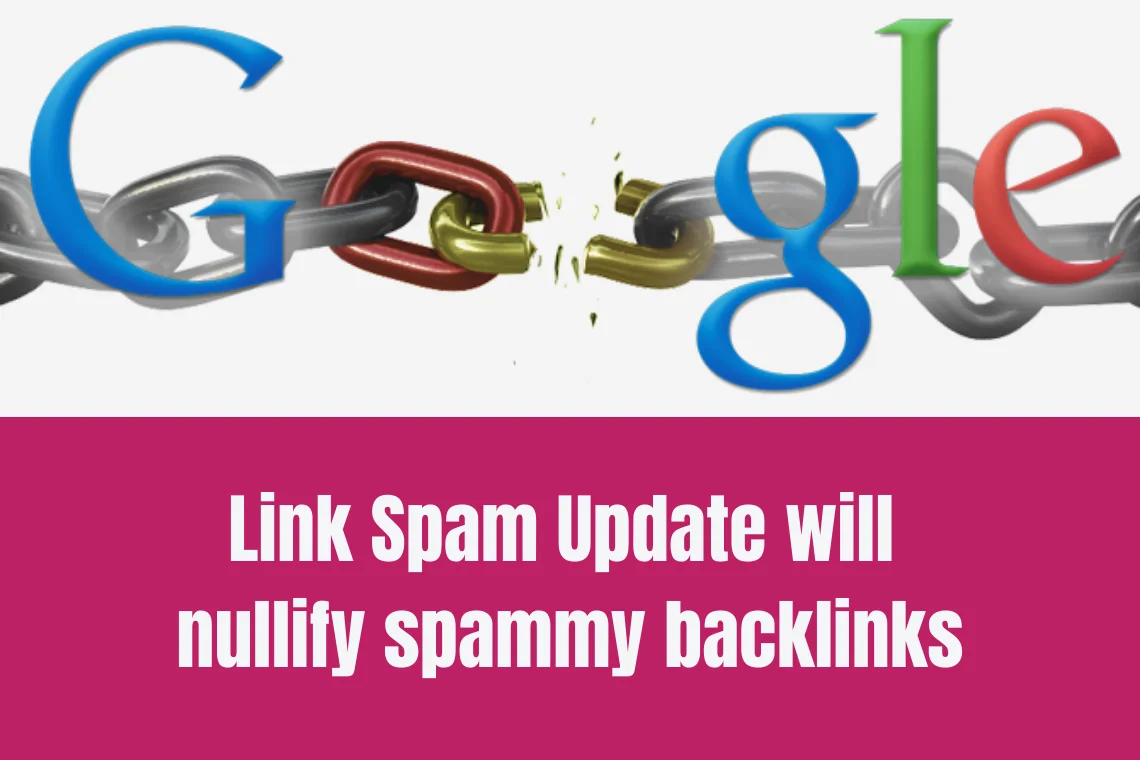
Link spam update will nulify spammy backlinks


How can Link spam Update impact rankings?

If your website does not comply with Google’s guidelines for link schemes, then you might see a sharp drop in your website’s rankings.

Some of the inappropriate link schemes that violate Google’s guidelines include:

  • Buying backlinks
  • Generate backlinks using bots or auto-services
  • Targeted guest blogging

How to deal with Google Link spam update?

In particular, Google is picking out affiliate links and links from sponsored guest content. Hence, below are a set of best practices to prevent getting hit by the latest update.

  1. Websites participating in affiliate programs should appropriately qualify these affiliate links by using the attribute rel=”sponsored” to the hyperlink tag.
  1. Websites must add tag rel=”ugc” to the links if there is a value exchange between the two domains, like the links from sponsored posts such as advertisements and paid links.
  1. Despite the links created manually or dynamically, Google recommends that links from guest posts are to be marked up with the rel=”nofollow” value.

Thus, if you are using WordPress, then you can use ‘functions.php’ to add these attributes or if you are using manual links, then you can edit the links one after the other.

Wrapping Up

  • Link spam is a global update across multiple languages which impacts both inbound and outbound links that are not natural and manipulative.
  • Websites taking part in link spam will see a drop in their rankings as these links are re-assessed by the new Link spam algorithm update.
  • Google advises website owners to focus on improving the site content and user experience, which help in attracting new backlinks naturally over time that are in accordance with Google’s webmaster guidelines.
  • The Link spam update will encourage the appropriate process of link-building and ensure that website owners don’t trade the links.
  • Make sure you are in compliance with the new Link spam update by following the best practices and invest in appropriately tagged links.
1. Google Link Spam Update, Delante.co
2. Affiliate Links, Rankya
5 Top Social Media Marketing Platforms in 2021

5 Top Social Media Marketing Platforms in 2021

Social Media platforms have brought about a significant shift in communication around the world. The billions of users hooked on social media everyday is an easy and viable target for marketers. These users are playing a pivotal role in boosting the brand images of many organizations. The social media users are audience to multitudes of Ad campaigns and in turn, become valuable customers for these brands. The brands are looking to establish their credibility and authenticity by connecting with their end-users by being virtually present through these social media platforms.

It is becoming more and more relevant in the pandemic times that brands are re-strategizing their marketing plans and trying to increase their brand visibility on Social media platforms. The real sale is happening here. Your sales funnel is generated here. Your customer trust is won here. You are evaluated and established as a market leader on these Social Media Platforms.

Let us discover which of these social media platforms stole the limelight in 2021 so that you know where to find your loyal customers.

Top 5 social media platforms based on the active user statistics

As per the statistics, Facebook takes the lead and captures the top slot with 2797 million users. It is closely followed by YouTube with 2291 million users. WhatsApp is right behind with 2000 million active users. Then we find Facebook Messenger with 1300 million active users and Instagram with 1287 million users at fourth and fifth place respectively. The numbers for LinkedIn are also promising as this platform boasts of having 294 million users and ranks at 15th place.

Let’s explore more about these platforms

Facebook is the number one choice for social media marketers

Facebook

Facebook might seem the most obvious choice for any marketer when considering social media marketing. The reasons are varied; it has the largest number of active users, high levels of engagement and response from the users etc. Many brands take the limelight for successfully positioning their brand and strategizing their marketing ideas on Facebook. This one’s sure not to fail the Giant businesses or the small startups alike.

You Tube

The ever-popular social media platform is a way for brands to virtually sell their ideas and values to the consumer. The possibility of giving product demos, tutorials about using products, highlighting company values etc., makes YouTube an instant choice for the Organizations.

WhatsApp

WhatsApp allows businesses to connect with customers on a one to one basis. Businesses can capture customer interest by sharing product information, receiving feedbacks and providing customer service directly to the customer. More and more organizations are shifting focus to having Business accounts that allow them to have certain automated features which provide an ongoing connection with the customer.

Facebook Messenger

You can focus on delivering the relevant brand-related content one to one to the customer. Potential leads can be tapped easily and engaged effectively on this platform.

Instagram

Instagram provides opportunities for companies to provide visual content to the audience. The hashtag trend strikes a strong affinity towards the young generation. Instagram pages can become a product portfolio and help in getting constant approval from the end-users.

Conclusion

Social media platforms are fast and easiest ways to penetrate the minds and hearts of the target audience. So if you want to stay ahead of the game, be there and engage with the real end- users. Add more value and essence to your brand.

1. Social Media Platform, Makeuseof
2. Instagram, Universalclass

We use cookies to ensure that we give you the best experience on our website. If you continue to use this site we will assume that you are happy with it.

Cookies settings
Accept
Privacy & Cookie policy
Privacy & Cookies policy
Cookie name Active

Privacy Policy

What information do we collect?

We collect information from you when you register on our site or place an order. When ordering or registering on our site, as appropriate, you may be asked to enter your: name, e-mail address or mailing address.

What do we use your information for?

Any of the information we collect from you may be used in one of the following ways: To personalize your experience (your information helps us to better respond to your individual needs) To improve our website (we continually strive to improve our website offerings based on the information and feedback we receive from you) To improve customer service (your information helps us to more effectively respond to your customer service requests and support needs) To process transactions Your information, whether public or private, will not be sold, exchanged, transferred, or given to any other company for any reason whatsoever, without your consent, other than for the express purpose of delivering the purchased product or service requested. To administer a contest, promotion, survey or other site feature To send periodic emails The email address you provide for order processing, will only be used to send you information and updates pertaining to your order.

How do we protect your information?

We implement a variety of security measures to maintain the safety of your personal information when you place an order or enter, submit, or access your personal information. We offer the use of a secure server. All supplied sensitive/credit information is transmitted via Secure Socket Layer (SSL) technology and then encrypted into our Payment gateway providers database only to be accessible by those authorized with special access rights to such systems, and are required to?keep the information confidential. After a transaction, your private information (credit cards, social security numbers, financials, etc.) will not be kept on file for more than 60 days.

Do we use cookies?

Yes (Cookies are small files that a site or its service provider transfers to your computers hard drive through your Web browser (if you allow) that enables the sites or service providers systems to recognize your browser and capture and remember certain information We use cookies to help us remember and process the items in your shopping cart, understand and save your preferences for future visits, keep track of advertisements and compile aggregate data about site traffic and site interaction so that we can offer better site experiences and tools in the future. We may contract with third-party service providers to assist us in better understanding our site visitors. These service providers are not permitted to use the information collected on our behalf except to help us conduct and improve our business. If you prefer, you can choose to have your computer warn you each time a cookie is being sent, or you can choose to turn off all cookies via your browser settings. Like most websites, if you turn your cookies off, some of our services may not function properly. However, you can still place orders by contacting customer service. Google Analytics We use Google Analytics on our sites for anonymous reporting of site usage and for advertising on the site. If you would like to opt-out of Google Analytics monitoring your behaviour on our sites please use this link (https://tools.google.com/dlpage/gaoptout/)

Do we disclose any information to outside parties?

We do not sell, trade, or otherwise transfer to outside parties your personally identifiable information. This does not include trusted third parties who assist us in operating our website, conducting our business, or servicing you, so long as those parties agree to keep this information confidential. We may also release your information when we believe release is appropriate to comply with the law, enforce our site policies, or protect ours or others rights, property, or safety. However, non-personally identifiable visitor information may be provided to other parties for marketing, advertising, or other uses.

Registration

The minimum information we need to register you is your name, email address and a password. We will ask you more questions for different services, including sales promotions. Unless we say otherwise, you have to answer all the registration questions. We may also ask some other, voluntary questions during registration for certain services (for example, professional networks) so we can gain a clearer understanding of who you are. This also allows us to personalise services for you. To assist us in our marketing, in addition to the data that you provide to us if you register, we may also obtain data from trusted third parties to help us understand what you might be interested in. This ‘profiling’ information is produced from a variety of sources, including publicly available data (such as the electoral roll) or from sources such as surveys and polls where you have given your permission for your data to be shared. You can choose not to have such data shared with the Guardian from these sources by logging into your account and changing the settings in the privacy section. After you have registered, and with your permission, we may send you emails we think may interest you. Newsletters may be personalised based on what you have been reading on theguardian.com. At any time you can decide not to receive these emails and will be able to ‘unsubscribe’. Logging in using social networking credentials If you log-in to our sites using a Facebook log-in, you are granting permission to Facebook to share your user details with us. This will include your name, email address, date of birth and location which will then be used to form a Guardian identity. You can also use your picture from Facebook as part of your profile. This will also allow us and Facebook to share your, networks, user ID and any other information you choose to share according to your Facebook account settings. If you remove the Guardian app from your Facebook settings, we will no longer have access to this information. If you log-in to our sites using a Google log-in, you grant permission to Google to share your user details with us. This will include your name, email address, date of birth, sex and location which we will then use to form a Guardian identity. You may use your picture from Google as part of your profile. This also allows us to share your networks, user ID and any other information you choose to share according to your Google account settings. If you remove the Guardian from your Google settings, we will no longer have access to this information. If you log-in to our sites using a twitter log-in, we receive your avatar (the small picture that appears next to your tweets) and twitter username.

Children’s Online Privacy Protection Act Compliance

We are in compliance with the requirements of COPPA (Childrens Online Privacy Protection Act), we do not collect any information from anyone under 13 years of age. Our website, products and services are all directed to people who are at least 13 years old or older.

Updating your personal information

We offer a ‘My details’ page (also known as Dashboard), where you can update your personal information at any time, and change your marketing preferences. You can get to this page from most pages on the site – simply click on the ‘My details’ link at the top of the screen when you are signed in.

Online Privacy Policy Only

This online privacy policy applies only to information collected through our website and not to information collected offline.

Your Consent

By using our site, you consent to our privacy policy.

Changes to our Privacy Policy

If we decide to change our privacy policy, we will post those changes on this page.

Save settings
Cookies settings