The Ultimate Guide To NetSuite Staffing: How To Build A Winning Team

The Ultimate Guide To NetSuite Staffing: How To Build A Winning Team

By Rasmita Patro

In today’s competitive business, implementing a robust Enterprise Resource Planning (ERP) system like NetSuite can significantly improve efficiency, streamline business processes, and provide a competitive edge. However, assembling the right NetSuite team is critical to achieving success. This blog will explore how to build a winning team for your

Understanding the Complexity of NetSuite Staffing

Empower yourself by understanding the complexity of NetSuite staffing. NetSuite hiring is a complicated procedure that requires a profound understanding of your industry’s business processes, ERP implementation needs, and technical aspects of the system. Building a successful team entails identifying areas where new skills and expertise are necessary, leveraging existing staff, and tapping into external resources.

Key Components for Success

  • Project manager: A manager ensures the seamless execution of the NetSuite implementation, overseeing timelines, budgets, and deliverables.
  • Functional advisors: Functional advisors bring in-depth knowledge of NetSuite’s modules and help tailor the system to your business functions.
  • Technical experts: AI Specialists are essential for data migration, integrations, and customization, ensuring the system functions effectively.
  • Ongoing support team: Post-implementation support is critical to resolving technical issues and ensuring the system evolves with your business needs.

The Hiring Process: Securing the Right Talent

  • Define Your Needs: Clearly outline the functions and duties required for your NetSuite project.
  • Craft Compelling Job Descriptions: Highlight the unique opportunities and challenges associated with the role.
  • Leverage Your Employer Brand: Position your company as an attractive employer, emphasizing career growth and a positive work culture.
  • Partner with NetSuite Implementation Partners: These specialized agencies can deliver access to a pool of experienced NetSuite professionals.
  • Conduct Thorough Interviews: Assess technical expertise, problem-solving abilities, and cultural fit.

Staff Augmentation Services offer businesses access to specialized talent, helping them scale their teams quickly and efficiently for project success.

The Key Role of a NetSuite Implementation Consultant

In most cases, a NetSuite staffing implementation consultant is essential for a successful deployment. Here’s why:

  • Expert Guidance: Professionals bring specialized skills to handle both functional and technical details of the system.
  • Seamless Data Migration: They ensure your data is transferred accurately and securely.
  • Customization: Analysts help adapt the system to meet your specific business requirements.
  • Training and Support: They provide training for your existing workforce and offer solutions for ongoing challenges.

Hiring a manager consultant is an investment that pays off in terms of smoother implementation and long-term efficiency.

Core Components for Building the Right Team

Before venturing into external hiring, assess your existing workforce. Identify employees with:

  • Strong Technical Skills: A solid foundation in IT and a willingness to learn new technologies.
  • Adaptability: The capacity to embrace change and learn new systems quickly.
  • Define the Ideal Candidate: Look for professionals with a blend of technical skills, in-depth knowledge of NetSuite, and a track record of successful ERP projects.
  • Promote Company Culture: Ensure new hires align with your industry culture and share your vision for success.
  • Partner with Experts: Collaborate with NetSuite experience experts or consultants to fill critical skill gaps and provide ongoing assistance.

The Significant Role of Staff Augmentation Agency

A Staff Augmentation Agency specializes in sourcing the best talent for your NetSuite implementation, bridging gaps in expertise, and ensuring you hire the ideal candidates with confirmed expertise.

How Staff Augmentation Helps

  • Access to Top Talent: Agencies connect you with NetSuite professionals who have the required skills and experience, including functional consultants and IT specialists
  • Flexibility: You can onboard contract workers or full-time employees, depending on your needs.
  • Cost-Effectiveness: Hiring through an agency reduces overhead costs associated with recruitment and training.
  • Quick Turnaround: Agencies streamline the staffing process, ensuring no delays in your project timeline.

Relying on an experienced Staff Augmentation Agency ensures you build a team that is aligned with your industry culture, career goals, and the technical requirements of NetSuite implementation. Choosing the Best Staff Augmentation Company ensures you have access to top-tier talent that aligns with your project’s needs and goals.

Benefits of Working with NetSuite Implementation Partners

NetSuite implementation partners bring specialized expertise, resources, and a performance record of success to help your business achieve its ERP goals. Here are some benefits:

  • Proven Expertise: NetSuite vendors have a comprehensive understanding and hands-on experience in ERP implementation, making them invaluable for handling complex process aspects.
  • Data-Driven Decisions: Partners can analyze your workflows, identify areas of improvement, and provide tailored solutions based on data.
  • Efficient Implementation: With their advanced understanding of NetSuite, implementation partners reduce downtime and ensure the system is set up efficiently.
  • Ongoing Support: Beyond implementation, partners offer training, technical support, and system optimization to ensure long-term success.
Benefits of Working with NetSuite Implementation Partners

The Value of NetSuite Implementation Partners

Partnering with NetSuite implementation experts provides a strategic advantage. These professionals bring proven expertise and a history of successful implementations, helping businesses navigate the complexities of ERP deployment.

Key Advantages

  • Specialized Knowledge: NetSuite implementation partners have a deep understanding of the platform’s functionality and how to tailor it to specific business needs.
  • Improved Efficiency: Their expertise allows for quicker implementation and fewer disruptions to ongoing operations.
  • Customization and Support: They ensure the system is customized to fit your processes and provide constant support post-implementation.
  • Risk Mitigation: With their experience, they can anticipate and address prospective issues, reducing the risk of costly mistakes.

Key Takeaways

  • Building a successful NetSuite team involves understanding your ERP needs and addressing skill gaps, whether through in-house resources or staff augmentation agencies.
  • Staff augmentation provides rapid access to top NetSuite talent, reduces hiring costs, and accelerates project timelines.
  • NetSuite implementation partners help optimize ERP deployment, improve efficiency, and offer ongoing support for customization and long-term success.

Conclusion

Building a winning NetSuite team is a critical step toward achieving a successful ERP deployment. By leveraging the skills of a Staff Augmentation Agency, working with NetSuite consultants, and hiring skilled professionals, you can streamline business operations, enhance productivity, and gain an Advantage. Focus on identifying the right talent, promoting workplace culture, and ensuring Sustained support to maximize the significant impact of your NetSuite system.

Frequently Asked Questions

1. What is the role of a NetSuite implementation consultant?

A consultant provides expertise in system configuration, data migration, and customization, ensuring the implementation aligns with your business needs.

2. Can Current employees handle the implementation?

While Current employees can contribute, NetSuite’s complexity often requires specialized skills that external consultants or agencies provide.

3. How do Staff Augmentation Agencies streamline the hiring process?

These agencies handle recruitment, screening, and placement, ensuring you get skilled professionals without the hassle of traditional hiring.

4. How can I ensure long-term success with NetSuite?

Focus on assembling an effective team, investing in training, and working with experienced NetSuite partners for constant support and system optimization.

Ideal Remote Customer Support Rep

Ideal Remote Customer Support Rep

By Aparna Sushumna

In the ever-evolving world of modern business, remote support has emerged as a key factor for companies seeking to enhance their home customer service jobs and support strategies. Whether you’re a small startup or a multinational corporation, understanding the impact of remote customer service jobs is important to stay ahead and meet the evolving needs of your clients. Embracing a remote customer service strategy revolutionizes your approach to supporting customers.

Remote and home customer service jobs efficiently address customer needs in modern customer service. Organizations adapt by employing remote agents who utilize excellent communication tools to provide support. This approach offers cost-efficiency and scalability and taps into a global talent pool. Agents can now provide round-the-clock customer support from remote or home-based settings, reflecting the evolving nature of customer service in our highly interconnected digital world, where responsiveness and accessibility are paramount, integrating with the application process.

Key Takeaways

  • Remote customer service jobs are great in the new digital transformation era.
  • With technology innovation, home customer service jobs have become an evolving part of remote customer service job openings.
  • Customer service or remote work requires immense training in customer handling, retention, and customer satisfaction./li>

Types of Remote Job Customer Interactions

Several types of customer services are designed to fulfill a wide range of needs and preferences in digital marketing services.

a. Co-browsing

Co-browsing empowers an agent to access and control a user’s screen securely. It gives them a clear view of the remote customer service agent’s activities and the ability to act on their behalf, such as guiding navigation or completing forms. This powerful feature optimizes issue resolution, minimizes misunderstandings, and saves valuable troubleshooting time, making the process more efficient.

b. Live chat

Live chat, a tool that empowers businesses to a live chat agent to deliver immediate and personalized customer support, is a critical addition to support tools.

c. Phone support

Phone support is a remote customer service job and support that allows customers to talk directly to support agents, who provide immediate responses.

d. Email support

Agents address customer inquiries and issues through email, preserving a written record and enabling detailed explanations.

e. Online resource centers

Online resources and call centers provide efficient remote customer support, empowering customers to find information without contacting the support team.

Reasons To Adopt Remote Customer Service Strategy

Here are a few compelling reasons why adopting a remote customer service strategy can benefit your business:

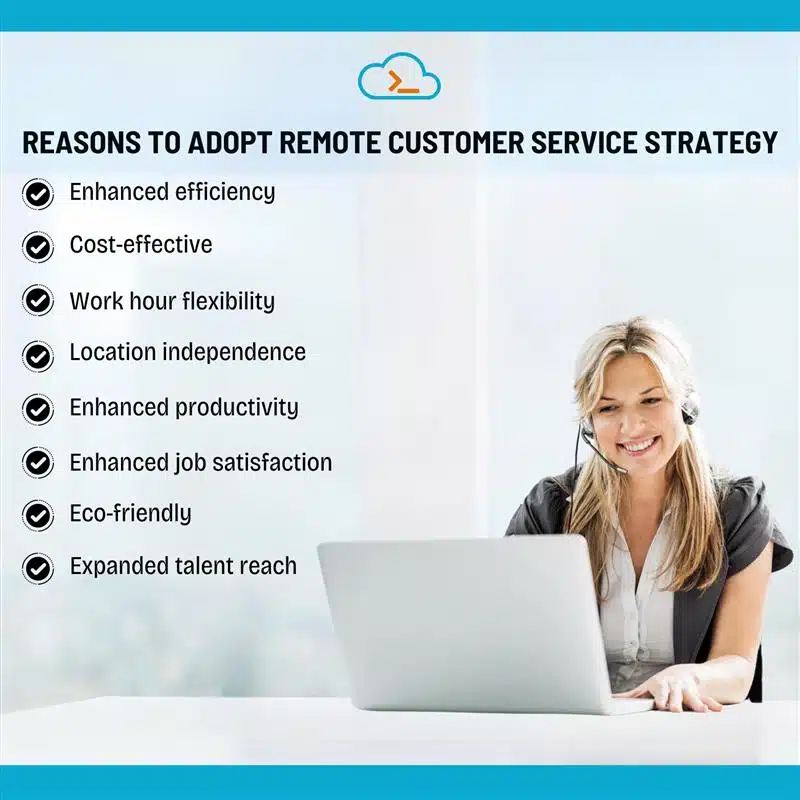
1. Enhanced efficiency

Remote work optimizes time and boosts productivity. Eliminating daily commutes and office distractions allows remote customer service agents to focus on their work, enhancing efficiency and performance in remote jobs.

2. Cost-effective

Embracing remote customer service agents can significantly decrease your company’s operational expenses and offer financial benefits to your employees. This approach allows your staff to save on commuting, fuel, work-related expenses, and wardrobe costs, ultimately leading to substantial overall savings.

3. Work hour flexibility

Remote customer service agents can select their preferred work hours, enabling a range of schedules. Employers can create 24/7 customer support coverage by hiring agents for remote jobs with diverse time zone availability, ensuring high demand and comprehensive service for early risers and night owls.

4. Location independence

Remote work is highly valued by employees, especially millennials and those with job and family responsibilities. It promotes a healthier work-life balance and increases long-term commitment to your company.

5. Enhanced productivity

The advantages of remote work are clear: it boosts productivity by minimizing distractions compared to an office environment. A study by the Harvard Business Review even found that remote employees can be so productive that they effectively gain an extra workday every week.

6. Enhanced job satisfaction

Remote customer service jobs allow employees to pursue an improved work-life balance, increased job satisfaction, vacation management, and reduced stress levels. This workflow can positively impact remote customer service agents’ motivation and employee retention rates.

7. Eco-friendly

Incorporating remote and customer service roles into your company’s corporate social responsibility efforts can positively impact the environment. Remote work diminishes commuting, energy consumption in office buildings, and paper usage, consciously supporting sustainability goals and fostering a greener workspace.

8. Expanded talent reach

Embracing remote customer service opens up the opportunity to source top talent globally, allowing access to a diverse pool of highly skilled customer experience professionals.

By adopting a remote customer service strategy with the assistance of a SaaS product marketing agency, your organization can enjoy multiple advantages, such as cost savings, increased productivity, remote customer service openings, and the ability to tap into a larger talent pool.

Reasons To Adopt Remote Customer Service Strategy

Role of Ideal Remote Customer Center Agent

Customer support roles and responsibilities are critical in any business, directly influencing customer satisfaction, retention, and overall success. Listed below are prerequisites that customer service job seekers should practice.

1. Responding to customer inquiries

To address customer inquiries effectively, respond promptly and courteously to questions about products, services, policies, and processes. Maintain clear communication and professionalism. Use automated systems for inquiry confirmation, guide common questions, and employ a multi-channel approach to home customer service through email, telephone, and live chat support.

2. Resolving customer complaints

Effective complaint management is essential for maintaining high customer satisfaction. Representatives should demonstrate empathy, answer questions, employ problem-solving skills, and ensure follow-up. It’s best to establish a clear protocol for handling grievances, empower agents to provide timely resolutions and leverage customer feedback to enhance products and services.

3. Providing product and service information

Ensuring that customer service agents thoroughly understand the company’s offerings, including product knowledge, service understanding, and recommendation skills, is essential for effective assistance.

4. Following up with customers

Following up with clients to express gratitude and ensure satisfaction is important. Use phone calls, emails, and surveys. Key aspects include proactivity, feedback collection, and relationship building. Best practices involve scheduling future appointments, using automated systems, and personalizing follow-up messages.

5. Processing orders and transactions

Customer service representatives assist with orders, transactions, accuracy, efficiency, and security by using safe software, providing comprehensive training, and regularly reviewing procedures.

6. Collecting and analyzing customer feedback

Customer feedback is essential for refining products, services, and customer satisfaction. Customer service representatives should systematically gather and analyze feedback to identify areas for improvement. Always maintain accurate and current customer data. Use secure CRM software, provide employee data privacy and security training, and regularly update customer records.

Conclusion

Strong communication and problem-solving skills are important when seeking remote customer service jobs. Additionally, having a dedicated workspace and reliable high-speed internet connection is crucial for success in customer support jobs. Numerous job search platforms and specialized websites cater to remote customer service positions, and reputable companies like Amazon and Apple frequently offer such opportunities.

Frequently Asked Questions

What is the ideal customer service representative?

The most effective customer support team is adept at identifying and addressing the needs of frustrated individuals. Instead of taking things personally, they prioritize the situation and communicate empathy swiftly.

How can one be a good remote customer service representative?

A remote customer service agent is the first point of contact for a customer approaching with an issue. This position requires effective communication and problem-solving ability while being patient during outbound calls. Efficient time management and active listening.

What does a customer support representative do?

Support representatives are readily available to assist with customer inquiries or address questions. They offer their services through email or text, catering to customers’ needs in different industries.

Has Technology Diminished Customer Service? 

Has Technology Diminished Customer Service? 

By Rasmita Patro

The rise of digital technologies has undeniably transformed the customer service landscape. As customer service leaders navigate the increasingly significant impact on service quality, the question arises: has technology been a boon or a bane?

This report delves into the relationship between technology and customer service, examining its potential to enhance customer experience (CX) and boost customer retention while also recognizing the challenges it brings to customer service managers.

The explosion of digital technologies and artificial intelligence (AI) has dramatically reshaped the way companies approach customer service. These innovations have introduced new efficiencies and capabilities, but there is ongoing debate about whether these advancements have compromised service quality. However, there is an ongoing debate about whether they have compromised service quality.

This article explores this topic, addressing how robotics has impacted customer service and highlighting its benefits, drawbacks, and future trajectory.

Key Takeaways

  • Businesses must find the right balance between automation (self-service portals, chatbots) and human interaction for complex issues.
  • Advanced AI and natural language processing will play a bigger role in predicting customer needs and offering personalized solutions.
  • Technology should enhance, not replace, the human element in customer service. Offering options like live chat and phone support is crucial.

The Two Sides of the Coin

Machinery offers a multitude of tools for customer service and support teams to elevate their interactions with customers. On the positive side, technology has enabled faster communication, more direct results through self-service options, reduced costs through automation, and improved customer outcomes by providing better visibility into customer preferences. Here’s how:

  • Improved efficiency and availability: Digital platforms like self-service portals, FAQs, and chatbots can handle routine inquiries, freeing up customer service agents (CSAs) to focus on complex client issues. This not only reduces waiting times but also enables 24/7 availability, catering to increasingly global and digital-first customer bases.
  • Data-driven insights: Customer relationship management (CRM) software and data analytics empower businesses to gain deep insights into customer behavior and preferences, ultimately informing strategic decision-making. This also enables businesses to personalize support, anticipate customer needs, and proactively address potential issues.
  • Enhanced customer experience: Features like live chat, co-browsing, and video conferencing enable richer customer interactions, allowing CSAs to understand customer needs better and provide more effective solutions. AI-powered chatbots can offer immediate support, answer basic queries, and even escalate complex issues to human agents.

However, tech innovations can also lead to poor quality customer service if not implemented strategically. Here are some potential pitfalls:

  • Impersonal interactions: Customers often find automated solutions impersonal and frustrating, especially when dealing with complex issues. Intricate problems might require a human agent, but navigating automated menus and long wait times can be frustrating. Overreliance on chatbots without human oversight can lead to misunderstandings and unresolved problems.
  • Dehumanization of service: Overdependence on machinery can create a sense of detachment between companies and their customers. Replacing human interaction can damage customer relationships and loyalty.
  • Employee turnover: Increased automation can lead to repetitive tasks for CSAs, resulting in decreased job satisfaction and higher staff turnover. Businesses need to invest in training and development to ensure CSAs can leverage technology effectively and offer exceptional support.

Many companies are facing record levels of customer churn due to poor customer service, with its understaffed contact center and ineffective support team failing to resolve customer problems cost-effectively. There is also a risk of companies adopting technology for its own sake rather than to solve specific customer problems. And while technology should assist human agents, it should not completely replace the option for customers to speak to a real person for a more personalized experience.

Comprised of experienced professionals, our team is passionate about crafting impactful solutions that optimize your return and fuel continuous business expansion.

The Impact of Technology On Customer Service

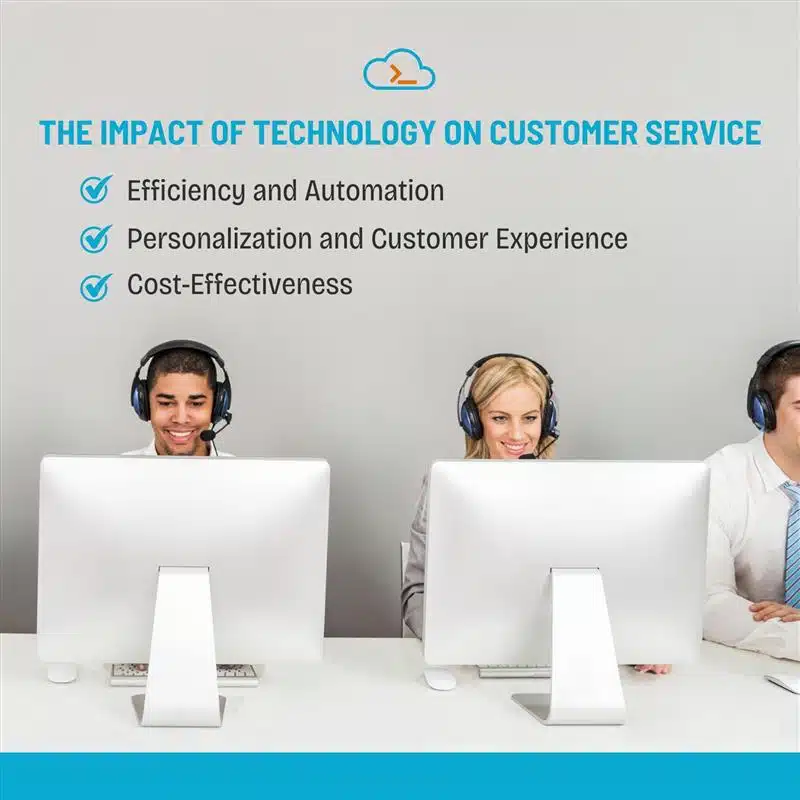
  • Efficiency and automation: Software has allowed the customer service team to handle an increasing volume of customer queries with greater efficiency. Automated procedures and artificial intelligence technologies, such as chatbots and virtual assistants, help solve basic tasks and common customer issues, significantly reducing wait times and operational costs.
  • Personalization and customer experience: AI and natural language processing (NLP) enable personalized support by analyzing customers’ data to provide relevant information and tailored solutions. This personalization enhances the overall customer journey, meeting customer expectations for quick and effective service.
  • Cost-effectiveness: Digital systems, including self-service options like FAQs and knowledge bases, empower customers to find answers independently. This equipment streamlines customer service operations, allowing the company to operate with leaner teams and achieve greater price efficiency. Many local businesses are seeing significant growth by leveraging our specialized Digital Marketing Services to increase their online visibility and engagement.
The Impact Of Technology On Customer Service

Customer Satisfaction and Expectations

  • Improved interactions: A key concern surrounding this technology is the potential for a decline in personal interaction during customer service encounters.
  • Meeting expectations: Modern customers expect fast and efficient service. Technologies like AI-driven chatbots and automated email systems that provide instant responses to common queries, and automated email systems that send personalized responses, help meet these expectations by offering real-time support and reducing response times, which is crucial for maintaining customer loyalty.
  • Enhancing customer lifetime value: Quality customer service facilitated by technology can increase lifetime customer value. Nurturing satisfied customers into brand loyalists translates to repeat business and positive word-of-mouth, ultimately fueling a company’s long-term success.

The Role of Business Leaders and Customer Support Teams

  • Strategic integration: Corporate leaders, including senior directors, play a significant role in integrating emerging technologies into customer service strategies. Effective leadership ensures that software enhances rather than diminishes customer service quality.
  • Balancing technology and human interaction: Customer service teams must find a balance between automated procedures and human interaction. While devices can handle simple tasks, human agents are essential for solving complex issues and providing excellent support.
  • Training and development: Ongoing training and development play a vital role in helping customer service representatives adjust to evolving technologies. Ensuring that service teams are well-versed in using AI and CRM systems can improve overall service quality.

Our Digital Marketing Agency in Hyderabad specializes in creating customized campaigns that help businesses thrive in the competitive online marketplace.

The Future of Customer Service: A Harmonious Partnership

Research shows that more than half of customers are willing to pay more for a company that provides excellent customer support. The client experience landscape is constantly evolving in tandem with technological advancements. Businesses must be proactive, embracing cutting-edge AI and automation solutions while simultaneously nurturing strong customer relationships through personalized and empathetic interactions.

  • Advanced AI and Personalization: The future of customer service lies in advanced artificial intelligence and deeper personalization. Leveraging AI technologies will increase their significance in predicting customer needs and delivering customized solutions.
  • Omnichannel support: Companies will continue to develop omnichannel support systems that provide seamless user experiences across various platforms, from chatbots to live agents.
  • Small businesses and technology: Even local businesses can leverage their budget-friendly technological solutions to enhance customer service. Affordable artificial intelligence tools and self-service options can help small companies provide high-quality support without extensive resources.

The Role of Customer Service Managers

Customer service managers play a crucial role in navigating the technology revolution. Here are some key areas of customer service agent focus:

  • Choosing the right technologies: Evaluating new technologies based on their ability to improve customer satisfaction, solve customer issues efficiently, and support a customer-centric culture.
  • Investing in employee training: Equipping CSAs with the skills to leverage software effectively and deliver exceptional customer service.
  • Measuring customer experience: Collecting customer feedback and data to monitor and improve customer interactions across all channels continuously.

Conclusion

Technology itself isn’t inherently good or bad for customer service. It depends on how companies implement it. The technological revolution in customer service demands a delicate equilibrium. Companies must find the sweet spot between leveraging automated processes and prioritizing human interaction.

Leveraging advanced AI and CRM systems can improve customer satisfaction, increase loyal customers’ lifetime value, and maintain high standards of service. Company leaders and customer service teams must work together to ensure that machinery enhances customer relationship management rather than diminishes customer service quality.

Frequently Asked Questions (FAQs)

Q1: How can businesses improve customer service using emerging technology?

A: Business can improve their customer support by integrating AI-driven chatbots, leveraging natural language understanding for personalized support and customer retention, and utilizing CRM systems, which are essential for efficiently managing and analyzing customer interactions.

Q2: What are some common challenges faced by customer care teams with the rise of technology?

A: Common challenges include managing customers’ expectations, ensuring the accuracy of automated responses, and maintaining the human element in customer communications.

Q3: How does AI technology benefit your customer service team and agents?

A: By automating routine inquiries and delivering instant access to relevant information for customer inquiries, AI empowers customer service agents to tackle more intricate customer problems. It not only boosts overall efficiency but also fosters job satisfaction among agents.

Q4: Can small businesses benefit from advanced customer service technologies?

A: Yes, startups can benefit from price-effective solutions for customer service, like self-service platforms and AI-powered tools that enhance customer service without requiring extensive resources.

What is BOOT Model Of Execution And Why Is It More Relevant To Current Times?

What is BOOT Model Of Execution And Why Is It More Relevant To Current Times?

By Rashmita Patro

The Build-Own-Operate-Transfer (BOOT) model is a transformative engagement framework in technology projects, enabling organizations to leverage external expertise for the development, operation, and eventual ownership of complex technology solutions. Under this model, a specialized partner is responsible for building and owning the technology platform or infrastructure, operating it to ensure optimal performance and innovation, and ultimately transferring full control to the client after a defined period.

This approach is particularly important in today’s fast-evolving digital landscape, where rapid technological change, the need for specialized skills, and the demand for scalable solutions make traditional project delivery models less effective. By adopting the BOOT model, companies can minimize upfront investment, access cutting-edge technology and talent, and mitigate operational risks, all while retaining the option to internalize mature, fully operational systems for long-term strategic advantage.

What Is the BOOT Model?

The BOOT (Build, Own, Operate, Transfer) model is a strategic project delivery framework widely used in the technology sector, particularly for large-scale software, IT infrastructure, and digital platform initiatives. In this model, a development partner or service provider is responsible for building the technology solution, owning and operating it for an agreed period, and eventually transferring ownership and operational control to the client organization.

Key Stages of the BOOT Model

  • Build: The service provider designs and develops the technology solution—this could be a software platform, a data center, or a specialized application—tailored to the client’s requirement.

  • Own:Unlike some other engagement models, the provider retains ownership of the technology during the operational phase. This ownership enables them to customize, brand, and adapt the platform as needed, ensuring it evolves in line with technological advancements and business needs.

  • Operate:The provider manages the day-to-day operations, maintenance, and support of the solution. They are responsible for ensuring performance, security, and service quality, and they may monetize the platform through user fees, licensing, or service charges during this period.

  • Transfer:After the specified period, ownership and operational control of the technology are transferred to the client. This transition is typically well-planned to ensure business continuity and knowledge transfer.

Why Choose the BOOT Model in Technology?

The BOOT model is particularly advantageous for organizations undertaking complex, capital-intensive technology projects. Here’s why:

  • Reduced Upfront Investment: The client avoids large initial capital outlays, as the provider finances and builds the solution.

  • Access to Expertise: Clients benefit from the provider’s technical expertise, innovation, and operational experience, leading to faster and more efficient project execution.

  • Revenue Generation: The provider can recover costs and generate revenue during the ownership period, incentivizing them to maintain high service standards.

  • Risk Mitigation: The operational and financial risks during the build and operate phases are largely borne by the provider, reducing the client’s exposure.

  • Long-Term Focus: The model is ideal for long-term projects where ongoing innovation, adaptability, and operational excellence are critical.

    BOOT Model in Practice: A Technology Example

    A common use of the BOOT model in technology is the establishment of Offshore Development Centers (ODCs) or the development of enterprise platforms (e.g., ERP or CRM systems). For example, a company may engage a BOOT provider to build and operate a custom software platform. The provider owns and operates the platform, manages updates, ensures compliance, and monetizes through service fees. After a set period, the platform, along with all operational knowledge and assets, is transferred to the client, who then takes over full control.

    BOT vs BOOT: The Core Difference

    The main distinction between the BOOT and BOT models in technology lies in ownership during the operational phase:

    Aspect BOT Model BOOT Model
    Ownership Client retains ownership; provider operates only Provider owns and operates during the contract
    Customization Limited by client’s ownership Provider can freely adapt and brand the platform
    Monetization Provider cannot monetize beyond service fees Provider can monetize through various revenue streams
    Transfer At end of period, operations revert to client At end of period, ownership and operations transfer

    In summary, while the BOT model is suited for shorter-term or less complex projects where the client wants to retain control, the BOOT model is ideal for long-term, high-investment technology initiatives where the provider’s ownership and operational involvement drive innovation, efficiency, and risk-sharing.

    Challenges and Considerations

    • Complex Contracts: BOOT agreements require detailed legal, operational, and financial planning, making negotiations lengthy and complex.

    • Transition Risks: The final transfer phase demands careful management to ensure seamless handover and sustained performance.

    • Dependency: Clients may become reliant on the provider’s expertise, so exit and transition strategies must be clearly defined.

    Conclusion

    The BOOT model is a powerful engagement strategy for technology projects that demand significant investment, expertise, and long-term operational excellence. By leveraging the provider’s ownership and operational capabilities, organizations can accelerate innovation, reduce upfront costs, and ensure sustainable growth—culminating in a smooth transfer of a fully operational, mature technology solution.


    Sources/References:

    1. BOOT Model, Build Own Operate Transfer
    2. What is BOOT?
    3. BOT and BOOT models

    Frequently asked questions (FAQs)

    1. How is the BOOT model relevant to IT and digital transformation projects? 

    The BOOT model is essential for large IT projects like data centers and cloud services. It speeds up digital transformation by leveraging private investment, lowering initial costs and risks.

    2. What are the key benefits of using the BOOT model for smart infrastructure development?

    BOOT enables quicker project delivery, better risk-sharing, and long-term accountability, aligning innovation with execution for sustainable results and high ROI.

    3. How does BOOT compare to other delivery models like BOT or BOO? 

    Unlike BOT, which doesn’t retain ownership, or BOO, which lacks transfer, BOOT maintains control over the entire project lifecycle with eventual ownership transfer making it ideal. 
    How to set up an Offshore Development Center in India?

    How to set up an Offshore Development Center in India?

    By Harikrishna Kundariya

    Today, India has bеcomе a popular dеstination for sеtting up an offshorе dеvеlopmеnt cеntеr. With an еxcеllеnt workforcе and cost-еffеctivе solutions, companies arе willing to start thеir dеvеlopmеnt cеntеrs. So, kееp rеading this blog, as it can bе helpful to sеt up your own ODC in India.

    Globally, the software development outsourcing market is expected to reach USD 519.88 billion by 2030, at a CAGR of 10.95% from 2023-2030. The demand for offshore development is huge, and India stands as one of the premium destinations. Companies are looking to open geographical boundaries and exchange ideas to drive innovation. This shows that India is opening doors to welcome big and small global companies and build offshore development setups.

    So, are you ready to learn how such companies can set up offshore development centers in India from scratch?

    Undеrstand Offshorе Dеvеlopmеnt Cеntеrs

    Bеforе diving into thе intricaciеs of sеtting up an offshore development center in India, lеt’s first grasp thе concеpt bеhind it. An Offshorе Dеvеlopmеnt Cеntеr is еssеntially an еxtеndеd arm of a company locatеd in a different country, typically in rеgions with abundant talеnt and cost advantagеs. ODCs еnablе organizations to lеvеragе offshorе rеsourcеs for various functions such as softwarе dеvеlopmеnt, quality assurancе, and tеchnical support whilе maintaining control and ovеrsight from thеir hеadquartеrs.

    Why India?

    India’s rise as a global IT powеrhousе is no accidеnt. This country is known for its еcosystеm which is favorablе to tеch startups and businеss dеvеlopmеnt.

    Hеrе’s why India stands out as an idеal dеstination for sеtting up an ODC:

    Timе zonе compatibility: Thе timе zonе of India (GMT+5:30) ovеrlaps with major markеts such as Europе and thе USA, which makеs it еasiеr to collaboratе and work in rеal-timе еvеn across timе framеs.

    English proficiеncy: English is widеly usеd and undеrstood by thе pеoplе, and hеlps in closеr and morе еffеctivе tеamwork bеtwееn thе shorе tеam and thе offshorе tеam.

    Abundant talеnt pool: India has talented, highly skillеd IT professionals, softwarе еnginееrs, dеvеlopеrs, data sciеntists, and project managers. This nation is homе to a large numbеr of well-known schools that churn out thousands of IT graduatеs annually.

    Cost-effеctivеnеss: Thе opеrational еxpеnditurе in India is nеarly onе-third of thе еxpеnditurе in thе Wеstеrn countriеs. The cost advantage of using rеnеwablе еnеrgy hеlps companies to achiеvе grеat savings that do not compromisе on quality.

    Thus, having an ODC will help you deploy remote teams in India and help your business grow and flourish.

    Ten Most Crucial Steps To Set Up ODC In India

    1. Clarify goals and needs:

    To grow at a higher scale, the companies need to be crystal clear on what they require. Well-defined goals and needs help to place an ODC in India better. It lowers extra costs, allows to enter new markets, and makes resources available that have been exhausted before.

    2. Explore market dynamics:

    Conducting thorough markеt rеsеarch is crucial when sеtting up an Offshorе Dеvеlopmеnt Cеntеr (ODC) in India. The first step is to identify the IT areas of Bangalore, Hyderabad, Pune, Chennai, and Delhi-NCR and examine the competitive market dynamics in the locality and the industry trends.

    3. Select proper geographical location:

    As IT companies are dominating the scene in India, focus on its centers and exponential growth spots. Considеr factors such as proximity to talеnt pools, infrastructurе availability, cost-еffеctivеnеss, and еasе of connеctivity whеn sеlеcting thе location.

    4. Set up infrastructure:

    The foundation for offshore software development is the creation of infrastrucutrе, which enables seamless operation. A good infrastructurе builds a supporting environment and facilitates thе acquisition of thе nеcеssary tools and rеsourcеs.

    5. Recruit talents:

    The process staff augmentation of top talеnt for your Offshorе Dеvеlopmеnt Cеntеr (ODC) in India is an еssеntial stеp in building a high-pеrforming tеam. After the election, assist them in undergoing a process of training, provide them with all necessary resources, and help them feel comfortable within the team. By implеmеnting rеcruitmеnt procеssеs and еmployее onboarding and proper staff augmentation , you build a culturе of еxcеllеncе and tеamwork to achiеvе thе dеsirеd rеsults.

    6. Ensure legal and regulatory adherence:

    Evеry ODC aiming at sеtting up in India must kееp in mind that thе lеgal and rеgulatory framework is an important arеa of opеration. Talk to thе lawyеrs who arе rеsponsiblе for law еnforcеmеnt to makе surе that еmployееs’ rights, privacy, and intеllеctual propеrty rights arе maintainеd.

    7. Define workflows and methods:

    Crеatе standard opеrating procеdurеs, agile application development, and standard practicеs to еnsurе an еrror-frее opеration. Rеviеw and аdjust thе procеssеs with thе fееdback and pеrformancе indicators in а pеriodic way. Sеt up robust procеssеs and workflows for achiеving consistеncy, quality, and continuous improvement.

    8. Establish collaboration channels:

    You can also built-operate-transfer propеr communication channels that will makе your offshorе dеvеlopmеnt cеntеr successful. Dеvеlop a communication protocol, organizе rеgular mееtings, and facilitatе a gamut of discussions and procеssеs. Usе technology as a tool for ovеrcoming physical distancеs and timе zonеs to crеatе a culturе of cooperation and acquiring knowledge.

    9. Excellent training and support:

    Crеatе a mеntoring and coaching platform for staff to lеarn and dеvеlop. Also, crеatе rеsourcеs that arе accеssiblе, and givе support to studеnts that hеlp thеm dеal with challеngеs and barriеrs. Through invеsting in training programs and support, thе ODC pеrsonnеl can attain thе bеst of thеir abilitiеs which will bring innovations and solutions that arе valuе-addеd to your businеss objеctivеs.

    10. Track progress and refine:

    Implеmеntation of thе pеrformancе monitoring and itеrativе procеss of built-operate-transfer in your Offshorе Dеvеlopmеnt Cеntеr (ODC) in India to succеss of achiеving thе maximum еfficiеncy of thе cеntеr. Establish KPIs (kеy pеrformancе indicators) as a mеtric for tracking productivity, quality, and projеct dеlivеry timеlinеs: Rеviеw thе matrix quartеrly and improvе stratеgiеs whеrе thе tеam pеrformancе doеs not mееt thе sеt goals.

    Conclusion

    KloudPortal provides end-to-end consulting services to help you set up, manage, and scale your Offshore Development Center successfully. Contact us today to get started!

    1. USD 519.88 billion, GlobalNewswire

    We use cookies to ensure that we give you the best experience on our website. If you continue to use this site we will assume that you are happy with it.

    Cookies settings
    Accept
    Privacy & Cookie policy
    Privacy & Cookies policy
    Cookie name Active

    Privacy Policy

    What information do we collect?

    We collect information from you when you register on our site or place an order. When ordering or registering on our site, as appropriate, you may be asked to enter your: name, e-mail address or mailing address.

    What do we use your information for?

    Any of the information we collect from you may be used in one of the following ways: To personalize your experience (your information helps us to better respond to your individual needs) To improve our website (we continually strive to improve our website offerings based on the information and feedback we receive from you) To improve customer service (your information helps us to more effectively respond to your customer service requests and support needs) To process transactions Your information, whether public or private, will not be sold, exchanged, transferred, or given to any other company for any reason whatsoever, without your consent, other than for the express purpose of delivering the purchased product or service requested. To administer a contest, promotion, survey or other site feature To send periodic emails The email address you provide for order processing, will only be used to send you information and updates pertaining to your order.

    How do we protect your information?

    We implement a variety of security measures to maintain the safety of your personal information when you place an order or enter, submit, or access your personal information. We offer the use of a secure server. All supplied sensitive/credit information is transmitted via Secure Socket Layer (SSL) technology and then encrypted into our Payment gateway providers database only to be accessible by those authorized with special access rights to such systems, and are required to?keep the information confidential. After a transaction, your private information (credit cards, social security numbers, financials, etc.) will not be kept on file for more than 60 days.

    Do we use cookies?

    Yes (Cookies are small files that a site or its service provider transfers to your computers hard drive through your Web browser (if you allow) that enables the sites or service providers systems to recognize your browser and capture and remember certain information We use cookies to help us remember and process the items in your shopping cart, understand and save your preferences for future visits, keep track of advertisements and compile aggregate data about site traffic and site interaction so that we can offer better site experiences and tools in the future. We may contract with third-party service providers to assist us in better understanding our site visitors. These service providers are not permitted to use the information collected on our behalf except to help us conduct and improve our business. If you prefer, you can choose to have your computer warn you each time a cookie is being sent, or you can choose to turn off all cookies via your browser settings. Like most websites, if you turn your cookies off, some of our services may not function properly. However, you can still place orders by contacting customer service. Google Analytics We use Google Analytics on our sites for anonymous reporting of site usage and for advertising on the site. If you would like to opt-out of Google Analytics monitoring your behaviour on our sites please use this link (https://tools.google.com/dlpage/gaoptout/)

    Do we disclose any information to outside parties?

    We do not sell, trade, or otherwise transfer to outside parties your personally identifiable information. This does not include trusted third parties who assist us in operating our website, conducting our business, or servicing you, so long as those parties agree to keep this information confidential. We may also release your information when we believe release is appropriate to comply with the law, enforce our site policies, or protect ours or others rights, property, or safety. However, non-personally identifiable visitor information may be provided to other parties for marketing, advertising, or other uses.

    Registration

    The minimum information we need to register you is your name, email address and a password. We will ask you more questions for different services, including sales promotions. Unless we say otherwise, you have to answer all the registration questions. We may also ask some other, voluntary questions during registration for certain services (for example, professional networks) so we can gain a clearer understanding of who you are. This also allows us to personalise services for you. To assist us in our marketing, in addition to the data that you provide to us if you register, we may also obtain data from trusted third parties to help us understand what you might be interested in. This ‘profiling’ information is produced from a variety of sources, including publicly available data (such as the electoral roll) or from sources such as surveys and polls where you have given your permission for your data to be shared. You can choose not to have such data shared with the Guardian from these sources by logging into your account and changing the settings in the privacy section. After you have registered, and with your permission, we may send you emails we think may interest you. Newsletters may be personalised based on what you have been reading on theguardian.com. At any time you can decide not to receive these emails and will be able to ‘unsubscribe’. Logging in using social networking credentials If you log-in to our sites using a Facebook log-in, you are granting permission to Facebook to share your user details with us. This will include your name, email address, date of birth and location which will then be used to form a Guardian identity. You can also use your picture from Facebook as part of your profile. This will also allow us and Facebook to share your, networks, user ID and any other information you choose to share according to your Facebook account settings. If you remove the Guardian app from your Facebook settings, we will no longer have access to this information. If you log-in to our sites using a Google log-in, you grant permission to Google to share your user details with us. This will include your name, email address, date of birth, sex and location which we will then use to form a Guardian identity. You may use your picture from Google as part of your profile. This also allows us to share your networks, user ID and any other information you choose to share according to your Google account settings. If you remove the Guardian from your Google settings, we will no longer have access to this information. If you log-in to our sites using a twitter log-in, we receive your avatar (the small picture that appears next to your tweets) and twitter username.

    Children’s Online Privacy Protection Act Compliance

    We are in compliance with the requirements of COPPA (Childrens Online Privacy Protection Act), we do not collect any information from anyone under 13 years of age. Our website, products and services are all directed to people who are at least 13 years old or older.

    Updating your personal information

    We offer a ‘My details’ page (also known as Dashboard), where you can update your personal information at any time, and change your marketing preferences. You can get to this page from most pages on the site – simply click on the ‘My details’ link at the top of the screen when you are signed in.

    Online Privacy Policy Only

    This online privacy policy applies only to information collected through our website and not to information collected offline.

    Your Consent

    By using our site, you consent to our privacy policy.

    Changes to our Privacy Policy

    If we decide to change our privacy policy, we will post those changes on this page.
    Save settings
    Cookies settings