

6 Essential Considerations for SEOs Building a Headless Website

6 Essential Considerations for SEOs Building a Headless Website

By Aparna Sushumna

Building a headless website has become a popular choice for modern SEOs seeking to enhance site performance, flexibility, and user experience. Unlike traditional websites, a headless setup separates the front-end and back-end, allowing developers to use different technologies for each. This separation offers numerous advantages, such as faster loading times and a more dynamic user experience. However, to fully leverage the benefits of a headless architecture, SEOs must consider several essential factors.

The global demand for headless content management systems has surged due to the increasing need for flexibility and control in distributing content across multiple channels. Headless CMSes are also viewed as more developer-friendly than traditional, monolithic CMSes.

In this blog, we will explore six crucial considerations for SEOs when building a headless website.

Understanding Headless Websites

A headless content management system involves implementing specific processes for optimizing SEO on headless websites. These processes include content modeling, intentional technical setup, and omnichannel search. It’s important to note that many popular SEO tools may not integrate seamlessly with headless CMSs. Despite this, SEO remains a fundamental aspect, aiming to deliver the best content most effectively. Ultimately, a successful headless SEO campaign hinges on three key elements.

Content Management Systems (CMS) utilize content models to separate content from its presentation effectively. Instead of just a collection of web pages, a content model is meticulously designed to represent the content’s structure accurately. This strategy allows for different types of content to be stored centrally and made available across various platforms. This approach empowers any front end to leverage the data format that best aligns with its specific requirements. agnostic to specific devices such as mobile phones or tablets. The primary objective of the content model is to precisely define the content needs based on attributes and their interrelations.

Traditional CMS vs. Headless CMS

Traditional CMSs consolidate all content within a single location and offer customization capabilities for specific devices, like combining various ingredients in a pizza. In contrast, a headless CMS separates content, codes, and designs, facilitating the seamless creation of content across diverse media platforms. For instance, in headless eCommerce, pricing data can be obtained from separate systems and seamlessly integrated into the website, operating independently from other content.

A headless CMS is a modern content management system that separates front-end and back-end functions that effectively separates front-end and back-end services for content creation, maintenance, and distribution. This architectural approach provides enhanced flexibility and scalability compared to traditional CMS systems. A key feature of a headless CMS is its utilization of a data layer instead of a traditional database, simplifying integration with third-party solutions. SEO best practices for headless website can be well executed with the best enterprise SEO agency in India.

Benefits And Disadvantages Of Using A Headless CMS For Search Engines

Benefits: easier integration with third-party technologies, content reuse across channels, and improved SEO performance.

Disadvantages: There is a prevalence of customizable integrations, which can be challenging to set up, and transitioning from a traditional CMS to a headless setup can be challenging due to the need for technical setup.

Headless SEO Fundamentals

a. Headless SEO and how it is different from traditional SEO

Headless SEO refers to the unique strategies SEOs use to optimize content with a headless CMS. It differs from traditional SEO approaches in terms of content creation and content distribution.

b. Importance of omnichannel SEO in headless architecture

Omnichannel SEO is a growing trend, requiring SEOs to optimize for search engines, social media, email, and other channels. Headless SEO goes beyond website optimization, considering user experience across all channels.

Actionable Technical SEO Considerations

Building a headless website involves separating the technical aspects of the presentation layer (front-end) from the back-end content management system (CMS). Here are key considerations the SEO team should consider:

1. URL Structure:

Ensure the URL structure on the static page is SEO-friendly, clear, and consistent. Avoid dynamic parameters and maintain clean, absolute URLs.

2. Content Delivery:

A content delivery network (CDN) can ensure fast and reliable content delivery, improving page load times and user experience.

3. JavaScript SEO:

Since headless websites often render JavaScript, search engines should properly crawl and index the content. Use SSR (server-side rendering) or SSG (static site generation).

4. Metadata management:

Implement proper meta tags, including title tags, to ensure search engines understand your pages’ content, structure, and internal linking.

5. Schema markup:

Improving your chances of appearing in rich search results.

6. XML sitemap setup:

Creating and maintaining XML sitemaps in the root directory helps search engines discover and reuse content, create valuable content, and index your pages more efficiently.

7. Robots.txt:

Ensuring your robots.txt or X-Robots-Tag directives is correctly configured allows search engines to crawl the necessary parts of your site while blocking sensitive areas.

8. Link structure:

Maintain a logical and hierarchical link structure to ensure easy navigation, fix broken links, and ensure proper internal linking, which will benefit users and search engines.

9. Canonicalization:

Canonical tags prevent duplicate content issues and ensure that search engines know the preferred version of a page. The top best enterprise agency in Hyderabad assists in preventing errors in canonical URLs.

10. Performance optimization:

Optimize for speed and performance, as users and search engines favor fast-loading pages. Compress images, leverage browser caching, and minimize cascading style sheets and JavaScript.

11. Mobile-friendliness:

Ensure the site is fully responsive and mobile-friendly, as mobile usability on-page content is a critical ranking factor.

12. Content management:

Have a clear strategy for managing and updating content to keep it fresh and relevant, which is important for SEO.

13. Analytics and tracking:

It is properly implementing analytics and tracking to monitor user behavior, traffic, and the effectiveness of SEO efforts.

14. Security:

Ensure the website is secure (HTTPS). Search engines present secure sites, and users trust them more.

15. International SEO:

Implement lang tags for multilingual or multi-regional sites to indicate language and regional targeting if applicable.

Top enterprise SEO agency in India assists firms and businesses in attaining the above SEO requirements.
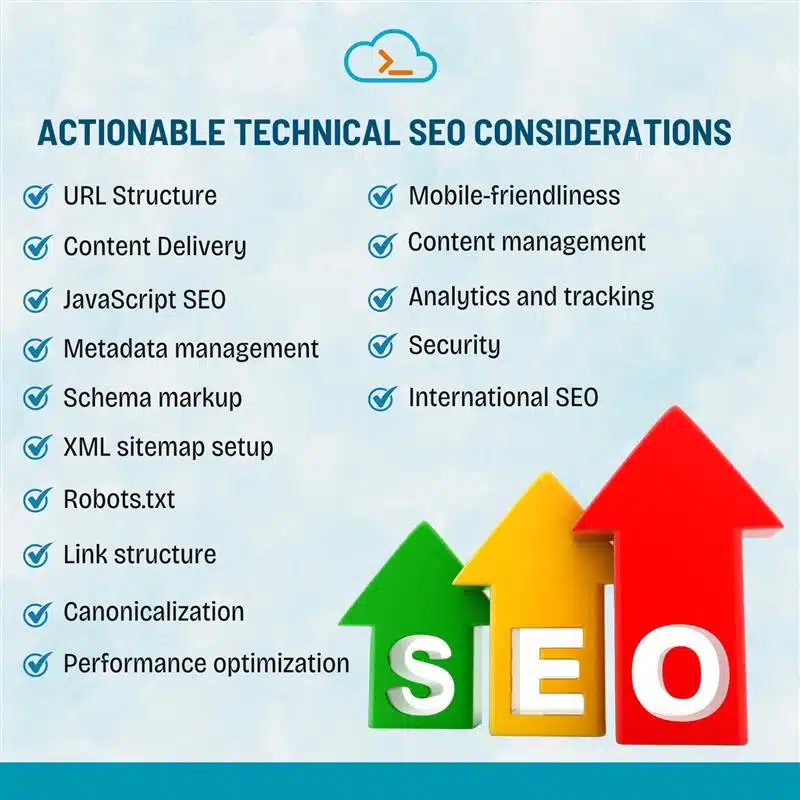
Actionable Technical SEO Considerations For Headless Website

Benefits And Drawbacks Of Using A Headless CMS

Ahrefs primarily utilizes the headless framework to present content using the Google algorithm. This approach enables agile updates and ensures that our content remains consistently current. Nonetheless, we have found that the advantages of avoiding headless approaches outweigh those of embracing them.

It is important to understand the potential drawbacks of a headless CMS. Despite the advantages of headless systems, it’s important to consider some potential drawbacks. While they can be more complex than traditional CMS systems, they offer exciting opportunities for innovative web development. Non-technical development teams may initially find navigating the integration and specialized APIs challenging. Still, headless systems can lead to successful and efficient web development with the right support and expertise. Although there are challenges, smaller firms can thrive in headless situations with the right strategies and support.

Key Takeaways

  • To excel at Headless SEO setup, it’s essential to grasp the intricacies of working with a system that separates content from presentation.
  • To enhance their performance, SEOs should proactively request essential fields in the CMS, such as titles, editable URL slugs, and an indexing management system.
  • Conducting a JavaScript parity audit is vital when establishing a JavaScript-heavy headless SEO strategy to guarantee that ensuring search engines can correctly interpret and index the content uncovered during keyword research.

Conclusion

The rise of headless CMSes demands an evolution in SEO practices. SEO professionals must sharpen their technical skillset and rethink content strategies. Building a strong technical SEO foundation on the front-end is essential. Headless architecture, however, empowers optimizations within the CMS itself, streamlining workflows for content editors.

Frequently Asked Questions

1. What is headless SEO?

Headless SEO involves optimizing a headless website for organic search engines. This process includes using headless content management systems and implementing methods that assist search engine spiders in efficiently crawling, searching, and ranking headless web pages.

2. How does headless CMS affect SEO?

Enhance your Search Engine Optimization efforts with a modern headless CMS that fully supports emojis. The headless CMS platform continuously evolves as technology progresses, empowering businesses to keep pace with the latest SEO trends and elevate content delivery across multiple channels.

3. What are the advantages of headless SEOs?

The biggest perks of adopting headless websites are Facilitating seamless content publishing across multiple channels, expanding reach to a wider audience, Streamlining the website for increased agility and versatility, and enhancing collaboration between development and content teams by eliminating bottlenecks.
SaaS Product Support: A Game Changer For Customer Retention

SaaS Product Support: A Game Changer For Customer Retention

By Rasmita Patro

In the competitive landscape of Software-as-a-Service (SaaS), the ability to retain customers is essential for achieving ongoing success and growth. Unlike traditional software companies, SaaS companies operate on a subscription-based model, making customer retention directly tied to revenue and growth. Retaining customers goes beyond just keeping them on board; it’s about ensuring their satisfaction, success, and loyalty. This comprehensive guide provides insights into how support for cloud-based software significantly enhances customer retention by exploring effective strategies, best practices, and the transformative impact of on fostering customer satisfaction, success, loyalty, and long-term business growth.

The Formula For Customer Retention Success

Customer retention rate (CRR) is crucial for SaaS companies as it measures the proportion of customers who maintain their subscriptions within a defined timeframe, which is essential for sustained business success. The formula for CRR is:

CRR = ((E – N) / S) × 100

Where:

E = Customers at the end of the period
N = New customers acquired during the period
S = Customers at the start of the period

A high CRR translates to a thriving SaaS business. Studies show acquiring first-time buyers can be five times more expensive than retaining existing ones. Here’s why retention holds such significance:

  • Increased Customer Lifetime Value (CLV): Retained customers become familiar with your product, leading to deeper engagement and increased utilization. It translates to a higher CLV, the total revenue a customer generates over their lifetime.
  • Reduced Churn: Customer churn signifies the frequency at which customers terminate their subscriptions, a challenge that effective product support tackles by preemptively meeting customer needs and enhancing their overall satisfaction.
  • Enhanced Customer Satisfaction and Loyalty: Responsive and supportive customer service enhances satisfaction, fostering trust and loyalty, which in turn encourages satisfied customers to advocate for the brand, fueling organic growth through positive word-of-mouth referrals.

The SaaS Product Marketing Company specializes in promoting software-as-a-service solutions to a global audience.

Unleashing The Power Of Data-Driven Customer Support

Customer data is the goldmine of the SaaS world. By leveraging data-driven insights and customer feedback, you can transform your product support into a proactive force for customer retention. Here’s how:

  • Customer Satisfaction Surveys: Regularly collect feedback through surveys to understand customer sentiment, pinpoint pain points, and identify areas for improvement to enrich their overall experience.
  • Customer Behavior Analysis: Analyze user interactions with your product to understand their needs and identify potential roadblocks. Preventive support can address these issues before they snowball into churn.
  • Retention Rate Analysis: Analyze churned customers to identify patterns and trends. It allows you to tailor your support approach to address common customer expectations.
  • Feedback Collection and Analysis: Create multiple feedback loops to collect valuable customer insights. Utilize direct communication channels, social media monitoring, and support ticket analysis to identify areas for improvement.

Building A Customer-Centric Support Strategy

Now that we understand the importance of data let’s explore strategies for the customer experiences and build a robust customer support system that improves retention:

  • Focus on Customer Needs: Prioritize understanding your customers’ needs and expectations. Align your support resources with their pain points and ensure your team possesses the expertise to address them effectively.
  • Embrace a Proactive Approach: Don’t wait for customers to reach out with issues. Utilize data-driven analytics to anticipate potential problems and offer proactive solutions. It could include personalized in-app tutorials or targeted knowledge-based articles.
  • Invest in a Stellar Support Team: Assemble a team of highly skilled and knowledgeable individuals passionate about helping customers. Empower them with the resources and training needed to deliver exceptional service.
  • Establish Service Level Agreements (SLAs): Define specific response times and resolution guidelines for various support channels. It sets clear expectations for both customers and your team.

SaaS Marketing involves leveraging digital platforms, artificial intelligence, and data-driven analytics to promote subscription-based software solutions to targeted audiences effectively.

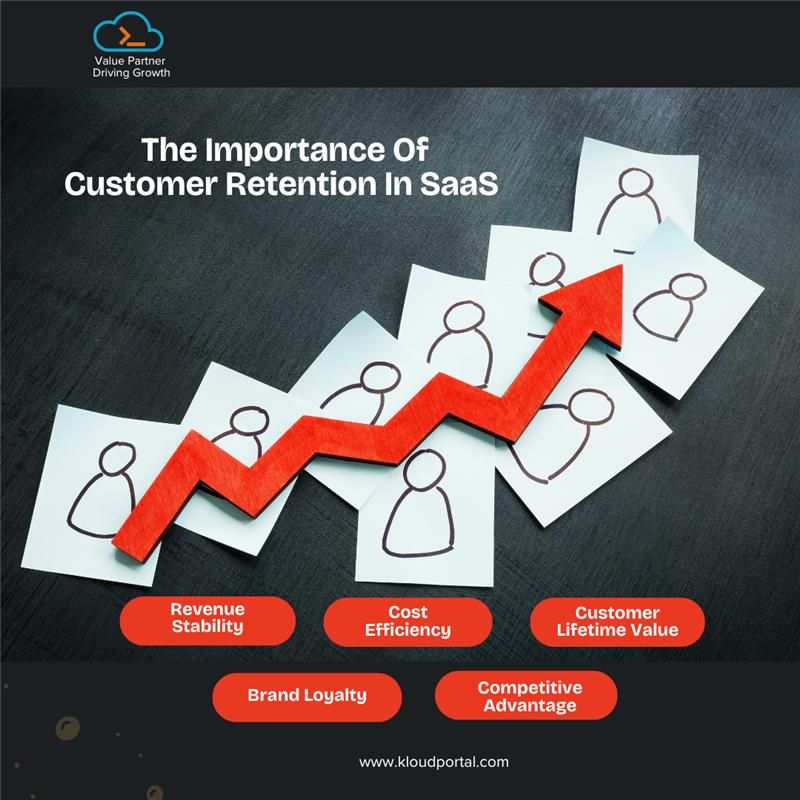
The Importance Of Customer Retention In SaaS

The Importance Of Customer Retention In SaaS

For the SaaS industry, High customer retention rates are critical as they directly correlate with increased CLV and stable revenue streams. Sustaining customer relationships is often more affordable than acquiring new ones, making it a priority for SaaS providers. High retention rates indicate that customers find value in the service, which in turn leads to better customer satisfaction scores and overall business success.

  • Revenue Stability: Recurring revenue from existing customers ensures financial stability and growth.
  • Cost Efficiency: Acquiring first-time buyers is generally more expensive than retaining existing ones.
  • Customer Lifetime Value: Higher retention rates increase the overall lifetime value of a customer.
  • Brand Loyalty: Dedicated customers often become brand advocates, drawing in new clients through positive word-of-mouth recommendations.
  • Competitive Advantage: A high retention rate can provide a strong competitive edge in the SaaS industry.

The Best B2B SaaS Product Marketing Agency offers tailored strategies to improve customer experience and elevate software companies’ visibility and client acquisition in competitive markets.

The Role Of Cloud-based Software Support In Customer Retention

Customer success is crucial in the dynamic SaaS landscape. These companies rely on data-driven decisions to enhance customer experience, prioritize personalized communication, and ensure users feel valued. Regular new feature releases keep customers engaged, fostering trust and satisfaction. This approach not only retains customers but also creates brand advocates, driving sustained growth and innovation in the competitive market.

  • Customer Success Managers: Customer Success Managers (CSMs) play a vital role in sustaining customer relationships ensuring they achieve their evolving goals with the product. CSMs act as the main point of contact for customers, providing personalized support, addressing complex queries, and guiding them through their customer journey.
  • Proactive Customer Support: Proactive support involves addressing potential issues before they become problems. It includes regular check-ins, a feedback loop monitoring user behavior, and using predictive analytics to anticipate customer requirements. Proactive support helps maintain high customer satisfaction and reduce churn rates.
  • Support Team Efficiency: An efficient support team is essential for providing timely and effective assistance to customers. It includes handling support tickets promptly, resolving issues quickly, and maintaining high service standards.
  • Data-driven analytics: Utilizing data-driven analytics and machine learning is essential for comprehending customer behavior and spotting trends. Through thorough analysis of customer data, SaaS companies can make informed decisions aimed at enhancing their products and services. Predictive analytics can also help identify potential churn risks and address them proactively.

Key Takeaways

  • Use data to predict customer needs and fix problems before they happen. Great support = happy customers.
  • Understand what customers need and personalize their experience to keep them engaged and loyal.
  • High customer retention rates translate to a higher Customer Lifetime Value (CLV), stable revenue streams, and a competitive advantage in the SaaS market.

Conclusion

By prioritizing customer success and implementing a data-driven customer support strategy, SaaS companies can transform customer retention from a struggle to a competitive advantage. Keeping current customers happy not only saves costs but also cultivates a loyal customer community that drives sustained growth and prosperity over time.

Frequently Asked Questions

1. How do you calculate the customer retention rate in SaaS?

To calculate the customer retention rate in SaaS, you divide the number of customers retained at the end of a period by the total number of customers at the start of that period and then multiply by 100 to get the percentage.

2. Why is retention important in SaaS?

Retention is crucial in SaaS because it is customer engagement, ensures stable recurring revenue, enhances CLV, and is more cost-effective than acquiring fresh clients.

3. What is the customer retention rate benchmark for SaaS?

Retention rate benchmarks in the SaaS sector vary widely based on industry and company size. However, achieving a retention rate of 85% or higher is widely regarded as successful, with leading SaaS companies frequently achieving churn rates above 90%.

Aligning SEO Strategy With Your Business Goals

Aligning SEO Strategy With Your Business Goals

By Aparna Sushumna

Search engine optimization SEO is a powerful tool used by professionals to improve websites, pages, and content visibility in search engines like Google. SEO involves a range of practices focused on enhancing the appearance, positioning, and usability of various types of content in organic search and search engine results pages.

This article encompasses web pages, video media, images, local business listings, and other assets. Given that organic search is the primary means through which people discover online content, applying search engine optimization best practices is indispensable for ensuring that the digital content published can be easily found and selected by the public from the search engine result pages and landing pages. ultimately boosting your website’s organic traffic.

Key Takeaways

  • Using targeted keywords that align with business goals is crucial, driving significant business results such as sales and engagement.
  • Integrating SEO into business and marketing goals creates a cohesive online presence.
  • Collaboration between SEO and content teams is essential coordinating strategies, aligning content calendars, and streamlining content.

Key Metrics To Set SEO Objectives

The factors below help set up SEO goals or SEO campaigns.

  • Customer lifetime value
  • Return on investment (ROI)
  • Google business profile metrics
  • Organics visibility
  • Cost per acquisition
  • Keyword ranking higher or lower
  • Conversions based on sales and leads
  • User engagement metrics
  • Backlinks
  • Branded vs. non-branded traffic
  • Organic sessions

Best Practices For SEO Goals and Strategies

SEO (Search Engine Optimization) encompasses various strategies to augment a website’s visibility on search engines and its search engine results pages (SERPs). Here are some best practices:

1. Keyword research and usage

Make sure first to identify the keywords that your target audience is actively searching for. Utilize these target keywords more naturally in titles, headings, and content while avoiding keyword stuffing.

2. High-quality content

Craft meaningful, informative, and captivating content that resonates with your audience’s interests. Incorporate a blend of text, images, videos, and infographics to enrich the user experience with the assistance of enterprise SEO agencies.

3. On-page optimization

Make sure that each page has a unique and descriptive title tag that contains relevant keywords and reflects the page’s content. Additionally, craft compelling meta descriptions that effectively summarize the page content and incorporate relevant keywords. When creating content, use header tags (H1, H2, H3, etc.) to structure the information and emphasize key points logically.

4. Technical SEO

Optimize your website to be responsive and perform well on mobile devices. Improve site loading times by optimizing images, using browser caching, and minimizing code. Ensure site security by using HTTPS.

5. User experience

Make navigation intuitive and user-friendly. Reduce bounce rates by providing clear calls to action and easy-to-find information.

6. Internal and external linking

Use internal links to effectively direct users to relevant content within your site. Additionally, high-quality backlinks from authoritative and reputable sources should be sought to increase conversions, drive organic traffic, and strengthen authority.

7. Local SEO

To improve your online presence and attract local users searching for keywords. It’s essential to optimize your website for local search, particularly if you have a physical location. Also, ensure that your business is listed in relevant local directories and on Google My Business.

8. Regular updates and audits

It’s crucial to keep your content fresh and conduct regular technical audits to maintain a high-performing website. Leverage tools like Search Console and Google Analytics to monitor your site’s performance and make informed, targeted traffic data-driven improvements.

9. Schema markup

Don’t forget to incorporate structured data to assist search engines in understanding your content and optimizing SERP features like rich snippets.

10. Social media integration

Promote content through social media to increase brand visibility and drive traffic to your site.

Following these best practices helps ensure the website is optimized for search engines, improving chances of ranking higher in search engines, more traffic, and attracting more quality traffic.

Aligning SEO Efforts With Actionable Business Objectives

Aligning SEO Efforts With Actionable Business Objectives

Aligning SEO goals with the business strategy and objectives involves integrating SEO strategies into the overall business plan to ensure that SEO efforts drive growth, generate leads, increase organic traffic, and support the company’s aims.

Here’s a detailed approach to achieve this alignment:

1. Understand business objectives

Understanding the company’s short-term and long-term goals is the primary objective of setting SEO goals. These include increasing revenue, expanding market reach, improving customer satisfaction, or launching new products. Determine the key performance indicators (KPIs) that measure success for these objectives, such as revenue growth, customer acquisition, conversion rates, or brand awareness.

2. Setting seo goals

Convert business goals into specific SEO targets. Ensure SEO goals are specific, measurable, achievable, relevant, and time-bound: SMART.

3. Conduct a comprehensive SEO audit

Review current SEO performance with help from SEO companies to identify strengths, opportunities, weaknesses, and threats. Compare against competitors to understand the market landscape.

4. Keyword strategy

Identify keywords relevant to the business’s products, services, and target audience. Focus on the long tail keywords that hold high search volume and align keyword research with business priorities. Ensure certain keywords are a mix of long-tail and short-tail keywords.

5. Content Strategy

Develop a content marketing strategy that discusses the target audience’s needs and interests while also aligning with business goals. Build a full content creation and content calendar that aligns content creation with marketing campaigns, product launches, and other business activities.

6. Technical SEO

Ensure the website is technically sound, with fast load times, mobile optimization, secure connections (HTTPS), and proper indexing. Regularly audit and fix technical issues that could hinder the quality of traffic or SEO performance.

7. Performance tracking and analytics

Tools like Google Analytics, Google Search Console, and other SEO tools help to track these key performance indicators. Track SEO metrics (organic traffic, bounce rate, keyword rankings) alongside business metrics (sales, leads, revenue).

8. Collaborate across teams

Work with marketing, sales, product development, and other teams to ensure SEO strategies support overall business activities. Ensure all teams understand the role of SEO in achieving overall business strategy and objectives and contribute to its success.

9. Regular reporting and communication

Provide regular reports showing how SEO and online marketing efforts contribute to business goals. Demonstrate the impact of SEO and online marketing efforts on business goals using data and insights.

10. Continuous improvement

Keep up with search engine algorithm advancements and industry best practices. Continuously refine SEO strategies based on performance data, market changes, competitor analysis, and business needs.

Conclusion

For the success of a digital content marketing and content strategy, it is essential to align the business goals with SEO goals. This alignment facilitates a cohesive approach toward a shared vision. The relationship between SEO and content marketing has become increasingly intertwined. Creating high-quality content enhances your search engine ranking, while effective SEO strategies amplify the reach of your content.

By integrating these steps and other content marketing strategies with the assistance of the best enterprise SEO services in India, businesses can ensure their paid advertising and SEO efforts are effectively contributing to their broader objectives, resulting in a cohesive and impactful digital strategy.

Frequently Asked Questions

How do I create an SEO strategy for my business?

First, find a keyword, check your website, and analyze your competitors. Then, create something new and better. Finally, optimize SEO on web pages and align with search intent.

What are the top 5 SEO strategies?

Check out the free SEO Check Tool at SEO.org today! Ensure easy website access, use targeted keywords, enhance your local listing, create high-quality content, update old content, assess ROIs, improve search engine rankings, and increase lead conversions.

What are the strategic goals of SEO?

SEO Benchmarking, Seasonality, Increase organic sales to X%, Boost website backlinks by X%, Improve page speed, Diversify websites, Reduce bounce rates, Increase daily time on site by X%.

How to Collect Email Addresses from Your Website Visitors

How to Collect Email Addresses from Your Website Visitors

By Rasmita Patro

Acquiring e-mail addresses from your online audience is essential for establishing an effective digital marketing strategy. A strong email list allows you to communicate directly with potential customers, nurture relationships, and drive conversions. But how do you effectively gather these e-mail addresses without being intrusive or annoying? In this guide, we will investigate different approaches and tools to legally and effectively collect email addresses, ensuring a bank of strong e-mail IDs to enhance your marketing endeavors.

Key Takeaways

  • Email marketing helps you connect with customers, build trust, and boost sales.
  • Use signup forms, offer free stuff (lead magnets), and get permission first.
  • Offer clear forms on your website and social media.
  • Free e-books, discounts, or webinars in exchange for email addresses.
  • Keep it legal – get consent, follow anti-spam laws, and let people unsubscribe easily.

Importance of Collecting E-Mail Addresses

Utilizing e-mail marketing can effectively engage your audience, advertise products, and stimulate conversions. Collecting visitors’ email addresses allows you to:

  • Personalized communication – E-mail offers a direct channel to send personalized messages to your audience.
  • Build relationships – Regular e-mail marketing updates help foster trust and loyalty.
  • Boost sales – E-mail campaigns can drive traffic to your website and increase sales.
  • Segment your audience – Collecting e-mails allows audience segmentation, enabling targeted marketing.
  • Track performance – E-mail marketing tools provide analytics on open rates, click-through rates, and conversions.

Discover the Best Digital Marketing Services in Hyderabad, customized to enhance your online visibility and propel business expansion. The expert teams specialize in delivering targeted strategies and impactful campaigns to help you achieve your marketing goals.

Strategies to Collect E-Mail Addresses

1. Utilize opt-in forms

Opt-in forms are essential for collecting visitor’s e-mail addresses. They represent the most straightforward method to encourage website visitors to join your e-mail list.

Types of opt-in forms

  • Signup forms – Put them in prominent locations like the bottom section, top area, or side panel of your web page for easy visibility.
  • Pop-up forms – Activate these forms according to user actions, such as duration spent on a page or scrolling behavior.
  • Landing pages – Create dedicated pages that focus solely on converting visitors into e-mail subscribers.
  • Exit-intent pop-ups – Use technology to detect when a visitor is about to leave your site and present a valuable offer.

2. Offer valuable content

Lead magnets are incentives that encourage visitors to exchange their e-mail IDs for valuable information.

Examples of  Lead Magnets

  • eBooks – Provide in-depth information on a relevant topic.
  • Whitepapers – Offer comprehensive analyses or reports.
  • Checklists – Share step-by-step guides.
  • Webinars – Host live or recorded sessions on topics of interest.
  • Discounts and coupons – Offer special deals for subscribers.

3. Incorporate interactive components

This tool can engage visitors and prompt them to share their e-mail addresses.

Interactive components

  • Quizzes – Offer personalized results in exchange for an e-mail address.
  • Surveys – Collect feedback and insights while gathering e-mail addresses.
  • Contests and giveaways – Encourage participation by offering prizes for e-mail subscriptions.

4. Leverage e-mail finder tools

These tools can help you discover and verify the e-mail addresses of potential customers.

Popular e-mail lookup tools

  • Finds e-mail addresses based on domain names.
  • Enriches contact info with additional data.
  • Locates e-mail addresses with high accuracy.

5. Promote through social media accounts

Social media platforms are excellent channels for website traffic to your e-mail signup forms.

Social media strategies

  • Regular posts – Share links to your signup form or landing page.
  • Targeted ads – Run ads promoting your e-mail list.
  • Events – Host webinars or live sessions that require e-mail registration.

Cooperating with the Best Digital Marketing Agency in India can transform your online approach and propel your business to unprecedented success.

6. Implement a referral program

Referral programs encourage your existing followers to advocate for your e-mail list to others.

Setting up a referral scheme

  • Offer incentives – Provide rewards like discounts or restricted content for referrals.
  • Use referral tools – Platforms like Referral Candy can help manage your referral scheme.

7. Optimize Call to Action (CTA)

Your CTA should be compelling and clearly guide visitors to provide their e-mail addresses.

Effective CTAs

  • Clear and direct – Use phrases like “Subscribe Now” or “Get Your Free Guide.”
  • Create urgency – Use terms like “Limited Time Offer” to encourage quick action.
  • Highlight benefits – Clearly state what the visitor will receive in exchange for their e-mail.

8. Utilize exit-intent technology

Exit-intent technology triggers a pop-up form when a visitor is about to leave your site, encouraging them to subscribe.

Tools for exit-intent pop-ups

  • Optinmonster – A popular list-building tool for creating exit pop-ups.
  • Sumo – Offers various pop-up options, including exit pop-ups.

9. Create a visually appealing website

A well-designed website can significantly enhance e-mail registrations.

Design tips

  • High-quality images – Use visuals to attract attention.
  • Simplicity – Avoid clutter to ensure forms are easy to find and use.
  • Mobile optimization – Ensure your site and forms are mobile-friendly.

10. Integrate e-mail collection with e-commerce stores

For online stores, there are several touchpoints where you can collect email addresses

E-commerce strategies

  • Checkout process – Include an option to subscribe during checkout.
  • Order confirmation pages – Offer discounts or special offers on the confirmation page.
  • Account creation – Prompt customers to establish an account and subscribe seamlessly throughout the process.
Importance of Collecting E-mail Addresses

Legal Considerations

Gathering e-mail IDs should adhere to data protection laws to prevent legal complications and preserve trust.

  • Obtain explicit consent – Always get explicit consent from visitors before adding them to your e-mail list. It’s typically done through opt-in forms.
  • Comply with data protection Laws – Be aware of and adhere to applicable laws, including GDPR in Europe and the CAN-SPAM Act in the USA.
  • Provide easy unsubscribe options – Each e-mail you send must provide an easy method for recipients to opt out.
  • Clearly state how e-mails will be used – Ensure clarity regarding the utilization of collected e-mail addresses and incorporate a link to your privacy policy.
  • Store data securely – Ensure the e-mail addresses you collect are stored securely to prevent unauthorized access.

Digital Marketing Services are essential tools for expanding your brand’s reach online and engaging with customers effectively. Utilizing an array of digital platforms and strategies enables you to build relationships, engage with your target audience, and drive conversions, thereby growing your business in the digital world.

Conclusion

Acquiring e-mail addresses from your website visitors is fundamental to crafting a successful e-mail marketing strategy. By employing a mix of opt-in forms, engaging content, interactive elements, and social media promotion, you can grow your e-mail list effectively. Always ensure you collect e-mails legally by obtaining explicit consent, complying with data protection laws, and providing easy unsubscribe options. Executing these tactics will aid in constructing a loyal subscriber base, helping drive sustained success for your business.

FAQS

1. How do I get the E-mail addresses of registered users of a website?

When users register on your website, you can collect their e-mail addresses as part of the registration process. Ensure you inform users that their e-mail will be utilized for marketing objectives and acquire their explicit consent.

2. How to legally collect E-mail addresses?

To legally collect e-mail addresses, always obtain explicit consent, comply with data protection laws, provide easy unsubscribe options, clearly state how e-mails will be used, use double opt-in, and store data securely.

4. How can I increase E-mail Signups on my website?

Increase e-mail signups by using subscription forms, offering valuable content, incorporating engaging features, leveraging social media, optimizing CTAs, providing exclusive access to exclusive content, and utilizing exit-intent technology.

The Changing Marketing Landscape: The Top 4 Skills Marketers Need to Stay Ahead

The Changing Marketing Landscape: The Top 4 Skills Marketers Need to Stay Ahead

By Almaas Saleem

Many marketers, including those in the B2B sector, often believe that a foundational skillset is enough to ensure success. However, the reality is that the marketing career is in a constant state of flux, with trends evolving at a rapid pace. Just as one platform is mastered, a new one emerges. To stay timeless in the digital marketing game, companies need to possess a specific set of marketing skills. The blog post gives you a deep understanding of four essential interpersonal skills that enable modern marketers to adapt and think of innovative solutions, thereby giving a competitive edge and helping achieve business objectives.

Key Takeaways

  • Upskilling is crucial in today’s digital marketing landscape to stay relevant and competitive.
  • Marketers need technical expertise to execute campaigns with emerging technologies effectively.
  • Evolve SEO and content strategies to meet changing customer expectations.
  • Agile marketing strategies are crucial to keep up with industry trends and give a competitive edge.

Why Upskilling Is Important?

Imagine the thrill of crafting a meticulously targeted content strategy, only to discover your audience has migrated to a new platform you haven’t even heard of.

Is it fair enough to blame the online audiences?

Do you see the drop in consumer engagement and reflect on your content strategy?

Not really?

In the current digital world, staying relevant is not just a challenge but an opportunity for growth. It’s a chance to take control of your career and steer it towards unparalleled success in the marketing world. These require a commitment to constantly upgrading our marketing skills.

Here are the three strong reasons why updating marketing skills is not just an option but a necessity for modern marketing jobs:

  • The tech tide is rising: Emerging Technologies underpin every aspect of modern marketing. From programmatic advertising and predictive analytics to influencer marketing, new tools and platforms emerge at a dizzying pace. Marketers who fail to possess technical expertise risk not just getting left behind but also missing out on the potential of these powerful tools to understand consumer behaviors effectively.
  • Consider the rise of short-form video marketing platforms like Instagram/TikTok. A marketer who hasn’t learned to utilize these key performance indicators by continuous learning not only misses out on a massive potential customer base but also risks becoming obsolete in the digital marketing landscape.
  • Customer expectations keep shifting: Consumer trends are constantly evolving. What resonated yesterday might sound generic today. Upskilling and curating updated SEO strategies equips marketers with an understanding of these changing preferences.
  • To understand these better, suppose you have a content strategy that hasn’t embraced the growing importance of social responsibility in marketing. The campaigns might fall flat with a generation increasingly concerned with a brand’s ethical and environmental impact.
  • Competition is fierce and agile: Your competitors are constantly innovating and adapting. To stay ahead, you need to do the same. Having the right marketing skills allows you to understand the customer data and work on Search engine optimization accordingly.
  • For example, marketing professionals who fail to upgrade their technical skills might see their website buried in search engines, while a competitor using the latest techniques thrives.

The consequences of not updating your marketing skills are clear: stagnant content strategy, dwindling engagement, and missed revenue opportunities.

Four Essential Skills Marketers Need

 The Four Essential Skills Every Marketers Needs

The B2B marketing landscape is a competitive and dynamic field characterized by a rapid pace of change and a need for continuous innovation.

But it’s not impossible! Equipped with the right skill set, you can survive and even conquer this dynamic terrain. Mastering the four essential skills we’re about to unveil can open doors to new opportunities, propel your career forward, and lead to unprecedented success in the B2B marketing landscape.

Here are the four essential skills that will propel you ahead of the competition:

1. Data-driven decision making

Gone are the days of relying on intuition alone. Today’s B2B marketing thrives on data. Imagine a software company making product development decisions based on gut feelings instead of analyzing user data to identify key features desired by their target market.

Disastrous, right?

Data empowers you to make informed decisions about everything from campaign strategy to content creation. By leveraging marketing analytics tools like Google Analytics or Salesforce Marketing Cloud, you can gain valuable insights into buyer behavior, campaign performance, and competitor strategies. It allows you to optimize campaigns for maximum ROI and deliver content that people connect with.

Example: A B2B software company utilizes marketing automation software to track website visitor behavior. They discover that decision-makers from the healthcare industry spend a significant amount of time on a specific page outlining their product’s HIPAA compliance features. This data allows them to tailor future content marketing efforts to highlight these features and attract qualified leads from the healthcare sector.

2. Content marketing 

Content is king in the B2B world. Position your brand as a thought leader and build trust with educational content, but simply creating content isn’t enough. It would help if you were a master storyteller who can weave engaging narratives that resonate with your target audience.

Think of a B2B financial services company that bombards potential clients with dry, technical jargon-filled white papers. Snooze-fest, right? However, by crafting engaging case studies that showcase real-world client success stories, they can demonstrate their expertise and value proposition in a way that’s both informative and captivating.

Example: A B2B marketing automation company creates a series of informative blog posts that address common pain points from the customer experience in the manufacturing industry. These blog posts not only attract qualified leads but also position the company as a valuable resource and trusted advisor.

With our digital marketing services, you skyrocket your online presence, establish a powerful brand reputation, and foster meaningful connections with customers. Don’t let your competitors get ahead. Let us help you dominate your market and achieve your goals.

3. The social selling savvy 

Social media is no longer just a place to share cat videos (although those are pretty great, too). It’s a powerful content strategy platform for B2B marketers to do market research and connect with potential clients, build relationships, and establish brand authority.

Example: In the digital Marketing terrain, a company can implement social media marketing practices on LinkedIn to showcase its marketing talent and skills. They encourage employees to share industry articles on social media platforms, participate in relevant discussions, do cross-functional projects, and connect with potential customers. This approach not only positions the agency as a thought leader but also helps in innovative solutions and actionable insights.

4. The agile advantage

The B2B marketing landscape is anything but predictable. Technological advancements, unique customer demands, and shifting market trends are constants. Marketers who can adapt quickly and remain agile are the ones who will succeed.

Think of a B2B marketing team rigidly clinging to outdated content strategy as the world embraces new technologies. This social strategy, which gives high-performance metrics, will take the business to the next level. By staying up-to-date on industry trends, embracing new tools and platforms, and encouraging a culture of experimentation, B2B marketers can successfully navigate the ever-changing marketing landscape.

Example: A B2B marketing team for a cloud computing company recognizes the growing influence of industry podcasts and webinars. They experiment with creating their podcast series featuring industry experts discussing relevant cloud computing trends. This agile approach allows them to reach a wider audience, establish them as thought leaders, and attract potential clients actively seeking such information.

Equip Yourself With Digital Marketing Success

By mastering the four key skills we’ve explored – data-driven decisions, compelling content, social savvy, and agile thinking – any marketeer is well-equipped to navigate change, build customer loyalty, and drive business growth.

Looking to take your B2B marketing to the next level?

You are at the right place!

We are experts in leveraging cutting-edge technology and developing data-driven strategies to reach and engage your target markets effectively. Our confidence in our expertise is backed by years of experience delivering unparalleled results to our clients. Partner with us today and unlock the full potential of your marketing efforts!

Frequently Asked Questions (FAQs)

What are the four things marketers need to be successful?

Marketers need to be data-driven, creative storytellers, social media savvy, and adaptable to constant change.

What is the changing landscape in marketing?

Technology, customer behavior, and competitor strategies are all constantly evolving in the marketing landscape.

What are the 4 P’s of a good marketing strategy?

  • Product: Understanding your product’s features, benefits, and how it solves customer problems.
  • Price: Determining the right price point that considers value, competition, and profitability.
  • Place: Choosing the best channels to reach your target audience, whether it’s online, in-store, or a combination.
  • Promotion: Developing effective communication strategies to raise awareness, generate interest, and drive sales.

What is a market landscape?

The market landscape is a big-picture view of the current trends, competition, and opportunities within a specific industry.

Inclusive Marketing: How Diversity Is Reshaping Digital Advertising

Inclusive Marketing: How Diversity Is Reshaping Digital Advertising

By Almaas saleem

We all have grown up seeing images of “Santoor Moms” in magazines, perpetuating an idealized version of motherhood where women effortlessly manage spotless homes and perfectly cooked meals.

Wearing the “Mother Cape” now, we realize the stark contrast between the advertisement and reality. It leads to an essential question: Is it ethical for advertising to uphold unrealistic standards and expectations?

These portrayals not only create a sense of inadequacy but also fail to reflect the beautiful diversity of real people. Outdated stereotypes like the “perfect housewife” and inauthentic minority representations can cause more emotional harm than good.

Fortunately, the landscape is shifting. Inclusive marketing is emerging as a powerful force in consumer expectations, celebrating diversity and resonating with a wider, more authentic audience.

Key Takeaways

  • Celebrate diversity and ensure everyone feels valued and included.
  • Show representation for all, be authentic, and make content accessible.
  • Benefits include building loyalty, reaching new audiences, and creating a positive brand image.
  • Consumers gain meaningful connections and enhanced user experiences.
  • Continuous improvement and embracing diversity are keys to long-term success.

Understanding Diversity and Inclusion

Picture a perfect family reunion. It’s not just one type of person, right? There’s your vegetarian cousin next to your little hard-of-hearing grandma, your aunt with a disability laughing with your extroverted friend. Diversity is like that family reunion – a beautiful mix of backgrounds, experiences, and perspectives. It’s about recognizing everyone’s unique story.

Inclusion, however, is making sure everyone feels welcome at the reunion. It’s not just inviting everyone and expecting to blend in. It’s about having vegetarian options for your cousin, ensuring there’s accessible seating for your aunt and your grandma doesn’t feel left out, and encouraging everyone to share their stories.

Inclusive marketing strives for the same thing – celebrating the diversity in our communities and creating advertising that resonates with all cultures, not a one-size-fits-all stereotype.

Inclusive Marketing

Inclusive marketing is a strategic approach to advertising that recognizes and celebrates the diversity of people in the real world. It goes beyond traditional marketing tactics that often rely on stereotypes or limited portrayals.

Here are the three key aspects to consider:

  • Representation: Show everyone, not just a few.
  • Authenticity: Be real and resonate deeply.
  • Accessibility: Don’t exclude, make it all-inclusive.

Benefits of Inclusive Marketing

Inclusive marketing isn’t just a feel-good practice; it benefits both brands and consumers. Let’s delve into the advantages of each:

Benefits for brands:

  • Increased brand loyalty: When consumers see themselves reflected in advertising, they feel a sense of connection and value. It builds trust and loyalty for your business brands.
  • Diverse range of audience: By moving beyond stereotypes and embracing diversity, brands tap into a wider pool of potential customers. It allows them to reach new markets and explore previously ignored demographics.
  • Positive brand image: It demonstrates a brand’s commitment to social responsibility and inclusivity. It resonates with consumers who value diversity and aligns the brand with positive social movements.

Example:  Dove’s “Real Beauty” campaign celebrated women of all shapes, sizes, ethnicities, and ages. These inclusivity efforts challenged beauty standards and resonated with a broad spectrum, leading to a significant trust in brand loyalty and sales.

Looking for the best digital marketing partner agency in India for your business? Think beyond tigers – Get Results!

Benefits for consumers:

  • Feeling seen and valued: Diversity and Inclusion helps consumers see themselves and their experiences reflected in advertising. It cultivates a sense of belonging and makes meaningful connections.
  • Stronger brand connection: When consumers feel seen and understood, they’re more likely to connect with brands on a deeper level. It leads to building a loyal customer base.
  • Improved user experience: It plays a pivotal role in improving user experience for less privileged people, too.
Inclusive Marketing Strategies

Inclusive Marketing Strategies

Understanding the diverse world is crucial, but the real power lies in translating that knowledge into action. Here are some key strategies for speaking the inclusive language:

Representation matters

  • Diverse casting: Ensure your business practices reflect the diverse representation of the consumers. Consider race, ethnicity, gender identity, age, ability, body type, and socioeconomic background in your casting choices.
  • Storylines that reflect real lives: Ditch the one-size-fits-all narratives. Showcase real-life stories and situations that resonate with diverse audience(s). Let your marketing strategies reflect the messiness, joy, and complexity of varied experiences.

Authenticity is key

  • Avoid stereotypes: Move away from tired tropes and clichés. Challenge stereotypes and create characters that feel genuine and relatable.
  • Relatable language and situations: Use clear and concise language that avoids jargon or cultural references that might exclude certain audiences. Situate your marketing strategies in scenarios that feel relatable to your diverse target audience.

Accessibility for all

  • Cultural backgrounds: It’s important to consider cultural differences when developing marketing strategies. Consider language translations, avoiding offensive imagery, and adapting your message to resonate with a diverse audience.
  • Clear and concise language: Use clear, concise language that is easy to understand for everyone. Avoid complicated sentence structures or technical jargon.
  • Features for people with disabilities: Make your marketing materials accessible to individuals with disabilities. It includes incorporating closed captions on videos, providing alternative text descriptions for images, and ensuring a user-friendly design for websites and apps.

Continuous improvement and evaluation

Regularly evaluate the effectiveness of your campaigns. Improve your business by having a deeper understanding of cultural competency. It is important to gather feedback from a diverse audience and be open to refining your approach based on the results.

Embrace Diversity With KloudPortal

In this digital age, embracing diversity is no longer a choice – it’s a necessity. So, take that step towards a more inclusive approach – it can lead to a more meaningful connection with your audience and pave the way for long-term success even for future generations. Let KloudPortal’s Digital Marketing Services be your guide on the journey to inclusive marketing success!

Frequently Asked Questions (FAQs)

What are the six principles of inclusive marketing?

  • Representation: Showcasing diversity in race, ethnicity, gender, ability, etc.
  • Authenticity: Avoiding stereotypes and portraying real-life experiences.
  • Accessibility: Making marketing materials understandable for everyone (clear language, disability features).
  • Unconscious bias awareness: Recognizing and mitigating personal biases in marketing decisions.
  • Cultural sensitivity: Understanding and respecting cultural nuances when creating campaigns.
  • Long-term commitment: Continuously striving for improvement and inclusivity in marketing efforts.

Why is inclusive marketing so important?

  • Resonates with a wider audience: Reaches beyond limited demographics.
  • Builds brand loyalty: Consumers connect with brands that value them.
  • Positive brand image: Shows commitment to social responsibility and diversity

What are the seven principles of marketing?

7 Principles of Marketing (Traditional):

  1. Product: Understanding your offering and its value proposition.
  2. Price: Determining the right price point for your target audience.
  3. Place: Choosing the best channels to reach your customers.
  4. Promotion: Communicating your product’s benefits through marketing campaigns.
  5. People: Understanding your consumers and their needs.
  6. Process: Creating a smooth customer experience from awareness to purchase.
  7. Physical Evidence: Tangible aspects of your brand (packaging, website).

What are the types of inclusive marketing?

  • Representation in advertising: Diverse casting, storylines reflecting real lives.
  • Accessible content: Clear language, closed captions, alt text descriptions.
  • Multicultural marketing: Campaigns tailored to specific cultures and languages.
  • Micro-influencer marketing: Partnering with diverse influencers with smaller, engaged followings.

We use cookies to ensure that we give you the best experience on our website. If you continue to use this site we will assume that you are happy with it.

Cookies settings
Accept
Privacy & Cookie policy
Privacy & Cookies policy
Cookie name Active

Privacy Policy

What information do we collect?

We collect information from you when you register on our site or place an order. When ordering or registering on our site, as appropriate, you may be asked to enter your: name, e-mail address or mailing address.

What do we use your information for?

Any of the information we collect from you may be used in one of the following ways: To personalize your experience (your information helps us to better respond to your individual needs) To improve our website (we continually strive to improve our website offerings based on the information and feedback we receive from you) To improve customer service (your information helps us to more effectively respond to your customer service requests and support needs) To process transactions Your information, whether public or private, will not be sold, exchanged, transferred, or given to any other company for any reason whatsoever, without your consent, other than for the express purpose of delivering the purchased product or service requested. To administer a contest, promotion, survey or other site feature To send periodic emails The email address you provide for order processing, will only be used to send you information and updates pertaining to your order.

How do we protect your information?

We implement a variety of security measures to maintain the safety of your personal information when you place an order or enter, submit, or access your personal information. We offer the use of a secure server. All supplied sensitive/credit information is transmitted via Secure Socket Layer (SSL) technology and then encrypted into our Payment gateway providers database only to be accessible by those authorized with special access rights to such systems, and are required to?keep the information confidential. After a transaction, your private information (credit cards, social security numbers, financials, etc.) will not be kept on file for more than 60 days.

Do we use cookies?

Yes (Cookies are small files that a site or its service provider transfers to your computers hard drive through your Web browser (if you allow) that enables the sites or service providers systems to recognize your browser and capture and remember certain information We use cookies to help us remember and process the items in your shopping cart, understand and save your preferences for future visits, keep track of advertisements and compile aggregate data about site traffic and site interaction so that we can offer better site experiences and tools in the future. We may contract with third-party service providers to assist us in better understanding our site visitors. These service providers are not permitted to use the information collected on our behalf except to help us conduct and improve our business. If you prefer, you can choose to have your computer warn you each time a cookie is being sent, or you can choose to turn off all cookies via your browser settings. Like most websites, if you turn your cookies off, some of our services may not function properly. However, you can still place orders by contacting customer service. Google Analytics We use Google Analytics on our sites for anonymous reporting of site usage and for advertising on the site. If you would like to opt-out of Google Analytics monitoring your behaviour on our sites please use this link (https://tools.google.com/dlpage/gaoptout/)

Do we disclose any information to outside parties?

We do not sell, trade, or otherwise transfer to outside parties your personally identifiable information. This does not include trusted third parties who assist us in operating our website, conducting our business, or servicing you, so long as those parties agree to keep this information confidential. We may also release your information when we believe release is appropriate to comply with the law, enforce our site policies, or protect ours or others rights, property, or safety. However, non-personally identifiable visitor information may be provided to other parties for marketing, advertising, or other uses.

Registration

The minimum information we need to register you is your name, email address and a password. We will ask you more questions for different services, including sales promotions. Unless we say otherwise, you have to answer all the registration questions. We may also ask some other, voluntary questions during registration for certain services (for example, professional networks) so we can gain a clearer understanding of who you are. This also allows us to personalise services for you. To assist us in our marketing, in addition to the data that you provide to us if you register, we may also obtain data from trusted third parties to help us understand what you might be interested in. This ‘profiling’ information is produced from a variety of sources, including publicly available data (such as the electoral roll) or from sources such as surveys and polls where you have given your permission for your data to be shared. You can choose not to have such data shared with the Guardian from these sources by logging into your account and changing the settings in the privacy section. After you have registered, and with your permission, we may send you emails we think may interest you. Newsletters may be personalised based on what you have been reading on theguardian.com. At any time you can decide not to receive these emails and will be able to ‘unsubscribe’. Logging in using social networking credentials If you log-in to our sites using a Facebook log-in, you are granting permission to Facebook to share your user details with us. This will include your name, email address, date of birth and location which will then be used to form a Guardian identity. You can also use your picture from Facebook as part of your profile. This will also allow us and Facebook to share your, networks, user ID and any other information you choose to share according to your Facebook account settings. If you remove the Guardian app from your Facebook settings, we will no longer have access to this information. If you log-in to our sites using a Google log-in, you grant permission to Google to share your user details with us. This will include your name, email address, date of birth, sex and location which we will then use to form a Guardian identity. You may use your picture from Google as part of your profile. This also allows us to share your networks, user ID and any other information you choose to share according to your Google account settings. If you remove the Guardian from your Google settings, we will no longer have access to this information. If you log-in to our sites using a twitter log-in, we receive your avatar (the small picture that appears next to your tweets) and twitter username.

Children’s Online Privacy Protection Act Compliance

We are in compliance with the requirements of COPPA (Childrens Online Privacy Protection Act), we do not collect any information from anyone under 13 years of age. Our website, products and services are all directed to people who are at least 13 years old or older.

Updating your personal information

We offer a ‘My details’ page (also known as Dashboard), where you can update your personal information at any time, and change your marketing preferences. You can get to this page from most pages on the site – simply click on the ‘My details’ link at the top of the screen when you are signed in.

Online Privacy Policy Only

This online privacy policy applies only to information collected through our website and not to information collected offline.

Your Consent

By using our site, you consent to our privacy policy.

Changes to our Privacy Policy

If we decide to change our privacy policy, we will post those changes on this page.
Save settings
Cookies settings