How Heatmaps Can Transform Your Digital Marketing Strategy 

How Heatmaps Can Transform Your Digital Marketing Strategy 

In today’s competitive digital landscape, businesses must leverage the power of data-driven insights to elevate their online marketing efforts and stay ahead. One powerful tool that can significantly elevate your approach and put you in control is the heatmap. Heatmaps are graphical depictions that track and analyze user behavior, offering critical findings into how users engage with your website and digital content. This article delves into how heatmaps work, how they can optimize your digital marketing efforts, and how they provide actionable data to improve your user experience and conversion metrics.

Understanding Heatmap

With a heatmap, you gain a powerful tool that empowers you to understand and control user behavior on your webpage. It uses color gradients to depict the areas of a page that receive the most attention from visitors. By analyzing these heatmaps, you can identify which parts of a page are most engaging and which areas are being ignored, giving you the control to make strategic adjustments and the confidence to steer your digital marketing strategy.

Here’s how heatmaps contribute to digital marketing growth, giving you a strategic advantage that can outpace your competition and keep you ahead in the fast-evolving digital environment:

  • Improved User Experience: By understanding how users respond to your website, you can identify areas of friction and confusion. It allows you to optimize the user interface (UI) and user experience (UX), making your website more user-friendly and intuitive interface.
  • Enhanced Success Rates: Heatmaps reveal which elements of your entry pages, product pages, and purpose pages are most effective in driving conversions. By optimizing these elements based on heatmap data, you can significantly increase success rates.
  • Data-Driven Decision Making: Heatmap data provides actionable data that can inform key decisions related to website design, content placement, and overall digital marketing strategy.
  • Increased Engagement: By understanding which parts of your website capture user attention, you can optimize content placement, ensuring that key messages and calls to action are effectively communicated to your target market.
  • Reduced Bounce Rates: By identifying areas of user frustration and improving the overall UX, heatmaps can help reduce exit rates and keep visitors engaged on your website.

We have expertise in providing tailored Digital Marketing Services that enhance brand presence and deliver measurable results across various online platforms.
How heatmaps contribute to digital marketing growth

Types of Heatmaps

There are several types of heatmaps providing different types of gain insights into user action. These include:

  • Click Maps: These heatmaps are visual representations where users click on a webpage, highlighting the most popular areas of interaction. By tracking user engagement, businesses can determine which areas are getting attention and which are being ignored, allowing them to adjust their layout and content strategically.
  • Scroll Maps: Scroll maps show how far down a webpage visitors scroll. This heatmap style is especially useful for understanding whether critical content or calls-to-action are being viewed. By analyzing scroll patterns, you can optimize page design to ensure that essential information is accessible without requiring excessive scrolling.
  • Attention HeatMaps: These heatmaps track where users spend the most time on a webpage. Attention heatmaps give marketers an indication of what content or page elements are drawing the most attention, helping you prioritize the most engaging sections of your website.
  • Movement Maps: Mouse movement heatmaps track the mouse movements of users on a page. While not always as accurate as click maps, they provide additional insights into where users’ attention is focused, even if they don’t click on specific elements.

By analyzing click maps and scroll maps, businesses can acquire knowledge of how visitors interact with their websites, especially on mobile devices. Understanding these behaviors allows companies to make informed decisions about optimizing their site for better user activity and conversion rates.

Enhance your online presence and reach your business objectives by collaborating with the Best Digital Marketing Agency in India, which is dedicated to driving growth.

Using Heatmaps to Evaluate Digital Strategy

Heatmaps are only valuable when used to evaluate and adjust your digital strategy. Here are some key steps to leverage heatmaps for better decision-making:

  • Set Clear Goals: Before using heatmaps, it’s crucial to define what you want to achieve with your digital advertising efforts. Whether it’s increasing conversion metrics, improving user experience, or optimizing content, setting clear and focused goals is the first step to leveraging heatmaps effectively and ensuring your digital marketing efforts are purposeful and directed.
  • Identify Key Pages to Track: Focus on analyzing pages that have a direct impact on your performance ratio, such as target pages, product pages, and checkout pages. Understanding how users interact with these pages can help identify opportunities for improvement.
  • Analyze Heatmap Data and Identify Trends: Once you have gathered activity mapping data, take time to analyze it and look for patterns. For example, if visitors are clicking on non-interactive elements, it may be time to reconsider your page layout. If users are scrolling past crucial content like call-to-action buttons or product descriptions, consider repositioning these key elements higher up on the page.
  • Make Data-Driven Changes: After identifying the issues, implement the necessary changes to your website using the insights gained from the heatmap. Continue monitoring heatmaps and other data analysis tools to refine your digital plan and improve your website’s performance.
  • Continuously Monitor and Optimize: Activity mapping data is not a one-time insight; it should be regularly monitored to track how changes are impacting user behavior. Regular analysis of heatmaps ensures your website is continuously optimized for the best user experience and performance, ensuring you stay ahead in the rival digital world.

Partner with the Best Enterprise SEO agency in India to achieve unparalleled growth in your digital strategy.

Conclusion

Heatmaps are a powerful tool for transforming your digital marketing strategy. By offering visual tools to track user behavior, including where visitors click, scroll, and interact, heatmaps provide actionable insights that can improve your web page performance and conversion metrics. Whether you’re optimizing landing pages, understanding the user journey, or enhancing UX, heatmaps offer valuable insights to help marketers make data-driven decisions.

Frequently Asked Questions

1. How do heatmaps help improve conversion rates?

Heatmaps help improve conversion rates by revealing user behavior patterns, allowing businesses to optimize page design and content arrangement to better align with visitor preferences.

2. Are heatmaps useful for mobile websites?

Yes, heatmaps are highly useful for mobile websites as they provide insights into how users interact with smaller screens, helping optimize design and user experience.

3. Can I use heatmaps to analyze user behavior on home pages?

Yes, heatmaps can be used to analyze user behavior on home pages by showing which areas attract the most attention and engagement from visitors.

4. How do I choose the right heatmap tool for my business?

To choose the right heatmap tool for your business, consider factors like Intuitiveness, integration with your website analytics tools, and the specific features you need, such as click tracking or scroll depth analysis.

Retention Metrics That Matter: How To Measure Success In 2025 

Retention Metrics That Matter: How To Measure Success In 2025 

Customer retention is fundamental to achieving long-term business growth. In 2025, as competition intensifies and customer expectations evolve, understanding and leveraging the right retention rate metrics will be critical to achieving business objectives. This comprehensive guide will explore the key retention metrics that matter, how to measure success, and strategies to optimize customer retention initiatives effectively.

Understanding customer retention

Customer retention refers to a business’s capacity to maintain its existing customer base over a defined timeframe. Loyal customers are more likely to make reorders, increase average purchase value (APL), and act as brand advocates, ultimately contributing significantly to overall business success. Retention metrics help businesses understand how well they maintain customer relationships. Retention contributes to reduced acquisition costs, increased lifetime customer value, and improved profitability over time.

Why is customer retention crucial?

Retention metrics offer crucial insights into the effectiveness of a business’s ability to maintain customer loyalty. These metrics are directly linked to crucial aspects such as CLV, gross profit margin, and overall business performance. Companies that prioritize customer retention enjoy higher repeat order rates, reduced churn, and increased revenue stability.

  • Increased customer lifetime value (CLTV): Retaining customers leads to higher CLTV, as repeat clients tend to spend more over time.
  • Improved profitability: Reduced customer acquisition costs and increased customer spending directly impact the bottom line.
  • Enhanced brand reputation: Satisfied and loyal customers become brand ambassadors, spreading positive word-of-mouth.
  • Competitive advantage: In a competitive marketplace, companies that master customer retention achieve a notable advantage.
  • Data-driven decision making: Retention data provide key metrics for refining business strategies and improving customer experiences.

Experience exceptional results with the Best Digital Marketing Agency in India, offering tailored strategies to elevate your brand and drive success.

Key retention metrics to measure success

By focusing on the right metrics, businesses can enhance customer loyalty, improve satisfaction, and ensure sustainable growth.

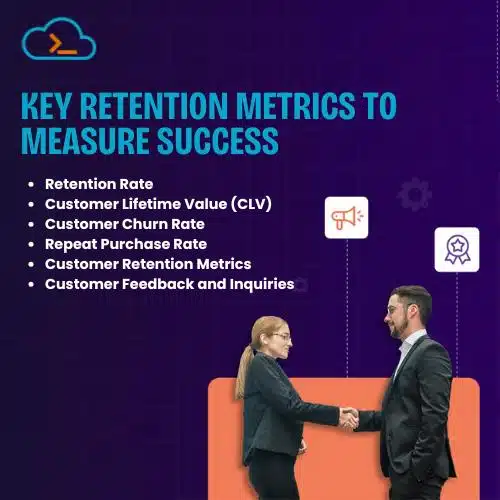
  • Retention rate

The retention rate reflects the percentage of customers a business maintains over a given timeframe. It is a fundamental metric that reveals how effectively your retention strategies are working.

  • Formula: [(Number of Customers at the Beginning of the Period – Number of Customers Lost During the Period) / Number of Customers at the Beginning of the Period] x 100
  • Customer lifetime value (CLV)

CLV calculates the total revenue a business anticipates from a customer over the duration of their relationship with the company. It helps identify the long-term value of repeat clients.

  • Formula: CLV=[(Average Purchase Value)×(Purchase Frequency)]×(Customer Lifespan)
  • Customer churn rate

The churn rate measures the percentage of customers who stop doing business with you during a specified period. A high churn rate indicates dissatisfaction or ineffective retention plans.

  • Formula: [(Number of Customers Lost During the Period) / Number of Customers at the Beginning of the Period] x 100
  • Repeat purchase rate

This metric shows the percentage of customers who make multiple purchases, reflecting the effectiveness of customer incentive programs and customer retention plans.

  • Formula: [(Total Customers)/(Repeat Customers​)]×100
  • Customer retention metrics

Customer retention rate can be assessed using metrics such as:

  • Net promoter score (NPS): Measures the likelihood of customers recommending your business.
  • Customer satisfaction score (CSAT): Gauges satisfaction levels from direct feedback.
  • Customer feedback and inquiries

Analyzing client feedback and inquiries offers applicable insights into customer pain points and areas for improvement.

Boost your brand’s online visibility with the expertise of our professional Content Marketing Services designed to engage your audience and drive meaningful results.

Key Retention Metrics to Measure Success

How to measure retention analytics

  • Define clear objectives: Establish specific, measurable, achievable, relevant, and time-bound (SMART) goals for customer retention.
  • Choose the right metrics: Select the specific metrics that are most relevant to your business objectives and industry.
  • Gather data: Utilize a variety of data sources, including CRM systems, website analytics, customer surveys, and social media monitoring.
  • Analyze data: Leverage data analysis tools and methods to uncover trends, patterns, and opportunities for enhancement.
  • Segment customers: Analyze customer data to identify different customer segments and tailor retention plans accordingly.
  • Track performance over time: Consistently track key retention metrics to assess progress and pinpoint opportunities for improvement.
  • Leverage predictive analytics: Utilize analytics to forecast future customer behavior and proactively address potential churn risks.

Strategies to optimize retention metrics

Tracking customer retention metrics and other key metrics helps in understanding business performance. By analyzing customers acquired, average revenue, and inventory turnover, companies can identify areas for improvement. Additionally, optimizing the hiring process and evaluating marketing ROI ensures resources are effectively utilized. Regularly gathering feedback from customers helps refine strategies and build long-term loyalty.

  • Enhance customer interactions – Personalized interactions and timely responses to customer inquiries can significantly improve retention activities. Predictive data analysis software can help tailor the user journey.
  • Implement loyalty programs – Reward programs for repeat clients incentivize loyalty and increase the average purchase value.
  • Address churn proactively – Identifying bottlenecks and customer segments with high attrition rates enables businesses to implement corrective measures.
  • Gather and act on feedback – Use firsthand feedback to continuously improve products, services, and the overall consumer journey.
  • Leverage analytics tools – Advanced tools provide actionable insights into market trends, customer categories, and performance metrics.
  • Align retention efforts with business goals – Ensure that retention strategies contribute to overarching goals, such as increasing total revenue or enhancing employee satisfaction.

Best metric to measure customer retention

Measurement of customer retention metrics depends on your business model and goals. For instance:

  • Retention rate is ideal for understanding overall customer retention.
  • Customer lifetime value (CLV) provides insights into the financial impact of retention.
  • Churn rate helps identify areas needing improvement.

Partner with a leading Enterprise SEO company in India to boost your website’s visibility, drive organic traffic, and achieve long-term growth.

Key takeaways

  • Retention rate, customer lifetime value (CLV), and churn rate are critical metrics for measuring customer retention success. These metrics provide insights into customer loyalty, financial impact, and areas for improvement.
  • Effective retention strategies include personalized interactions, loyalty programs, proactive churn management, and leveraging predictive analytics to tailor customer experiences and minimize attrition.
  • Continuous analysis of customer feedback, segmentation, and performance metrics ensures retention strategies align with business goals, driving long-term growth and profitability.

Conclusion

Measuring success in 2025 requires a thorough understanding of retention metrics. By focusing on the key metrics – such as retention rate, CLV, and churn rate – and implementing effective retention strategies, businesses can drive scalable growth and foster long-term customer retention. Continuous improvement, informed by actionable insights and client feedback, will remain essential for achieving retention goals.

Freuently asked questions

What is the difference between customer retention and loyalty?

Customer retention focuses on maintaining repeat clients, while loyalty emphasizes the emotional connection and advocacy customers have for a brand.

How do customer incentive programs improve retention?

Customer incentive programs incentivize repeat purchases by offering rewards, fostering a sense of exclusivity and engagement.

Can high employee satisfaction impact retention?

Yes, satisfied employees often deliver better customer service, positively influencing customer retention.

What role does the customer journey play in retention?

A seamless and engaging client journey enhances the overall experience, increasing the likelihood of repeat purchases and loyalty.

AI-Generated Content: Is It The Future Of Social Media Marketing? 

AI-Generated Content: Is It The Future Of Social Media Marketing? 

By Rashmita Patro

Social media marketing is the backbone of modern digital strategies, with billions of users across platforms like Facebook, Instagram, TikTok, and LinkedIn. As competition increases, marketers face increasing pressure to deliver engaging, personalized, and consistent content at scale. Artificial intelligence (AI) and Machine Learning (ML) are reshaping how businesses approach social media.

AI’s capabilities, including content generation, predictive analytics, and social listening, have made it indispensable in streamlining processes, improving efficiency, and enhancing audience engagement. But as AI tools continue to evolve, many wonder: Can AI-generated content creation become the dominant force in social media marketing?

How AI Is Transforming Social Media Marketing

Artificial intelligence is transforming content marketing by introducing machine learning and AI algorithms that support automated content creation across social media platforms. These tools enable businesses to simplify their processes, ensure consistent messaging, and create compelling content that resonates with their target audience.

Generative AI tools provide insights, allowing marketers to dig deeper into user interactions, fine-tune campaigns, and make data-driven decisions. By enhancing customer experiences and optimizing marketing strategies, AI has become a game changer, equipping brands with the key ways to stay ahead in the competitive landscape while strengthening their presence on social media accounts. Transform your online growth with the best digital marketing agency in India, offering tailored strategies to achieve your business goals. Let’s examine the key areas where AI is making a difference:

1. AI in Content Creation

AI-driven content generation tools, like generative AI, produce social media posts, blogs, images, and even videos. For instance, a Gen AI tool can analyze data on user behavior, trends, and audience choices to create a compelling Instagram post that resonates with a specific demographic.

Key Benefits:

  • Automated creation of captions, hashtags, and visuals.
  • Faster content production for real-time campaigns.
  • Enhanced personalization through data insights.

Challenges:

  • Risk of generic or impersonal content without human intervention.
  • Maintaining creativity and originality while using automated tools.

2. Social Listening and User Behavior Analysis

AI-powered platforms track and analyze consumer behavior, conversations, and trends in real-time. This process, known as ‘social listening, ‘enables brands to monitor their reputation, understand customer sentiments, and create content that aligns with audience expectations.
Applications of Social Listening:

  • Identifying trending topics for timely campaigns.
  • Understanding user preferences to refine content strategies.
  • Monitoring competitors to identify gaps and opportunities.

3. Enhancing Customer Interactions

Virtual assistants and chatbots powered by AI have revolutionized customer service on social media. These tools provide Immediate replies to customer queries, offer product recommendations, and resolve issues, all while ensuring a seamless user experience.

Advantages:

  • 24/7 availability for customer support.
  • Handling repetitive tasks efficiently, freeing up human resources.
  • Maintain consistency of the tone across all interactions.

4. Optimizing Content Strategies with Predictive Analytics

AI uses historical data and learning algorithms to forecast what type of content will perform best. It identifies the optimal posting times, formats, and platforms for maximum engagement.

Predictive Analytics in Action:

  • Determining which topics resonate with different audience segments.
  • Forecasting engagement rates based on past campaign performance.
  • Helping marketers adjust strategies in real time.

5. Personalization at Scale

AI allows marketers to create hyper-personalized campaigns. By analyzing individual user preferences, brands can deliver content that feels tailored, boosting engagement and customer loyalty.

Examples:

  • Personalized product recommendations based on browsing history.
  • Dynamic ads that adapt to user preferences in real time.
  • Maintaining creativity and originality while using automated tools.

Balancing AI and Human Creativity

AI’s influence on social media platforms extends far beyond automation. It has introduced smarter, data-driven strategies that enhance every stage of the content marketing services funnel. While AI excels in efficiency and scalability, creative thinking remains irreplaceable when crafting content that connects emotionally with audiences. The key is finding the right balance:

Where AI Excels:

  • Automating repetitive tasks.
  • Analyzing data for actionable insights.
  • Generating large volumes of content quickly.

Where Humans Are Essential:

  • Infusing storytelling and emotion into campaigns.
  • Ensuring cultural and contextual relevance.
  • Maintaining a unique brand voice and identity.

Marketers must use AI as a tool to complement their creative instincts rather than relying on it entirely. Boost your brand’s online presence with a professional content approach designed to engage your audience and drive meaningful results.

AI in Social Media: Enhancing Connection Through Smart Innovation

AI in Social Media: Enhancing Connection Through Smart Innovation

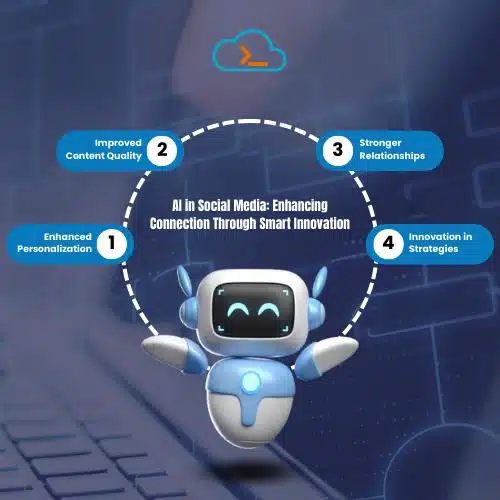
The evolving role of AI in social media platforms is set to expand, but it will likely serve as a complement to human expertise rather than a replacement. While AI will refine its ability to craft highly targeted campaigns and improve content quality, innovative thinking, and emotional insight will remain essential in ensuring depth and resonance in campaigns.

  • Enhanced Personalization: AI will refine its ability to craft highly targeted campaigns by leveraging user preferences and Forecasting analytics.
  • Improved Content Quality: While AI can generate content quickly, creative thinking will still be necessary to ensure depth and emotional resonance.
  • Stronger Relationships: AI algorithms will enable brands to engage their audiences in more meaningful ways, fostering loyalty and trust.
  • Innovation in Strategies: Emerging technologies will continue to provide new tools for marketers to create innovative campaigns that stay ahead of trends.

Leveraging artificial intelligence and AI algorithms, businesses can enhance their content marketing strategies across social media platforms and optimize their social media accounts. Companion with the Best Social Media Marketing Agency in India to enhance your web presence and connect with your target audience effectively.

Key Takeaways

  • Artificial intelligence is transforming social media marketing by streamlining processes, improving efficiency, and driving personalized engagement at scale.
  • From automated content creation to predictive analytics, AI tools empower brands to craft compelling campaigns tailored to their audience’s preferences.
  • While AI enhances speed and precision, human creativity remains essential for emotional resonance and maintaining a unique brand voice.

Conclusion

AI-generated content is undoubtedly a transformative force in social media platforms. Its capacity to streamline processes, provide actionable insights, and enhance personalization makes it an invaluable tool for brands. However, the human touch remains irreplaceable in crafting emotionally engaging content and culturally relevant campaigns.

Frequently Asked Questions

1. Will AI Replace Social Media Marketing?

No, AI will not replace social media marketing. Instead, it will act as a powerful enabler, empowering marketers to work smarter and more effectively. Human imagination, emotional insight, and thoughtful strategy continue to be essential. With AI-generated content, marketers can feel more in control and confident in their abilities, knowing that they have a powerful tool at their disposal.

2. What are the benefits of using AI in social media marketing?

AI offers numerous advantages and opportunities, including saving time, improved efficiency, enhanced personalization, and data-driven insights that help create more effective campaigns.

3. How can AI improve audience engagement?

AI enhances customer engagement by delivering personalized content, automating interactions through chatbots, and analyzing data to optimize experiences in real time.

4. Is AI affordable for small businesses?

Yes, many AI and ML tools are not only powerful but also affordable and scalable, making them accessible to small businesses looking to improve their social media strategies.

Customer Nurturing Strategies Using Email Automation For Business Growth

Customer Nurturing Strategies Using Email Automation For Business Growth

By Rashmita Patro

In today’s digital marketplace, businesses must adopt effective strategies to nurture their leads and foster growth. Email automation plays a critical role in streamlining customer nurturing efforts, helping businesses convert prospects into loyal customers while enhancing overall efficiency. This article explores actionable strategies to leverage email automation for business success.

Lead nurturing is the process of cultivating and developing relationships with potential customers throughout their buyer’s journey. It involves providing valuable content and targeted messages to develop leads, build trust, and move them closer to making a purchase decision.

Understanding the Power of Email Automation in Lead Nurturing

Email campaigns remain a highly effective channel for reaching and engaging with your desired audience. By incorporating email automation, businesses can streamline their email campaign initiatives, saving time and resources while delivering customized and timely messages to their subscribers.

Key Benefits of Using Email Automation for Lead Nurturing:

  • Improved Lead Quality: Nurturing campaigns help identify and qualify leads based on their engagement with emails, website activity, and other specific criteria.
  • Increased Conversion Ratios: By delivering relevant and timely information, email automation guides leads through the sales funnel, increasing the likelihood of conversion.
  • Enhanced Customer Relationships: Personalized and consistent communication fosters stronger customer relationships, building trust and loyalty.
  • Better ROI: Automated email campaigns can significantly improve return on investment (ROI) by optimizing resource allocation and maximizing the impact of marketing efforts.
  • Data-Driven Insights: Email automation platforms provide key insights into customer behavior, such as open rates, click engagement, and bounce rates, enabling businesses to refine their strategies and improve campaign performance.

Our Digital Marketing Servicesare created to Assist companies in improving their digital visibility and attaining measurable growth.

How to Nurture Your Leads with Automated Campaigns

Enhance your lead generation efforts with marketing automation and effective email marketing strategies. Use automation software to streamline lead management, create landing pages with relevant content, and gain valuable insights into your audience. Leverage industry insights to draw in high-quality leads and turn them into paying clients, driving long-term success with a well-executed lead nurturing plan.

  • Identify your Ideal Customer Profile (ICP): Understand your target audience’s demographics, interests, pain points, and buying behavior. It will help you create highly relevant and personalized content.
  • Segment Your Audience: Divide your leads into smaller, more manageable segments based on their behavior, interests, and position in the buyer’s journey. It enables you to send tailored messages that connect with each specific segment.
  • Create High-Quality, Valuable Content: Develop a variety of content formats, such as ebooks, white papers, webinars, case studies, blog posts, and email newsletters, that provide value to your target audience.
  • Develop Compelling Email Sequences: Design automated email sequences tailored to each stage of the buyer’s journey:
    1. Awareness Stage: Concentrate on increasing brand recognition and educating prospects about your industry and the challenges they face.
    2. Interest Stage: Provide more in-depth information about Your services and how they meet the needs of your target audience.
    3. Decision Stage: Offer compelling offers, testimonials, and case studies to encourage prospects to take the next step.
    4. Action Stage: Nurture existing customers with loyalty programs, exclusive offers, and valuable resources to encourage repeat business.
  • Optimize Your Email Sequences: Regularly monitor your email campaign performance, analyze key metrics, open rates, click ratio, and conversion rates, and make adjustments to improve results.
  • Personalize Your Messages: Utilize personalization tokens to include the recipient’s name, job title, company name, and other relevant information in your email topic lines and body text.
  • Track and Measure Results: Utilize lead scoring To rank and assess leads according to their level of engagement with your emails and other marketing channels. Monitor important metrics like site visits, lead generation, conversions, and customer lifetime value to measure the effectiveness of your nurturing campaigns.

Co-operate with the Best Digital Marketing Agency in India to elevate your brand and achieve outstanding online success.

Key Benefits of Using Email Automation for Lead Nurturing

Strategies to Nurture Leads Using Email Automation

1. Know Your Audience

Understanding your audience’s needs is the cornerstone of successful email marketing. By analyzing consumer data, businesses can segment their audience based on behavior, preferences, and demographics. This segmentation empowers you to align your messages closely with each group, increasing the chances of engagement and conversion.

Tools to Utilize:

  • Marketing Automation Platforms: Platforms like Marketo, Mailchimp, or HubSpot provide advanced segmentation capabilities.
  • Customer Data Management Tools: CRMs help gather and organize customer insights.

2. Deliver Meaningful Content

Your email campaigns should provide value to the recipient. Use insights from your industry to craft blog posts, guides, or case studies that address specific challenges faced by your audience.

Best Practices:

  • Write compelling message titles to improve open rates.
  • Align content with the recipient’s stage in the buyer’s journey.
  • Include clear CTAs to guide actions, such as downloading resources or scheduling consultations.

3. Implement Automated Campaigns

Email automation is a cornerstone of efficient nurturing strategies. Automated messages ensure timely delivery and free up resources for strategic planning, allowing businesses to focus on creating valuable content and refining their campaigns.

Common Automated Email Types:

  • Welcome emails for new subscribers.
  • Reminder emails for abandoned carts or expiring offers.
  • Educational drip campaigns that provide consistent value over time.

4. Use Lead Grading to Prioritize Efforts

Lead grading is a crucial tool in identifying the most engaged prospects. By assigning scores based on actions like email opens or website visits, marketing teams can focus their resources on individuals with the highest potential to convert, ensuring that efforts are aligned with business goals.

Criteria for Lead grading:

  • Interaction frequency with emails.
  • Downloads of gated content.
  • Attendance at webinars or events.

5. Measure and Refine Campaigns

Regularly evaluating the performance of your email marketing efforts is crucial. Examine data like click-through rates, conversion rates, and user engagement levels to identify areas for improvement.

Metrics to Monitor:

  • Open rates: Measure the effectiveness of subject lines.
  • Click-through rates: Assess content relevance and engagement.
  • Conversion rates: Determine how well emails drive desired actions.

Experience unmatched growth with the Best Enterprise SEO company in India, delivering tailored strategies to boost your online visibility and rankings.

Key Takeaways

  • Email automation helps businesses deliver timely, personalized messages to nurture leads, enhancing engagement and conversion rates.
  • Automated email sequences boost ROI by optimizing resource allocation and leveraging data insights.
  • Effective use of audience segmentation and personalized content increases relevance and engagement.

Conclusion

Email automation provides businesses with a scalable and efficient way to nurture leads, improve consumer relationships, and drive business success. By combining customized content, strategic segmentation, and data-driven insights, companies can transform potential customers into paying clients and cultivate long-term loyalty. A well-executed email strategy not only optimizes marketing efforts but also serves as a critical driver of growth and success.

Frequently Asked Questions

1. What benefits does email automation offer in lead nurturing?

Email automation simplifies the delivery of personalized, timely messages to leads and customers, improving engagement and conversion rates while saving time and resources.

2. Why is Lead evaluation important?

Lead evaluation allows businesses to prioritize their marketing efforts by identifying and focusing on the most promising leads and optimizing resource allocation.

3. What metrics should I track to improve email campaigns?

Key metrics include open rates, click-through rates, and conversion rates. These insights help fine-tune your strategy for better outcomes.

The Role Of Loyalty Programs In Customer Retention Strategies

The Role Of Loyalty Programs In Customer Retention Strategies

By Rashmita Patro

Customer loyalty and retention are cornerstones of a successful business. Incentive programs have emerged as powerful tools to strengthen customer relationships, build loyalty, and drive repeat purchases. By focusing on retaining customers rather than solely acquiring new ones, businesses can significantly improve customer lifetime value (CLTV), reduce customer attrition, and boost sales.

Understanding Loyalty Programs

Loyalty programs are structured marketing tactics designed to incentivize customers to return to business. These programs offer rewards such as discounts, points, early entry to products, or store credit to customers who frequently engage with a brand. The motive of Loyalty Programs is to improve customer loyalty and enhance CLTV by creating long-term relationships and positive customer interactions.

Before delving deeper, let’s define some key terms:

  • Customer Loyalty: A deep-rooted commitment to a brand or company, characterized by repeat orders and a strong emotional connection.
  • Customer Lifetime Value (CLTV): The total profit a business anticipates earning from a single customer throughout their entire relationship with the company.
  • Consumer Retention: The ability of a business to retain its existing customer base over time.
  • Customer Acquisition Cost (CAC): The total cost associated with acquiring a new customer.

Why Retaining Customers is the Golden Key to Business Growth

Retaining existing customers is crucial for several reasons:

  • By reducing Customer Acquisition Expenses: Loyalty programs prove to be a cost-effective investment. Acquiring new consumers is significantly more expensive than retaining existing ones, and the programs are a proven way to achieve this. This financial benefit can provide reassurance about the return on investment in loyalty programs.
  • Increased Revenue: Customer loyalty leads to spending more money over their lifetime. They are more likely to make repeat buys, explore new products, and refer friends and family.
  • Improved Profitability: Higher retention strategies directly translate to increased profitability for businesses.
  • Enhanced Brand Reputation: Satisfied and repeat customers act as brand ambassadors, spreading positive word-of-mouth and building a strong brand image.

Loyal customer feedback provides relevant data that can be used to upgrade products, services, and overall customer experience. This involvement in the improvement process can make the audience feel empowered and part of the business’s success. Transform your web presence with the Best Digital Marketing Company in India, offering tailored solutions to boost your brand and drive results.

Do Loyalty Schemes Programs Influence Customer Retention?

Customer retention programs significantly impact casual customer retention rates by addressing key aspects of customer behavior:

  • Encouraging Repeat Orders: By appreciating customers for their loyalty, businesses incentivize repeat orders and foster a habit of engagement. For instance, customers are more likely to return to a store where they can earn points for future purchases.
  • Building Emotional Connections: Customer retention programs often create a sense of belonging and exclusivity. Programs that offer personalized rewards, early access to sales, or tailored incentives strengthen emotional bonds between businesses and their customers.
  • Reducing Customer Churn: It refers to the rate at which customers stop doing business with a company. Repeat customers are less likely to switch to competitors. A well-structured Customer loyalty program acts as a barrier to churn by making customers feel valued and appreciated. This can make the audience feel secure about their customer base.
  • Generating Valuable Insights: Customer Loyalty programs collect customer data and provide businesses with insights into purchasing habits, preferences, and behaviors. Predictive analytics from this data can be used to enhance consumer engagement strategies.
  • Lowering Customer Acquisition Expenses: Retaining customers through reward programs is more affordable than acquiring new ones. Satisfied consumers are also more likely to recommend a brand, further reducing acquisition costs.

Elevate your online presence with Professional Digital Marketing Services designed to drive traffic, boost engagement, and grow your business model.

The Purpose Of Reward Programs

The ultimate purpose of reward programs is to build and sustain a loyal consumer base while enhancing consumer relationships. Customer Loyalty programs play a critical role in business strategies by:

  • Fostering Loyalty: Encouraging repeat transactions and fostering a sense of trust between the brand and its customers.
  • Enhance profits: Driving repeat buys and future buys to generate revenue and improve profitability.
  • Enhancing Customer Engagement: Encouraging customers to interact with the brand frequently through rewards, incentives, and also through activities such as earning points, redeeming rewards, or participating in exclusive events.
  • Improving Customer Satisfaction: Ensuring customers feel valued and rewarded for their patronage, leading to increased satisfaction and retention.
  • Boosting Loyalty and Retention Rates: Loyal customers are more likely to stick with a brand, ensuring stable revenue streams.
  • Driving Repeat Business: Encouraging customers to return for additional purchases through rewards.
  • Improving Customer Lifetime Value: Maximizing the revenue generated from each consumer over their lifetime with the brand.
Effective Strategies For Customer Loyalty Programs

Effective Strategies For Customer Loyalty Programs

For Customer loyalty programs to succeed, businesses must adopt strategies, including:

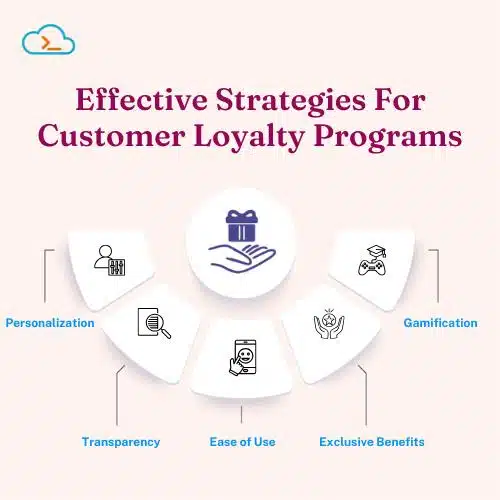
  • Personalization: Tailor rewards and incentives based on customer data to enhance relevance and engagement.
  • Transparency: Clearly communicate the benefits and terms of the program to avoid confusion.
  • Ease of Use: Simplify the process of earning and redeeming rewards to encourage participation.
  • Exclusive Benefits: Offer perks such as early access to sales, free shipping, or special discounts to acknowledge customers. For instance, a clothing brand could offer seasonal sales for loyal customers, or a subscription service could provide free shipping for all orders over a certain amount.
  • Gamification: Make retention programs fun and engaging by incorporating elements like badges, tiers, or challenges.

Partner with the Best Enterprise SEO Company in India to enhance your website’s visibility, drive organic traffic, and achieve scalable growth.

Key Takeaways

  • Loyalty programs are strategic tools that transform casual customers into repeat buyers, driving long-term revenue and enhancing brand relationships.
  • Loyalty programs are a cost-effective way to maximize customer lifetime value (CLTV), reduce churn, and boost profitability.
  • In a crowded market, loyalty programs give businesses a competitive edge by building emotional connections, rewarding repeat customers, and enhancing brand reputation.

Conclusion

Customer Loyalty programs are a vital component of customer retention strategies. By rewarding customers, encouraging loyalty, and enhancing customer relationships, these programs drive return business and generate sustainable revenue. Businesses that effectively implement reward programs can reduce churn, improve customer satisfaction, and gain key takeaways into customer behavior, ensuring long-term success.

Frequently Asked Questions

1. How do loyalty reward schemes benefit businesses?

Loyalty reward schemes help businesses with frequent customers, enhance profits, and gain insights into customer preferences. By building loyalty, these programs also reduce customer acquisition expenses and enhance customer satisfaction.

2. What types of rewards can be included in a loyalty program?

Rewards can range from discounts, points, retail credit, and freebies to exclusive access to products, services, or events. Tailoring rewards to customer preferences enhances their effectiveness.

3. How can businesses assess the success of loyalty Schemes?

Success can be measured using key indicators such as customer retention rates, CLTV, repeat purchase rates, and program participation rates.

We use cookies to ensure that we give you the best experience on our website. If you continue to use this site we will assume that you are happy with it.

Cookies settings
Accept
Privacy & Cookie policy
Privacy & Cookies policy
Cookie name Active

Privacy Policy

What information do we collect?

We collect information from you when you register on our site or place an order. When ordering or registering on our site, as appropriate, you may be asked to enter your: name, e-mail address or mailing address.

What do we use your information for?

Any of the information we collect from you may be used in one of the following ways: To personalize your experience (your information helps us to better respond to your individual needs) To improve our website (we continually strive to improve our website offerings based on the information and feedback we receive from you) To improve customer service (your information helps us to more effectively respond to your customer service requests and support needs) To process transactions Your information, whether public or private, will not be sold, exchanged, transferred, or given to any other company for any reason whatsoever, without your consent, other than for the express purpose of delivering the purchased product or service requested. To administer a contest, promotion, survey or other site feature To send periodic emails The email address you provide for order processing, will only be used to send you information and updates pertaining to your order.

How do we protect your information?

We implement a variety of security measures to maintain the safety of your personal information when you place an order or enter, submit, or access your personal information. We offer the use of a secure server. All supplied sensitive/credit information is transmitted via Secure Socket Layer (SSL) technology and then encrypted into our Payment gateway providers database only to be accessible by those authorized with special access rights to such systems, and are required to?keep the information confidential. After a transaction, your private information (credit cards, social security numbers, financials, etc.) will not be kept on file for more than 60 days.

Do we use cookies?

Yes (Cookies are small files that a site or its service provider transfers to your computers hard drive through your Web browser (if you allow) that enables the sites or service providers systems to recognize your browser and capture and remember certain information We use cookies to help us remember and process the items in your shopping cart, understand and save your preferences for future visits, keep track of advertisements and compile aggregate data about site traffic and site interaction so that we can offer better site experiences and tools in the future. We may contract with third-party service providers to assist us in better understanding our site visitors. These service providers are not permitted to use the information collected on our behalf except to help us conduct and improve our business. If you prefer, you can choose to have your computer warn you each time a cookie is being sent, or you can choose to turn off all cookies via your browser settings. Like most websites, if you turn your cookies off, some of our services may not function properly. However, you can still place orders by contacting customer service. Google Analytics We use Google Analytics on our sites for anonymous reporting of site usage and for advertising on the site. If you would like to opt-out of Google Analytics monitoring your behaviour on our sites please use this link (https://tools.google.com/dlpage/gaoptout/)

Do we disclose any information to outside parties?

We do not sell, trade, or otherwise transfer to outside parties your personally identifiable information. This does not include trusted third parties who assist us in operating our website, conducting our business, or servicing you, so long as those parties agree to keep this information confidential. We may also release your information when we believe release is appropriate to comply with the law, enforce our site policies, or protect ours or others rights, property, or safety. However, non-personally identifiable visitor information may be provided to other parties for marketing, advertising, or other uses.

Registration

The minimum information we need to register you is your name, email address and a password. We will ask you more questions for different services, including sales promotions. Unless we say otherwise, you have to answer all the registration questions. We may also ask some other, voluntary questions during registration for certain services (for example, professional networks) so we can gain a clearer understanding of who you are. This also allows us to personalise services for you. To assist us in our marketing, in addition to the data that you provide to us if you register, we may also obtain data from trusted third parties to help us understand what you might be interested in. This ‘profiling’ information is produced from a variety of sources, including publicly available data (such as the electoral roll) or from sources such as surveys and polls where you have given your permission for your data to be shared. You can choose not to have such data shared with the Guardian from these sources by logging into your account and changing the settings in the privacy section. After you have registered, and with your permission, we may send you emails we think may interest you. Newsletters may be personalised based on what you have been reading on theguardian.com. At any time you can decide not to receive these emails and will be able to ‘unsubscribe’. Logging in using social networking credentials If you log-in to our sites using a Facebook log-in, you are granting permission to Facebook to share your user details with us. This will include your name, email address, date of birth and location which will then be used to form a Guardian identity. You can also use your picture from Facebook as part of your profile. This will also allow us and Facebook to share your, networks, user ID and any other information you choose to share according to your Facebook account settings. If you remove the Guardian app from your Facebook settings, we will no longer have access to this information. If you log-in to our sites using a Google log-in, you grant permission to Google to share your user details with us. This will include your name, email address, date of birth, sex and location which we will then use to form a Guardian identity. You may use your picture from Google as part of your profile. This also allows us to share your networks, user ID and any other information you choose to share according to your Google account settings. If you remove the Guardian from your Google settings, we will no longer have access to this information. If you log-in to our sites using a twitter log-in, we receive your avatar (the small picture that appears next to your tweets) and twitter username.

Children’s Online Privacy Protection Act Compliance

We are in compliance with the requirements of COPPA (Childrens Online Privacy Protection Act), we do not collect any information from anyone under 13 years of age. Our website, products and services are all directed to people who are at least 13 years old or older.

Updating your personal information

We offer a ‘My details’ page (also known as Dashboard), where you can update your personal information at any time, and change your marketing preferences. You can get to this page from most pages on the site – simply click on the ‘My details’ link at the top of the screen when you are signed in.

Online Privacy Policy Only

This online privacy policy applies only to information collected through our website and not to information collected offline.

Your Consent

By using our site, you consent to our privacy policy.

Changes to our Privacy Policy

If we decide to change our privacy policy, we will post those changes on this page.
Save settings
Cookies settings